From anaphylaxis to eosinophilic esophagitis during omalizumab treatment in a boy with severe asthma and food allergy: a case report - Report - MDSpire

From anaphylaxis to eosinophilic esophagitis during omalizumab treatment in a boy with severe asthma and food allergy: a case report

  • By

  • Urszula Jedynak-Wąsowicz

  • Liliana Klim

  • Ewa Cichocka-Jarosz

  • May 29, 2026

  • 0 min

Share

Transition from Anaphylaxis to Eosinophilic Esophagitis in a Pediatric Patient

Overview

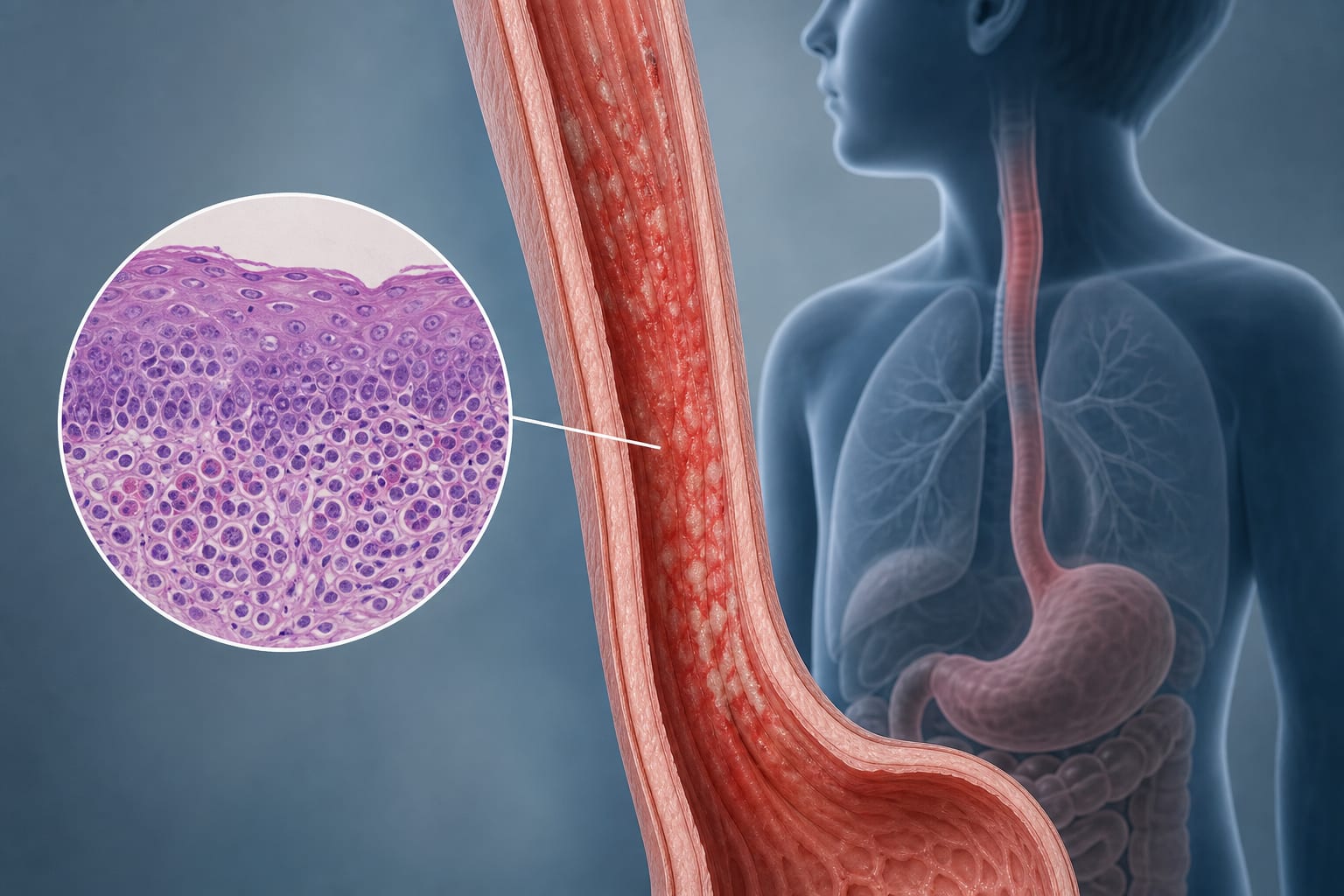
This case study presents a pediatric patient with severe asthma and IgE-mediated cow's milk allergy who developed eosinophilic esophagitis (EoE) during omalizumab therapy. The findings underscore the need for vigilance regarding EoE in atopic patients experiencing gastrointestinal symptoms during dietary liberalization.

Background

Eosinophilic esophagitis (EoE) is a chronic inflammatory condition of the esophagus linked to atopic diseases, including asthma and food allergies. Its diagnosis is critical as it can manifest in patients undergoing treatments such as oral immunotherapy. Understanding the relationship between EoE and atopic conditions is essential for effective management in pediatric patients.

Data Highlights

No numerical data available in the article.

Key Findings

  • The patient had a history of severe IgE-mediated cow's milk allergy and asthma.
  • Omalizumab therapy provided significant asthma control but was followed by gastrointestinal symptoms.
  • Histological examination confirmed eosinophilic esophagitis after the patient liberalized his diet.
  • Management included proton pump inhibitors and topical budesonide, leading to rapid clinical improvement.
  • This case highlights the potential for EoE to develop in patients with atopy during dietary changes.

Clinical Implications

Clinicians should be aware of the potential for eosinophilic esophagitis in patients with severe atopic conditions who experience gastrointestinal symptoms, especially during dietary liberalization. A multidisciplinary approach may be beneficial in managing such complex cases.

Conclusion

This case emphasizes the importance of monitoring for eosinophilic esophagitis in atopic patients undergoing dietary changes, particularly those receiving biologic therapies like omalizumab.

Related Resources & Content

  1. The New Gastroenterologist, 2025 -- Eosinophilic Esophagitis: Highlights from the Past Year
  2. Drug Safety, 2020 -- Evaluating the Safety of Benralizumab in Eosinophil-Depleting Treatment for Severe Eosinophilic Asthma
  3. The New Gastroenterologist, 2025 -- Extended Treatment for Eosinophilic Esophagitis Reduces Relapse Risk Without Increased Complications
  4. A Look at the Updated ACG Eosinophilic Esophagitis Clinical Guidelines - American College of Gastroenterology
  5. FDA Approves First Medication to Help Reduce Allergic Reactions to Multiple Foods After Accidental Exposure | FDA
  6. conexiant — Personalizing Steroid Duration in Asthma
  7. Triggers for eosinophilic esophagitis (EoE): The intersection of food allergy and EoE - PubMed
  8. A Look at the Updated ACG Eosinophilic Esophagitis Clinical Guidelines - American College of Gastroenterology
  9. FDA Approves First Medication to Help Reduce Allergic Reactions to Multiple Foods After Accidental Exposure | FDA

Original Source(s)

Related Content