Subsite-specific advantages of induction chemoimmunotherapy in OPSCC
Overview
This study evaluates the impact of immune checkpoint inhibitors (ICIs) added to induction chemotherapy in HPV-negative oropharyngeal squamous cell carcinoma (OPSCC).
Background
Oropharyngeal squamous cell carcinoma (OPSCC) is a significant subtype of head and neck squamous cell carcinoma (HNSCC), with HPV-negative cases associated with poorer outcomes. The addition of immune checkpoint inhibitors (ICIs) to treatment regimens has been explored to enhance therapeutic efficacy, particularly in aggressive HPV-negative cases.
Data Highlights
Group
24-month PFS
36-month PFS
IC + ICI
100%
100%
IC
74.0%
68.9%
Key Findings
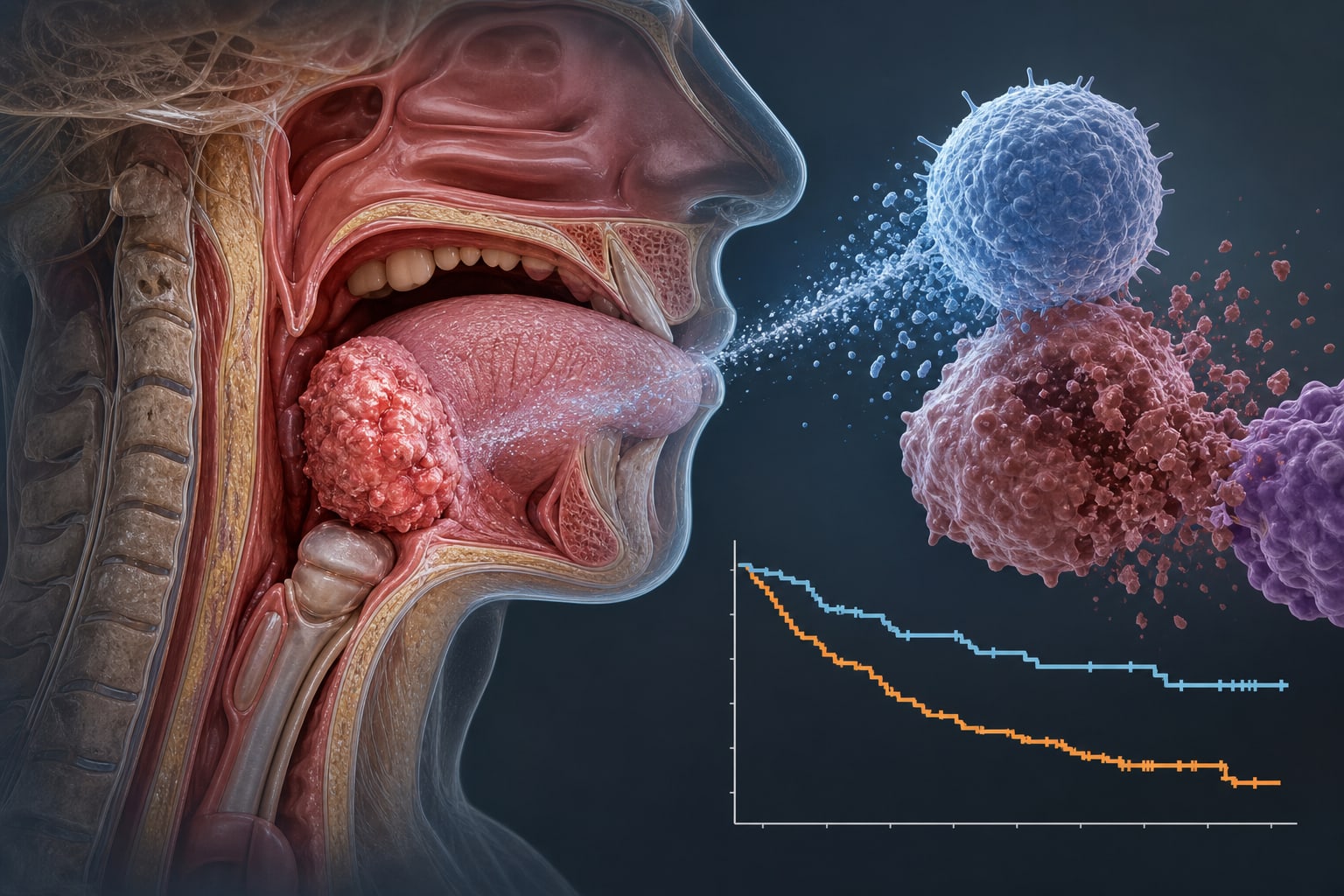
IC plus ICI showed numerically improved PFS and OS in the overall cohort, but differences were not statistically significant.
In the non-BOT cohort, IC plus ICI was associated with significantly improved PFS before and after propensity score matching.
Before matching, 24-month PFS rates were 100% for IC + ICI versus 74.0% for IC.
After matching, 36-month PFS rates were 100% for IC + ICI versus 72.9% for IC.
OS did not significantly differ between groups.
In the BOT cohort, neither PFS nor OS showed significant differences between treatment groups.
Clinical Implications
The findings suggest that the addition of ICIs may provide a benefit in terms of PFS for patients with non-BOT HPV-negative OPSCC. Further prospective studies are warranted to validate these exploratory results and refine treatment approaches.
Conclusion
The study indicates a potential benefit of adding ICIs to induction chemotherapy in non-BOT HPV-negative OPSCC, highlighting the need for further investigation in this area.