Impact of the red blood cell distribution width-to-albumin ratio on neurological outcomes in cardiac arrest patients - Report - MDSpire
Coming Soon: Introducing MDSpire News. Learn more
Conexiant’s news site is now MDSpire News. Learn more

Influence of the red blood cell distribution width to albumin ratio on neurological outcomes following cardiac arrest

  • By

  • Xiaoli Yang

  • Haiyan Wang

  • Fei Wang

  • Fei Peng

  • September 4, 2026

Share

Influence of the red blood cell distribution width to albumin ratio on neurological outcomes following cardiac arrest

Overview

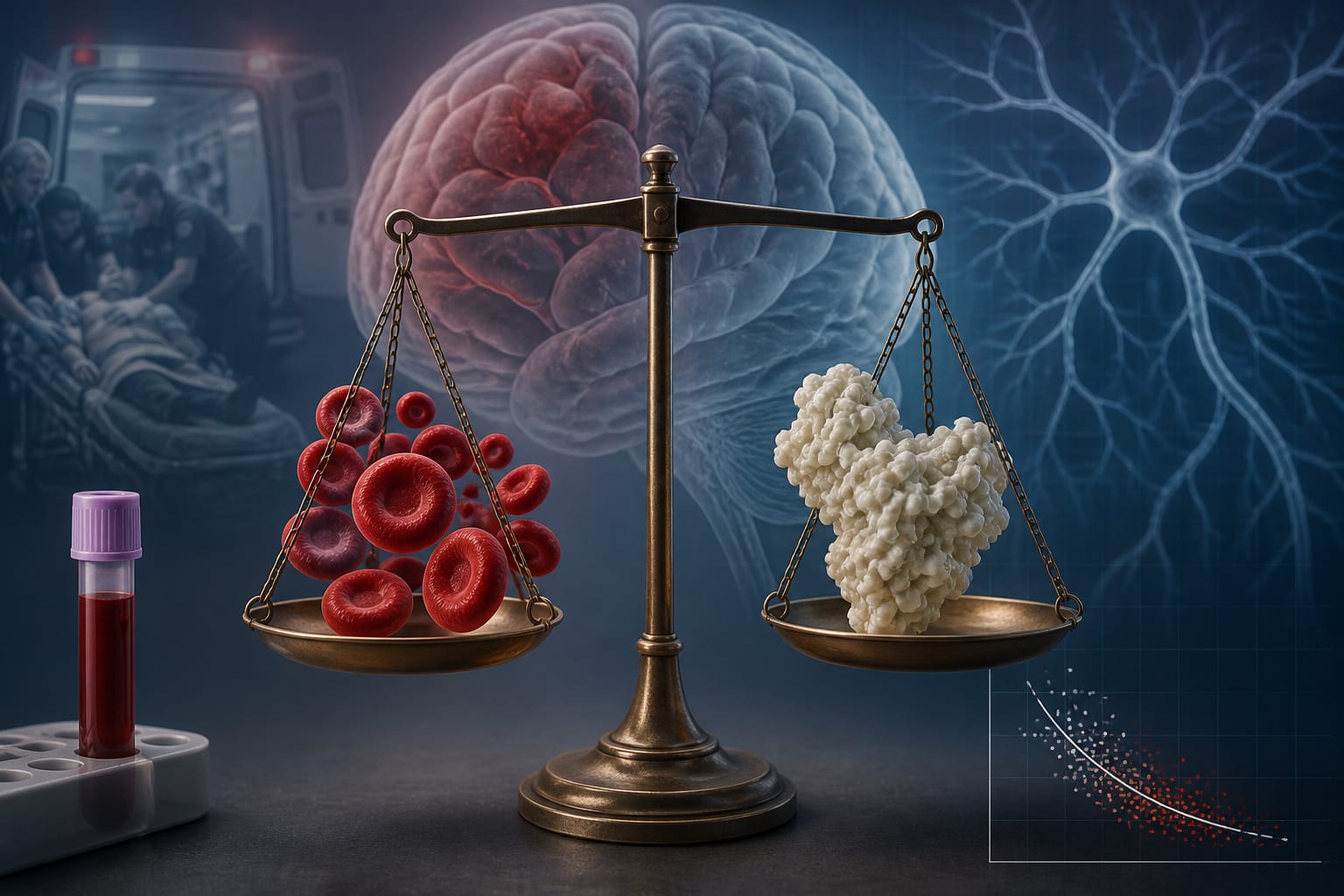
This study investigates the association between the red blood cell distribution width-to-albumin ratio (RA) and neurological outcomes in patients following cardiac arrest. Elevated RA levels were found to correlate with neurological outcomes, but further validation is needed.

Background

Cardiac arrest leads to significant brain injury, which is a major cause of mortality and morbidity among survivors. Identifying reliable biomarkers for predicting neurological outcomes is crucial for improving patient management. The red blood cell distribution width-to-albumin ratio (RA) has been studied as a potential indicator of inflammatory responses and prognosis in various medical conditions.

Data Highlights

OutcomeRA LevelsSurvival Status
Good Neurological Outcome (CPC ≤ 2)Lower RA10 patients
Poor Neurological Outcome (CPC ≥ 3)Higher RA70 patients

Key Findings

  • RA levels were significantly higher in patients with poor neurological outcomes compared to those with good outcomes.
  • The RA yielded an area under the receiver operating characteristic curve (AUC) of 0.90.
  • RA values remained independently associated with poor neurological outcomes after adjusting for confounding factors.
  • Only 10 out of 80 patients survived to hospital discharge with favorable neurological function.
  • PCABI remains a leading cause of mortality and morbidity in cardiac arrest survivors.

Clinical Implications

The findings indicate that RA may be associated with neurological outcomes in patients following cardiac arrest.

Conclusion

The study highlights the association of the red blood cell distribution width-to-albumin ratio with neurological outcomes after cardiac arrest.

Related Resources & Content

  1. Frontiers in Cardiovascular Medicine, 2026 -- The association between the red blood cell distribution width-to-albumin ratio and in-hospital mortality in cardiac arrest patients: an analysis of the eICU database
  2. Frontiers in Medicine, 2026 -- The Prognostic Value of Red Cell Distribution Width-to-Albumin Ratio for 28-Day Mortality in Sepsis Patients: A Multicenter Analysis Based on the eICU Collaborative Research Database
  3. Frontiers in Neurology, 2026 -- The association between red blood cell distribution width to albumin ratio and migraine: evidence from clinical and population-based cohorts
  4. American Heart Association CPR & First Aid -- Part 11: Post-Cardiac Arrest Care
  5. European Resuscitation Council and European Society of Intensive Care Medicine Guidelines 2025 Post-Resuscitation Care
  6. MDSpire News — Lactate–Albumin Ratio Tied to TBI Mortality
  7. Part 11: Post-Cardiac Arrest Care | American Heart Association CPR & First Aid
  8. European Resuscitation Council and European Society of Intensive Care Medicine Guidelines 2025 Post-Resuscitation Care
  9. Hypothermia versus Normothermia after Out-of-Hospital Cardiac Arrest | New England Journal of Medicine

Original Source(s)

Related Content