CORO1A links inflammatory chondrocyte subpopulations to immune microenvironment alterations in osteoarthritis: an integrative multi-omics and single-cell study - Report - MDSpire
Conexiant’s news site is now MDSpire News. Learn more
Advertisement
CORO1A associates inflammatory chondrocyte subsets with changes in the immune microenvironment in osteoarthritis: a comprehensive multi-omics and single-cell analysis
CORO1A associates inflammatory chondrocyte subsets with immune changes in OA
Overview
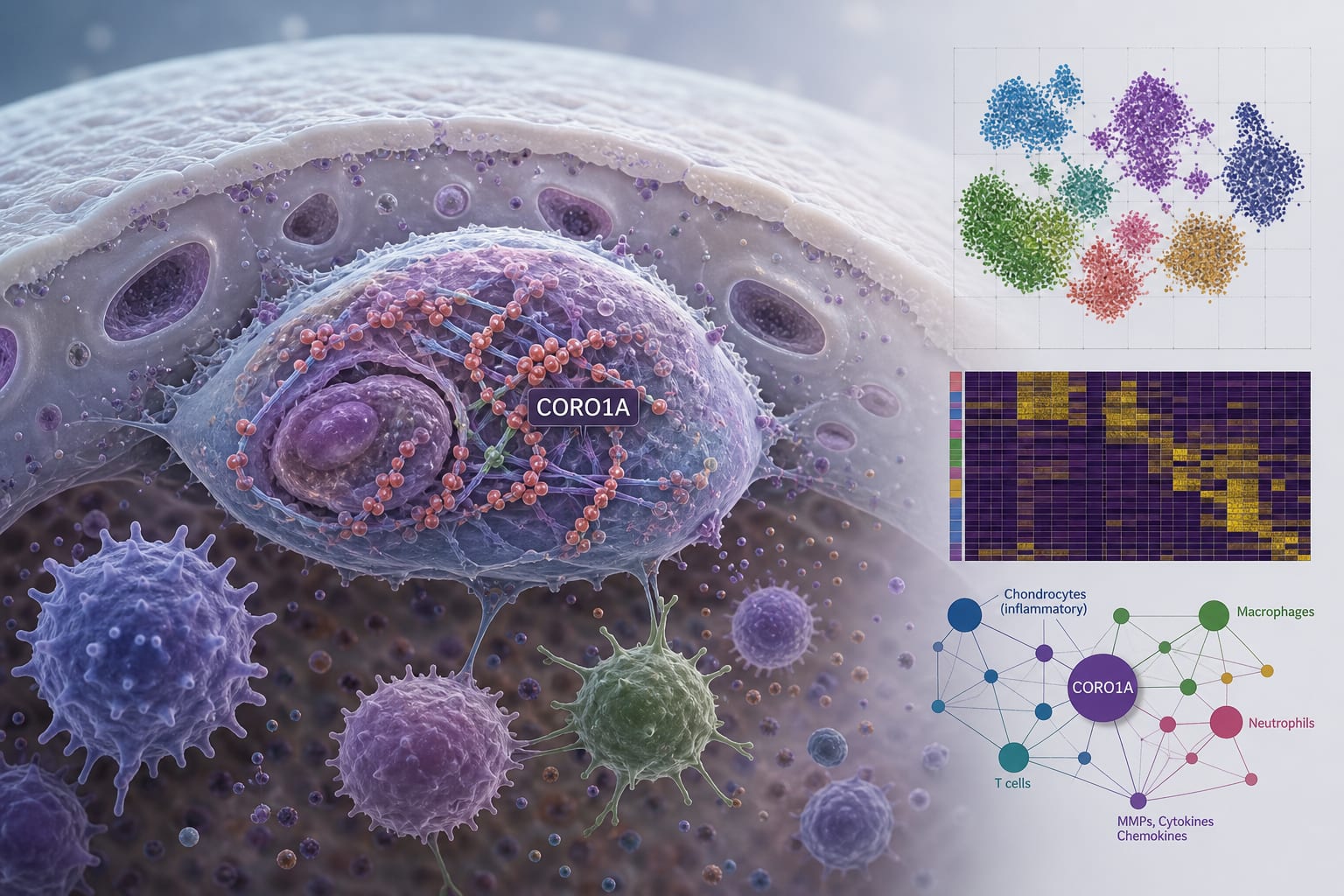
This study identifies CORO1A as a key protein in osteoarthritis (OA) that associates with inflammatory chondrocyte subsets and immune microenvironment changes. The findings suggest that CORO1A may serve as a potential therapeutic target due to its role in cartilage degradation and immune cell interaction.
Background
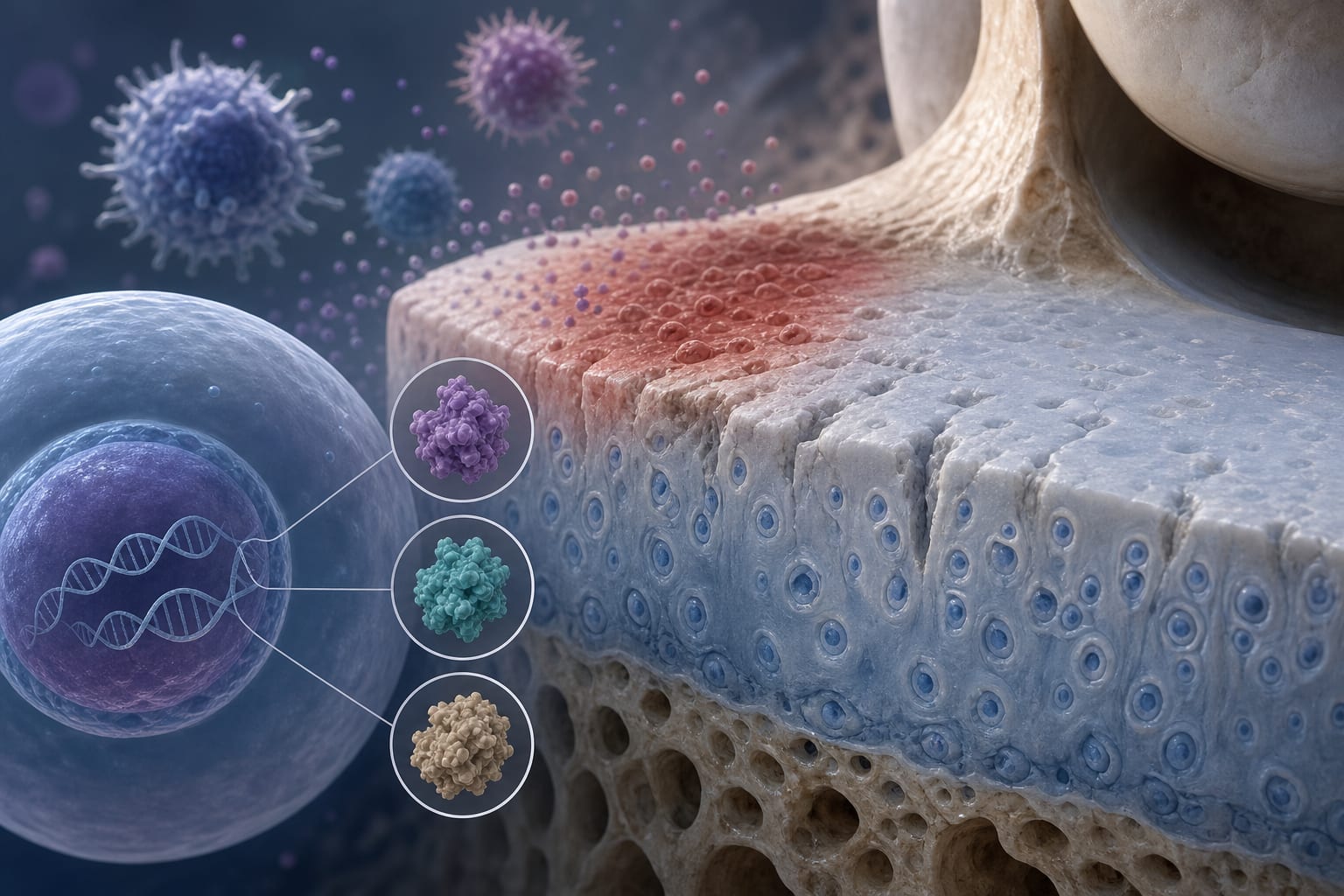
Osteoarthritis (OA) is a prevalent degenerative joint disease characterized by cartilage degradation and significant pain, impacting mobility and quality of life. Understanding the molecular mechanisms underlying OA, particularly the interactions between chondrocytes and the immune system, is crucial for developing effective treatments. The role of CORO1A in this context has not been thoroughly explored, highlighting the need for further investigation.
Data Highlights
No numerical data available in the provided source material.
Key Findings
Coro1A is significantly expressed in osteoarthritic cartilage, particularly in inflammatory and proliferative chondrocyte subpopulations.
Increased CORO1A expression correlates with the infiltration of immune cells, including M2 macrophages and natural killer cells.
Coro1A upregulation is linked to the activation of IL-6/JAK-STAT3 and TNF-α/NF-κB signaling pathways.
Experimental suppression of CORO1A leads to reduced MMP13 expression and diminished chondrocyte migration.
Coro1A may serve as a mechanistic link between immune remodeling and cartilage degradation in OA.
Clinical Implications
The findings suggest that targeting CORO1A may provide a novel therapeutic approach for managing OA by addressing both cartilage degradation and immune system dysfunction. Understanding the role of CORO1A in chondrocyte and immune interactions could lead to more effective treatment strategies.
Conclusion
CORO1A emerges as a significant factor in the interplay between chondrocytes and the immune microenvironment in OA, indicating its potential as a therapeutic target. Further research is warranted to explore its role in OA pathogenesis and treatment.
Systematic review found robotic-assisted total hip arthroplasty improved implant positioning precision without demonstrating better patient-reported outcomes or lower complication rates than conventional surgery.