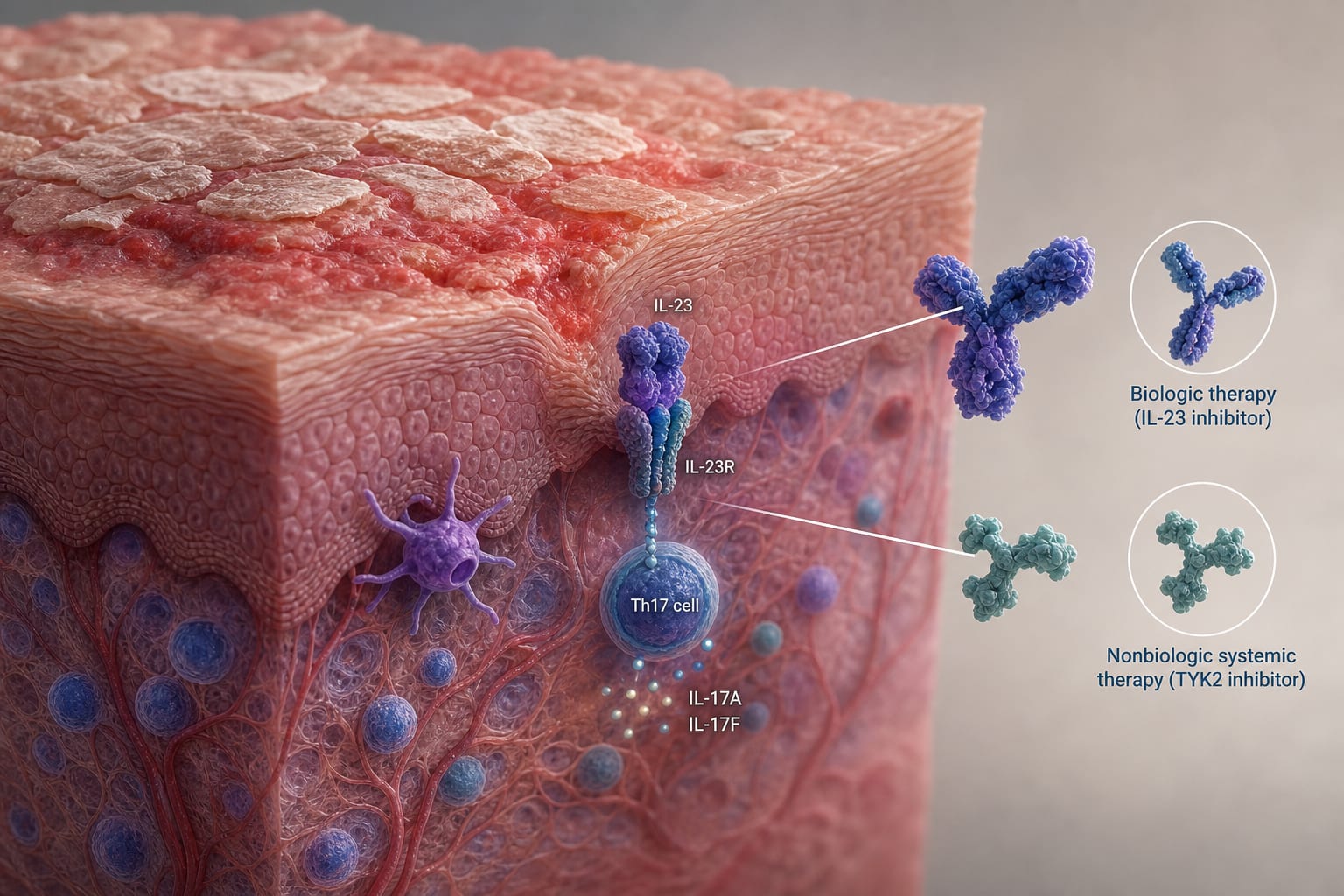
Clinical Report: Assessing Kidney Safety in Biologic Therapies for Psoriasis
Overview
This report reviews the renal safety profiles of biologic therapies used in psoriasis management, highlighting their potential impact on kidney function. It emphasizes the need for careful monitoring and management of psoriasis patients with renal concerns.
Background
Psoriasis is increasingly recognized as a systemic disease with potential renal implications, including chronic kidney disease (CKD). The introduction of biologic therapies has revolutionized treatment but raises concerns regarding their renal safety. Understanding the relationship between biologics and renal function is crucial for optimizing treatment strategies in affected patients.
Data Highlights
No specific numerical data or trial results were provided in the source material.
Key Findings
['Biologics have not been associated with a higher incidence of CKD compared to conventional therapies like methotrexate.', 'Case reports indicate successful use of biologics in patients with end-stage renal disease (ESRD) and IgA nephropathy.', 'Chronic systemic inflammation in psoriasis may contribute to renal injury, necessitating careful management.', 'Current guidelines recommend the use of biologics across all CKD stages due to their favorable renal safety profile.', 'Emerging evidence suggests that biologics do not require dose adjustments for renal impairment.']
Clinical Implications
Clinicians should consider biologic therapies as safe options for psoriasis patients with renal concerns, particularly given their favorable safety profiles. Ongoing monitoring and collaboration with nephrology are essential to balance treatment benefits and potential risks.
Conclusion
The integration of biologic therapies in psoriasis management presents a promising avenue for preserving kidney health while effectively treating skin symptoms. Further research is warranted to enhance understanding and optimize treatment strategies.