FaReWell Depression – a randomized controlled trial of a physiotherapeutic program for the facial rehabilitation of wellbeing in depression - Report - MDSpire
Advertisement
FaReWell Depression – a randomized controlled trial of a physiotherapeutic program for the facial rehabilitation of wellbeing in depression
Clinical Report: Facial Rehabilitation for Depression: Results from a Randomized Controlled Trial of the FaReWell Program
Overview
The FaReWell program, a facial rehabilitation intervention, demonstrated significant reductions in depression severity among participants compared to a control group. This study provides preliminary evidence supporting the use of facial physiotherapy as a novel approach to managing depression.
Background
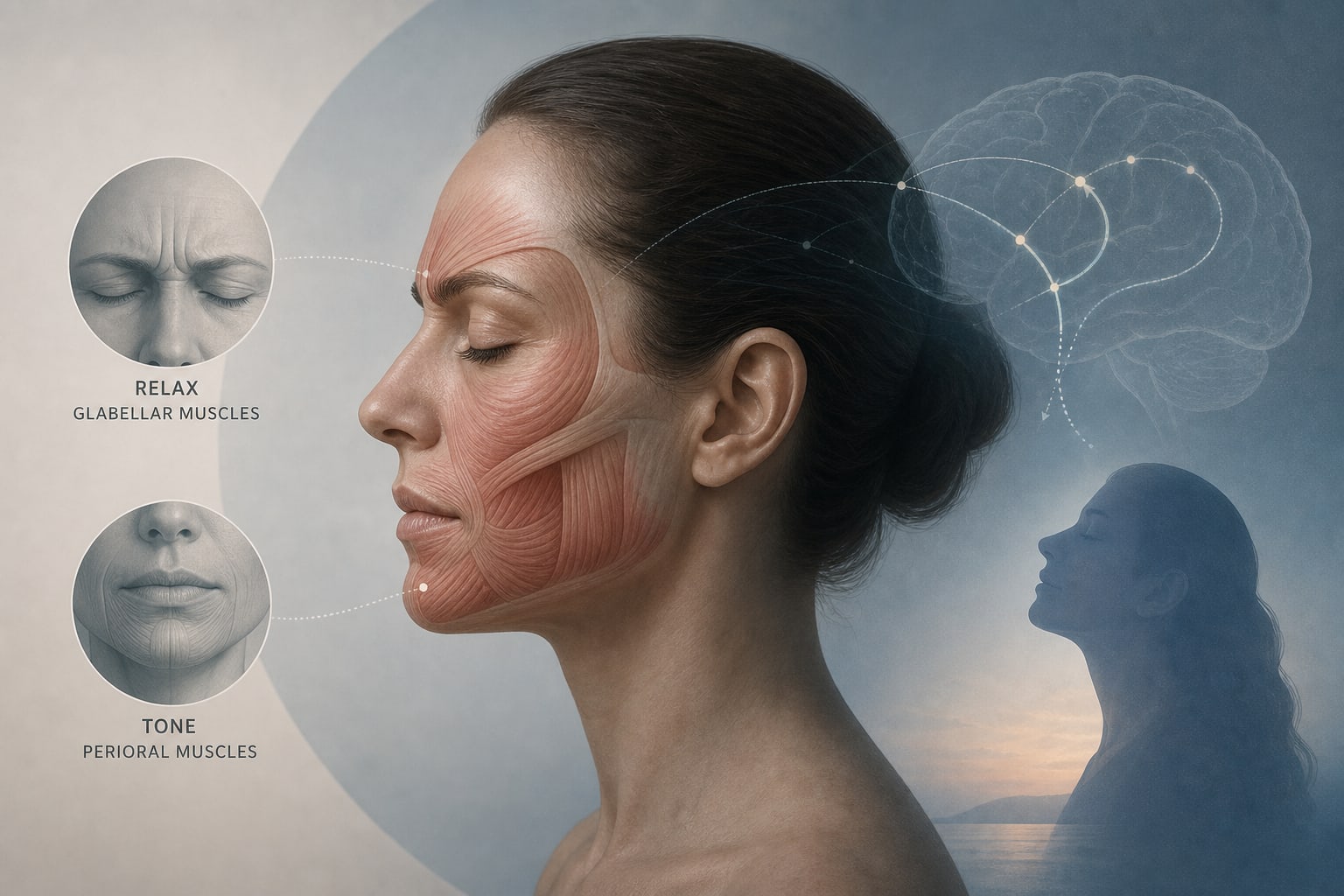
Facial feedback mechanisms play a crucial role in modulating emotional states, with implications for treating depression. Traditional treatments primarily focus on pharmacotherapy and psychotherapy, leaving a gap for innovative non-pharmacological interventions. The FaReWell program aims to leverage facial muscle rehabilitation to enhance emotional wellbeing in individuals with depression.
Data Highlights
Group
Mean Pre-Intervention MADRS Score
Mean Post-Intervention MADRS Score
Intervention
20.64 (SD 5.56)
13.29 (SD 7.76)
Control
20.10 (SD 7.23)
18.26 (SD 6.78)
Key Findings
The FaReWell program significantly reduced MADRS scores in the intervention group compared to the control group.
There was a significant group × time interaction effect (F = 6.37, p = .017).
Secondary outcomes, including anhedonia and facial self-perception, did not show significant differences over time.
Participants engaged in daily 15-minute sessions of facial rehabilitation.
The study involved 49 patients with mild to moderate depression.
Clinical Implications
The findings suggest that facial physiotherapy may serve as a complementary intervention for patients with mild to moderate depression. Clinicians should consider exploring non-pharmacological approaches like the FaReWell program as adjuncts to traditional treatments.
Conclusion
The FaReWell program shows promise as a novel therapeutic approach for depression, warranting further investigation to establish its efficacy and potential integration into treatment protocols.
by M. Axel Wollmer, Hannah Lemke, Patricia Waldvogel, Insa Neumann, Kayleigh Keller, Veronika Nölle, Nathalie Dittmer, Maksim Lucic, Barbara Walss, Tillmann H.C. Krüger, Josef Hättenschwiler