Cobalt nanoparticles protect against endocrine disruption in response to multiple abiotic stresses in fish - Report - MDSpire

Cobalt nanoparticles protect against endocrine disruption in response to multiple abiotic stresses in fish

  • By

  • Neeraj Kumar

  • Paritosh Kumar

  • S.A. Kochewad

  • Prem Kumar

  • Dilip Kumar Singh

  • Kotha Sammi Reddy

  • June 10, 2026

  • 0 min

Share

Cobalt Nanoparticles Mitigate Endocrine Disruption Induced by Various Abiotic Stressors in Fish

Overview

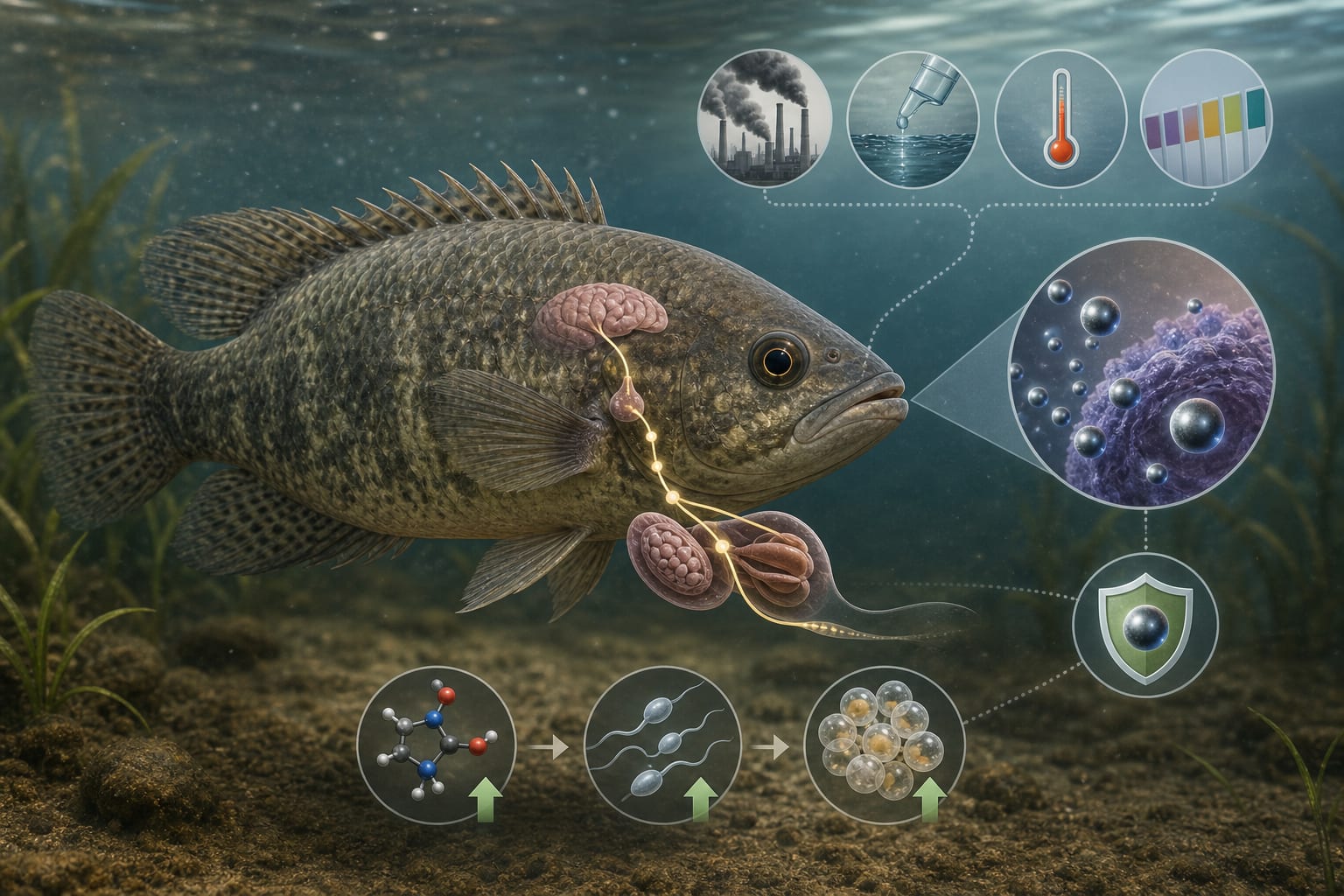
This study investigates the protective effects of cobalt nanoparticles (Co-NPs) on fish exposed to multiple abiotic stressors, including arsenic and ammonia. Results indicate that Co-NPs significantly improve reproductive hormone levels and milt quality in Anabas testudineus under stress conditions.

Background

The impact of climate change and pollution on aquatic ecosystems poses significant challenges to aquaculture and fish reproduction. Endocrine disruption caused by abiotic stressors like arsenic and ammonia can lead to hormonal imbalances and decreased reproductive efficiency in fish. Understanding how to mitigate these effects is crucial for sustainable aquaculture practices.

Data Highlights

TreatmentCo-NP Dose (mg/kg)Improvement in Reproductive HormonesEnhanced Milt Characteristics
Control0.4SignificantYes
As+NH3+pH+T0.6SignificantYes

Key Findings

  • Co-NPs at doses of 0.4 and 0.6 mg kg-¹ improved reproductive hormones in both male and female fish.
  • Significant enhancement in milt characteristics was observed with Co-NP supplementation.
  • Endocrine disruption was mitigated by dietary Co-NPs under stress exposure conditions.
  • Parameters such as milt motility and sperm velocity were notably improved with Co-NP treatment.
  • The study highlights the potential of Co-NPs in enhancing reproductive efficiency in fish under abiotic stress.

Clinical Implications

The findings suggest that cobalt nanoparticles could be a viable dietary supplement to enhance reproductive health in fish exposed to environmental stressors. This approach may contribute to improved aquaculture practices and fish population sustainability.

Conclusion

Dietary supplementation of cobalt nanoparticles demonstrates significant potential in mitigating the adverse effects of abiotic stressors on fish reproduction. Further research may solidify their role in sustainable aquaculture.

Related Resources & Content

  1. Frontiers in Endocrinology, 2026 -- Immunoendocrine response to individual or combined exposure of polystyrene nanoplastics and elevated salinity on gilthead seabream
  2. Archives of Toxicology, 2026 -- The use of new approach methodologies (high-throughput transcriptomics) to study nanoagrochemicals: mechanisms of toxicity of a commercial copper oxychloride to soil model invertebrates
  3. Archives of Toxicology, 2026 -- From raw data to meaningful information: a robust but flexible method to assess in vitro assay responses—lessons learned from a novel Dicentrarchus labrax estrogen screen test
  4. Guidance Document on Aquatic and Sediment Toxicological Testing of Nanomaterials, Second Edition | OECD
  5. Thermal impacts on aquatic fertility | Nature Climate Change
  6. Archives of Toxicology — Modification of CuO Nanoparticles through Surface Carboxylation or PEGylation Reduces Cytotoxic Effects on Human Cells In Vitro While Preserving Antibacterial Activity
  7. Effects of nano products on physiological reproduction of fish
  8. Guidance Document on Aquatic and Sediment Toxicological Testing of Nanomaterials, Second Edition | OECD
  9. Thermal impacts on aquatic fertility | Nature Climate Change

Original Source(s)

Related Content