Female sex is not associated with worse surgical outcomes in infective endocarditis: a prospective study disproving a common assumption - Report - MDSpire
Advertisement
Female sex is not associated with worse surgical outcomes in infective endocarditis: a prospective study disproving a common assumption
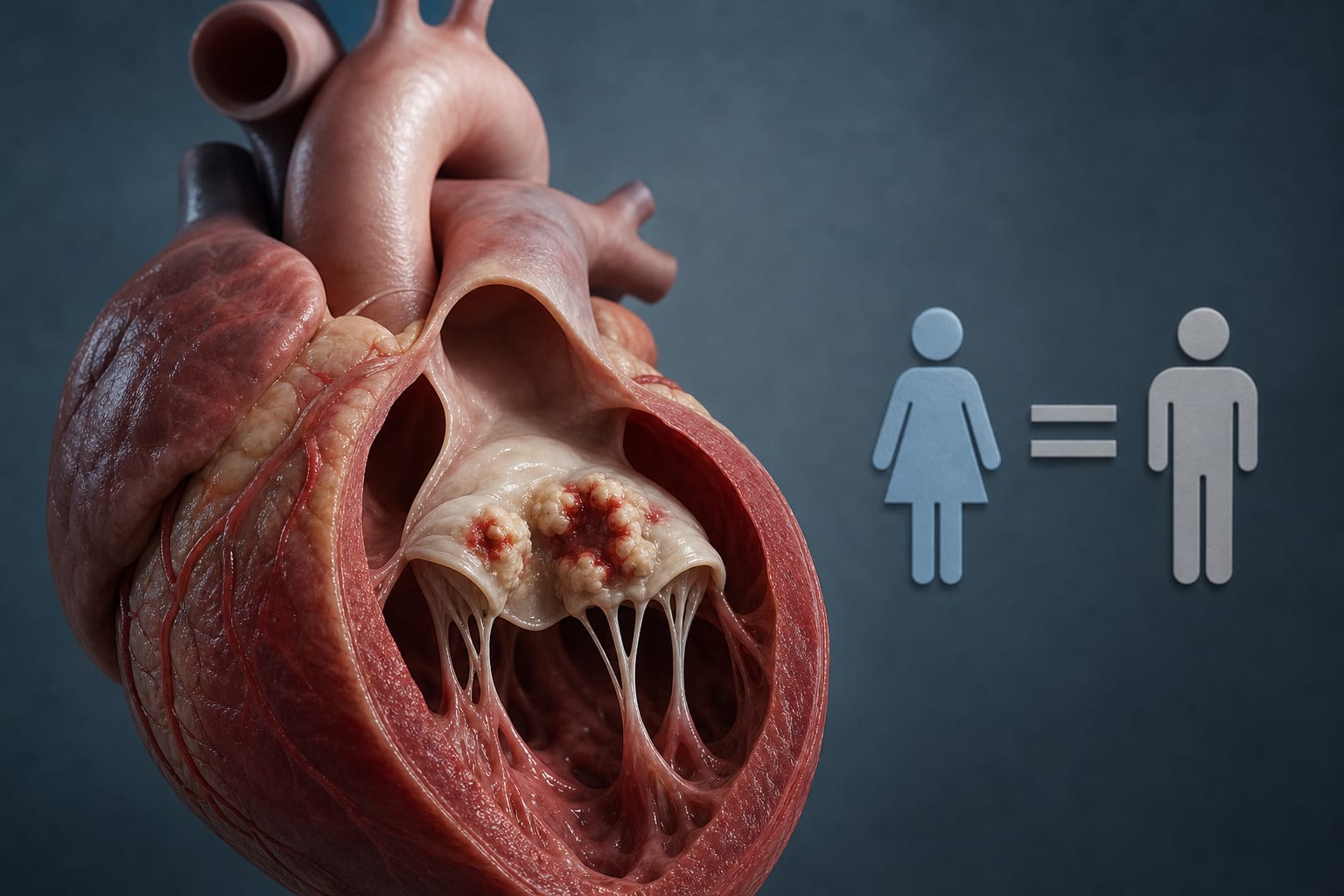
Clinical Report: Gender does not correlate with poorer surgical results in infective endocarditis
Overview
This study investigates the impact of sex on surgical outcomes in infective endocarditis (IE), revealing no significant differences in in-hospital mortality or mid-term outcomes between male and female patients. Women were less likely to undergo surgery despite similar surgical indications.
Background
Infective endocarditis (IE) poses significant morbidity and mortality challenges, with ongoing research into sex-based disparities in outcomes. This study aims to clarify these disparities by examining a cohort of surgically treated patients for IE.
Data Highlights
Characteristic
Female
Male
Patients undergoing surgery
22 (18.8%)
95 (81.2%)
In-hospital mortality
9.1%
13.7%
Formal surgical indication
67.2%
75.6%
Surgery performed
48.9%
63.8%
Key Findings
117 patients underwent cardiac surgery for IE, with 22 (18.8%) being female.
Women had a lower rate of surgery despite similar surgical indications compared to men (48.9% vs. 63.8%).
No significant differences in in-hospital mortality were observed between sexes (12.8% overall).
Female sex was not an independent predictor of in-hospital mortality or mid-term outcomes.
Univariable analysis suggested female sex may be associated with reduced surgical access (OR 0.544, p = 0.076).
Clinical Implications
The findings indicate that while women with infective endocarditis have similar clinical indications for surgery, they are less likely to receive surgical intervention.
Conclusion
This study challenges the belief that female sex is associated with worse surgical outcomes in infective endocarditis.
by N. Pavone, E. M. d’Acierno, G. Mazzenga, F. Cammertoni, M. Calabrese, F. Giovannenze, N. Testa, G. Scoppettuolo, A. Pasquini, M. Grandinetti, E. Romagnoli, G. A. Chiariello, P. Bruno, M. Massetti