Clinical Report: Evaluating Video Instruction Versus Four-Step Simulation for Pediatric BLS Training
Overview
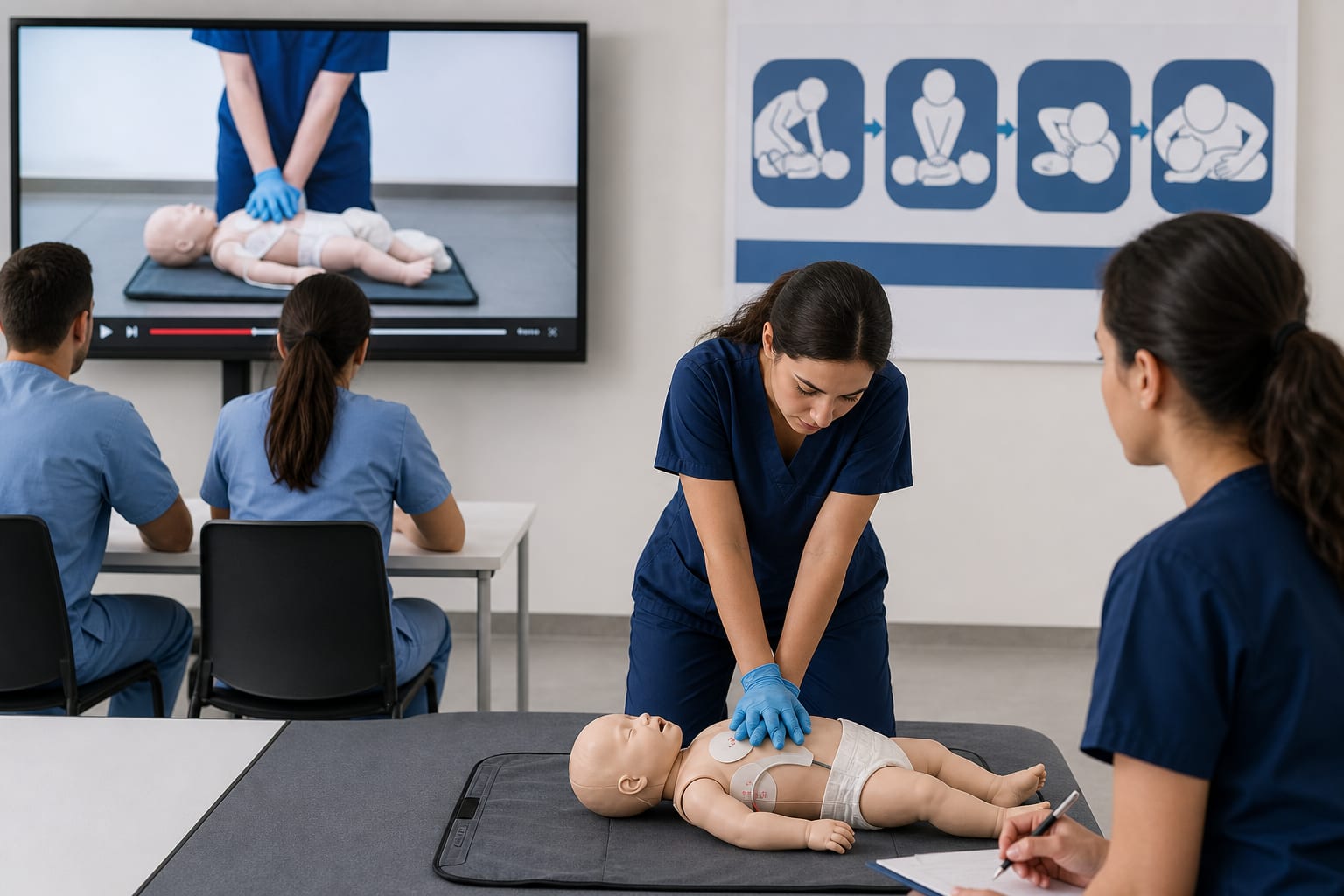
This pilot randomized controlled trial compared video-based instruction and four-step low-fidelity simulation for pediatric Basic Life Support (BLS) training among interns and nurses. Both methods significantly improved knowledge and skills, but no significant differences were found between the two training modalities immediately after training.
Background
Basic Life Support (BLS) is essential for healthcare providers, as inadequate proficiency can lead to poor outcomes in cardiac arrest situations. Traditional instructor-led simulation is resource-intensive, making it challenging to implement in low-resource settings. Video-based instruction offers a standardized and flexible alternative, yet comparative evidence in pediatric BLS training is limited.
Data Highlights
Training Modality
Knowledge Improvement
Skills Improvement
Video-based
Median 86.7%
Median 90.0%
Simulation-based
Median 86.7%
Median 90.0%
Key Findings
Both training modalities significantly improved knowledge immediately after training (p<0.001).
No statistically significant difference in knowledge scores between video-based and simulation-based training (p=0.270).
Practical skills were similarly high post-training with no overall between-group difference (p=0.18).
Exploratory subgroup analyses suggested higher skill scores among nurses trained with simulation compared to video-based instruction.
All participants reported high satisfaction with both training methods.
Clinical Implications
Both video-based instruction and low-fidelity simulation improved pediatric BLS knowledge and skills in this pilot study.
Conclusion
This pilot study indicates that both training modalities are effective for pediatric BLS training.