Cross-software comparison shows strong agreement for quantitative indocyanine green fluorescence angiography in reconstructive surgery - Report - MDSpire

Cross-software comparison shows strong agreement for quantitative indocyanine green fluorescence angiography in reconstructive surgery

  • By

  • Guy Oster

  • Lasse W. P. van ‘t Hof

  • Daniel M. de Bruin

  • Caroline Driessen

  • June 24, 2026

  • 0 min

Share

Clinical Report: Evaluation of Consistency in Quantitative Indocyanine Green Fluorescence Angiography

Overview

This study evaluates the reproducibility of quantitative indocyanine green fluorescence angiography (Q-ICG-FA) parameters across two software platforms. Key findings indicate varying levels of agreement for time-to-peak and normalized mean slope inflow, while other parameters showed poor to moderate agreement.

Background

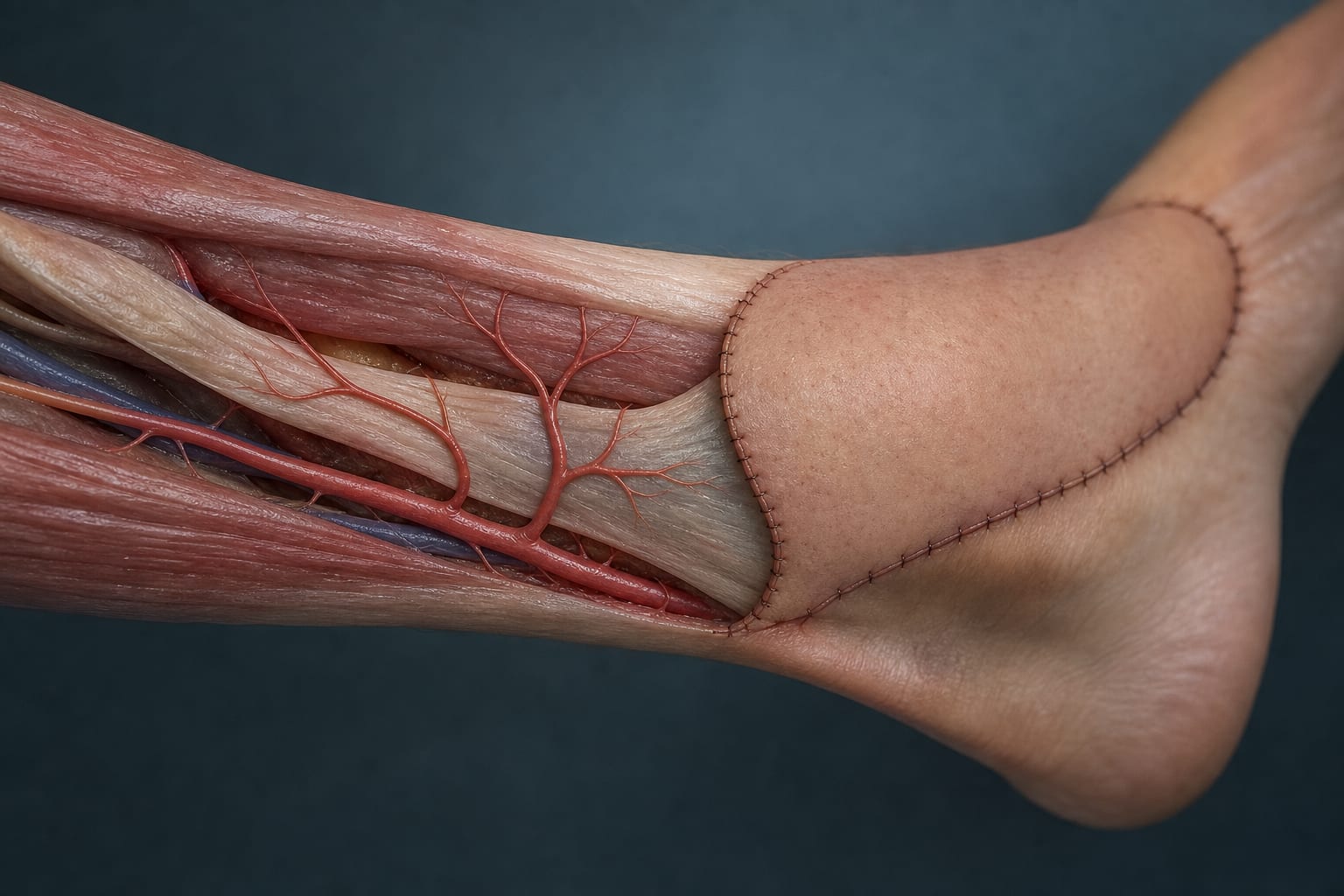
Indocyanine green fluorescence angiography (ICG-FA) is increasingly used for intraoperative perfusion assessment in reconstructive surgery. Traditional qualitative assessments are subjective and can lead to variability in clinical outcomes, as noted in previous studies. Quantitative methods aim to provide objective metrics for perfusion evaluation, but consistency across software platforms remains uncertain.

Data Highlights

ParameterICCAgreement
Time-to-Peak (TTP)0.979Excellent
Normalized Mean Slope Inflow0.944Excellent
T0Good
FmaxGood
Absolute Mean Slope InflowGood
Normalized Maximum Slope Inflow0.412Poor to Moderate
Normalized Maximum Slope Outflow0.315Poor to Moderate

Key Findings

  • Excellent agreement for TTP (ICC = 0.979).
  • Normalized mean slope inflow showed high agreement (ICC = 0.944).
  • Good to excellent agreement for T0, Fmax, and absolute mean slope inflow.
  • Poor to moderate agreement for normalized maximum slopes.
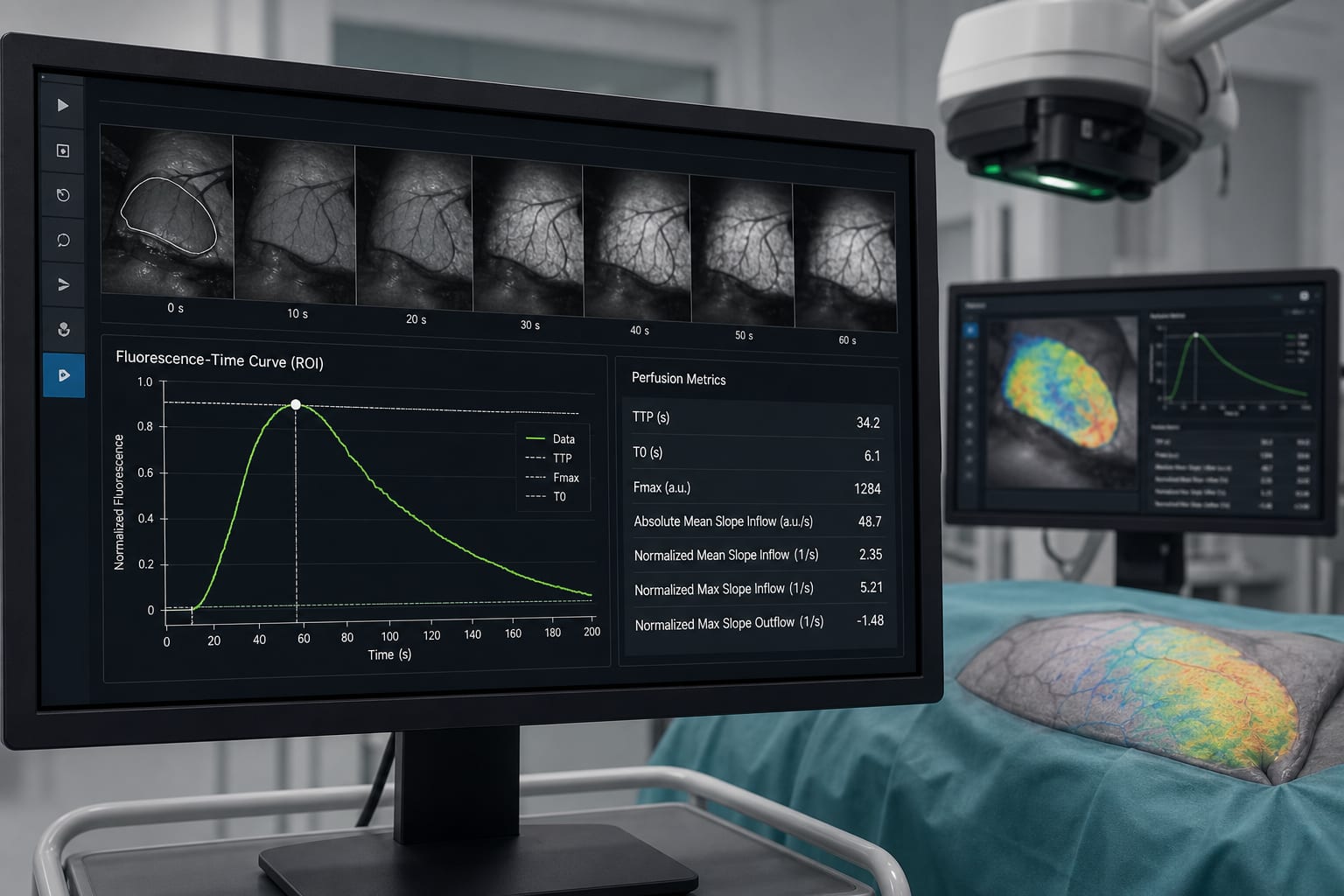
  • AMS showed higher TTP values compared to EPA (p < 0.001).
  • Significant systematic differences were found for six out of seven parameters.

Clinical Implications

Clinicians should be aware of the variability in parameters when using different software platforms.

Conclusion

The study highlights the importance of evaluating Q-ICG-FA parameters across software platforms.

Related Resources & Content

  1. Surgical Endoscopy, 2024 -- Evaluation of Fluorescence Angiography for Assessing Visceral Perfusion: Comparing Two Software Algorithms for Agreement
  2. Surgical Endoscopy, 2023 -- Evaluation of Perfusion Quantification with Indocyanine Green in Surgical Settings: Present Uses and Future Recommendations
  3. Surgical Endoscopy, 2025 -- Assessment of Indocyanine Green Fluorescence Angiography in Colorectal Surgical Procedures: A Comprehensive Literature Review
  4. Surgical Endoscopy — Advancements in Clinical and Computational Approaches for a Patient-Specific ICGFA Bowel Transection Recommendation System
  5. Evidence base for intraoperative ICG fluorescence angiography in reconstructive surgery
  6. Measurement approaches and push toward standardization
  7. Intraoperative Indocyanine Green Angiography Use for Perfusion Assessment in Immediate Breast Reconstruction Is Associated With Reduced Reoperation and Takeback - PubMed
  8. Role of Qualitative and Quantitative Indocyanine Green Angiography to Assess Mastectomy Skin Flaps Perfusion: A Prospective Monocentric Experience - Manuela Mastronardi, Stefano Fracon, Serena Scomersi, Margherita Fezzi, Zaira Pellin, Marina Bortul, 2024
  9. Developing an Indocyanine Green Angiography Protocol for Predicting Flap Necrosis During Breast Reconstruction - PubMed
  10. Impact of standardising indocyanine green fluorescence angiography technique for visual and quantitative interpretation on interuser variability in colorectal surgery - PubMed
  11. Frontiers | Cross-Software Comparison Shows Strong Agreement for Quantitative Indocyanine Green Fluorescence Angiography in Reconstructive Surgery
  12. 2025 Guidelines for Fluorescence Image-guided Surgery Using Indocyanine Green in Gastrointestinal Procedures - A SAGES Publication

Original Source(s)

Related Content