Clinical Report: MicroRNAs Linked to Increased Psychometabolic Risk Profiles in Midlife Women
Overview
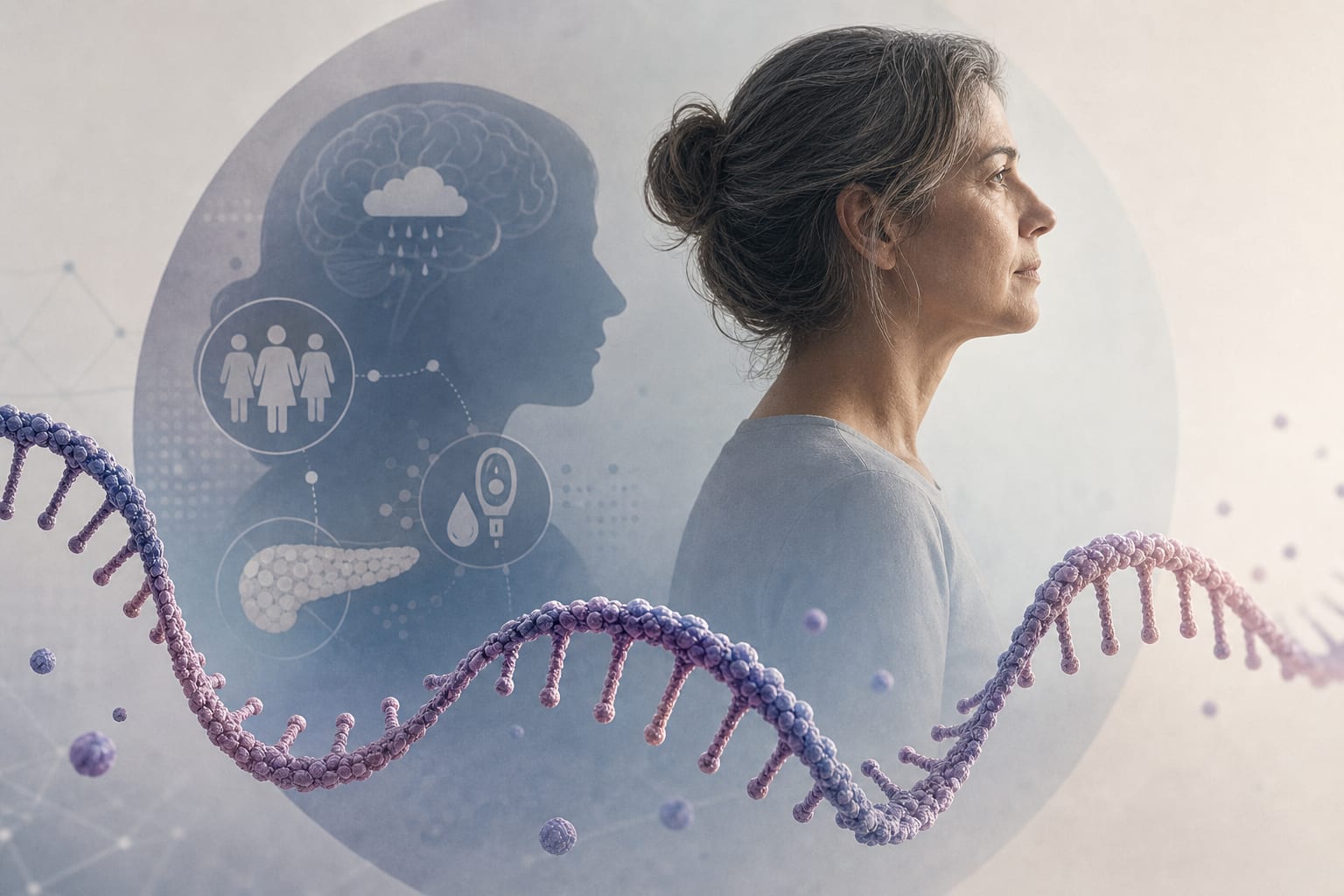
This study identifies distinct multimorbid risk profiles in midlife women, particularly linking depression and type 2 diabetes (T2D). It highlights specific microRNAs associated with high-risk profiles.
Background
Midlife women are disproportionately affected by the co-occurrence of depression and T2D, which are significant contributors to disability. Understanding the phenotypic and mechanistic factors that underlie this multimorbidity is important.
Two distinct multimorbid risk profiles were identified in midlife women.
The high-risk profile was characterized by younger age, higher adiposity, and greater depression symptom burden.
MiR-320a and miR-320c were associated with increased odds of high-risk profile assignment.
A co-expression cluster of miRs from the miR-320 family was significantly linked to high-risk profiles.
Black race demonstrated at least threefold higher odds of high-risk profile assignment.
Clinical Implications
The identification of specific microRNAs associated with high-risk profiles may provide insights into the relationship between depression and T2D in midlife women.
Conclusion
This study identifies multimorbid risk profiles in midlife women and highlights the role of microRNAs in the co-occurrence of depression and T2D.
An artificial intelligence–based optical coherence tomography pathway met noninferiority criteria for false-positive diabetic macular edema referrals and was associated with fewer referral decisions in a randomized clinical trial.