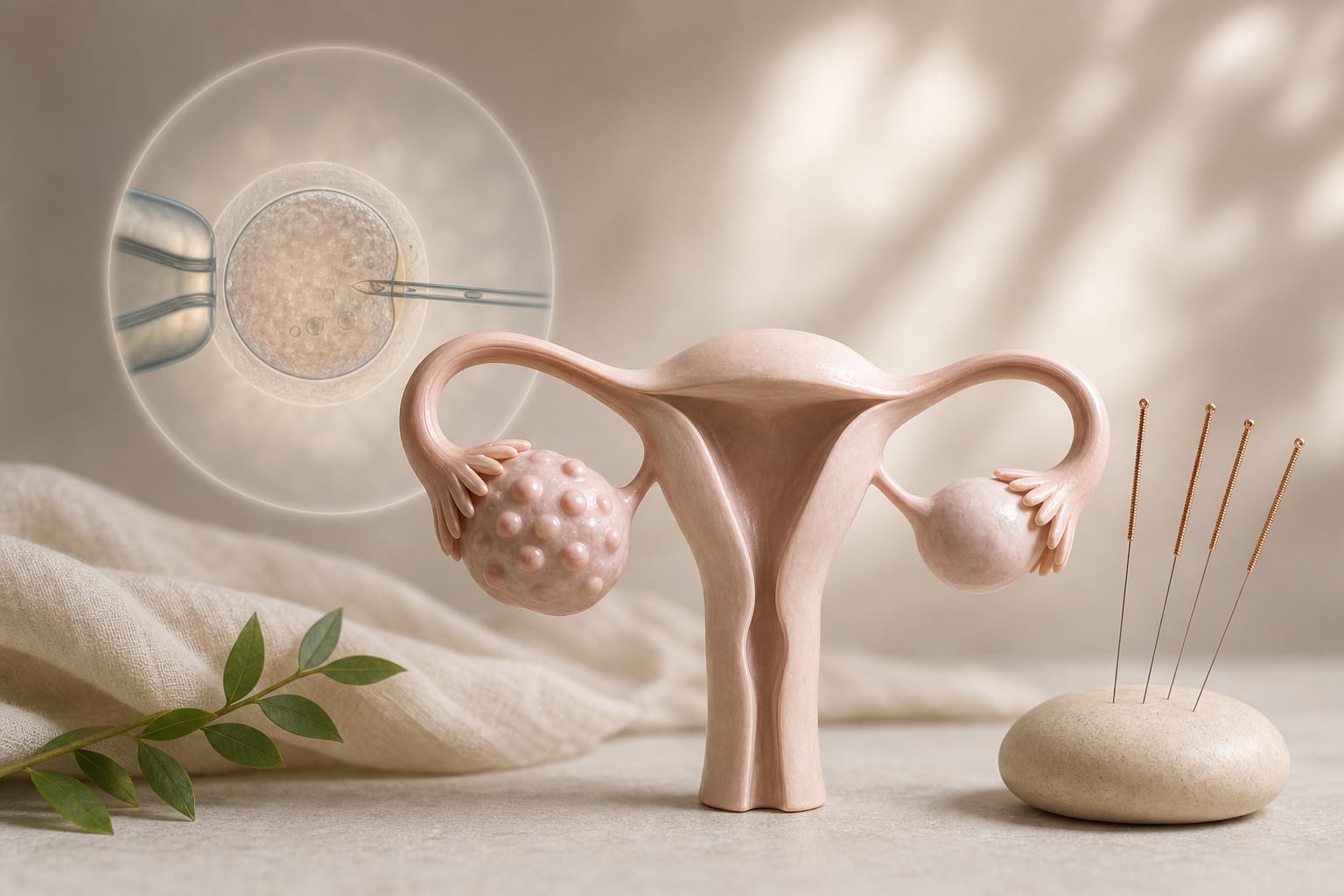
Clinical Report: Effectiveness of Acupuncture in Women with PCOS Receiving IVF/ICSI
Overview
This meta-analysis evaluates the impact of acupuncture on clinical outcomes in infertile women with PCOS undergoing IVF/ICSI. Findings indicate significant improvements in clinical pregnancy rates and live birth rates associated with acupuncture, although the overall quality of evidence is low to moderate.
Background
Infertility is a significant global health issue, with PCOS being a leading cause among women. The rising prevalence of infertility necessitates effective treatment options, particularly in assisted reproductive technologies like IVF and ICSI. Acupuncture has been proposed as a complementary therapy, yet its efficacy remains debated in clinical settings.
Data Highlights
Outcome
Effect
95% CI
p-value
Clinical Pregnancy Rate
+13%
0.09 to 0.17
< 0.00001
Live Birth Rate
+15%
0.09 to 0.21
< 0.00001
Optimal Embryos
+0.42
0.17 to 0.66
0.0009
Total Gn Dose
-633.45
-1034.65 to -232.24
0.002
Duration of Gn Use
-0.74
-1.14 to -0.34
0.0003
Key Findings
Acupuncture was associated with a 13% increase in clinical pregnancy rates.
Live birth rates increased by 15% in the acupuncture group.
Acupuncture resulted in a reduction of total gonadotropin dose by an average of 633.45 units.
Shorter duration of gonadotropin use was observed in the acupuncture group.
Manual acupuncture showed a higher clinical pregnancy rate compared to electroacupuncture.
Subgroup analysis indicated better outcomes with GnRH antagonist protocols when combined with acupuncture.
Clinical Implications
The findings suggest that acupuncture may be a beneficial adjunct therapy for improving reproductive outcomes in women with PCOS undergoing IVF/ICSI. However, clinicians should consider the low to moderate quality of evidence and the need for further rigorous studies before integrating acupuncture into standard treatment protocols.
Conclusion
Acupuncture may enhance IVF/ICSI outcomes in women with PCOS, but the evidence is not robust enough to warrant routine clinical application. Further research is essential to validate these findings.