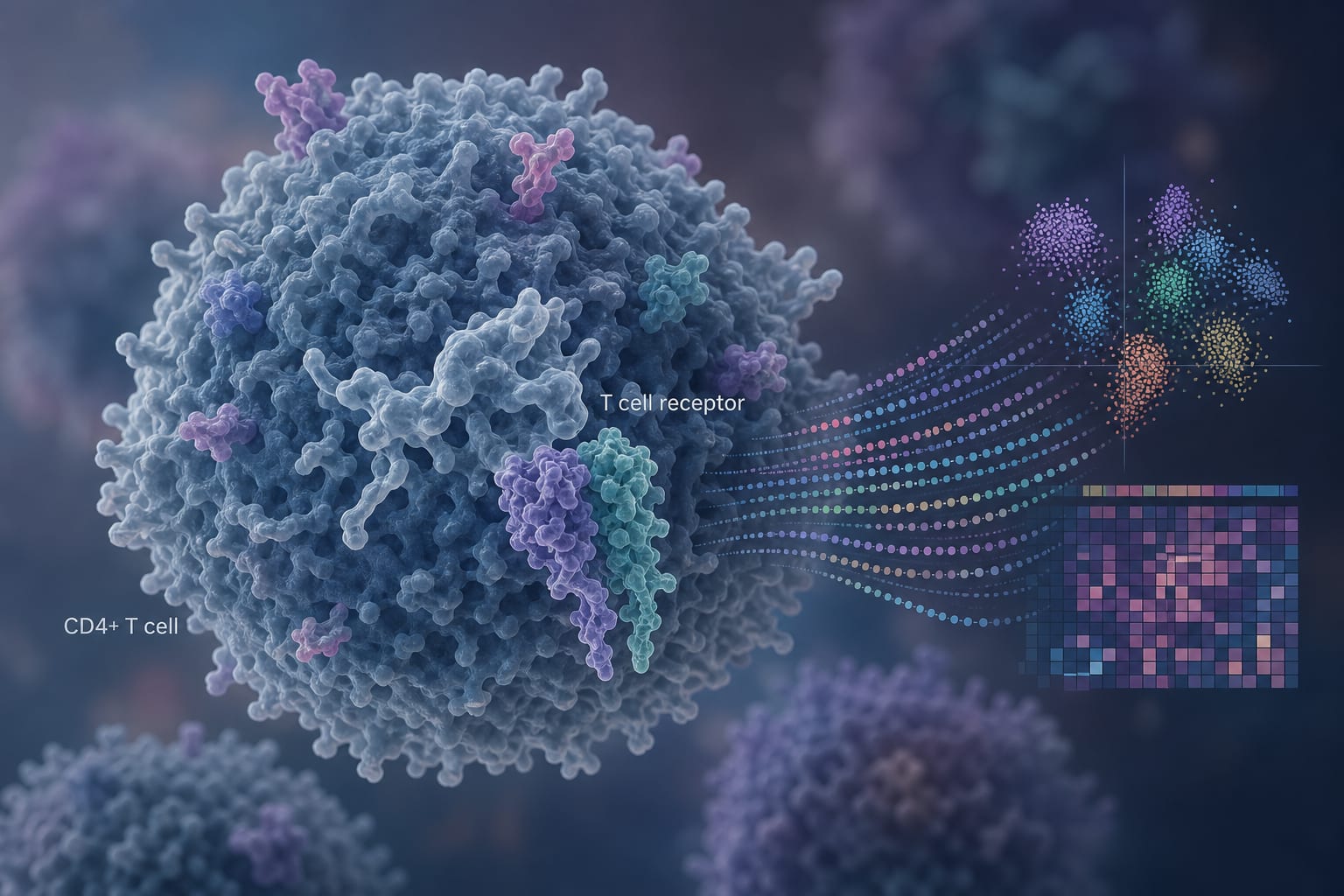
Clinical Report: Exploring T Cell Adaptability in Systemic Lupus Erythematosus
Overview
This study investigates T cell plasticity in systemic lupus erythematosus (SLE) by analyzing T cell receptor (TCR) repertoires and transcriptomic data. Findings indicate distinct TCR and transcriptome profiles in SLE patients compared to healthy controls.
Background
Systemic lupus erythematosus (SLE) is a chronic autoimmune disease characterized by diverse clinical manifestations and the production of autoantibodies. CD4+ T cells play a crucial role in SLE pathogenesis, influencing B cell activity and contributing to inflammatory processes.
Data Highlights
No specific numerical data or trial results were provided in the source material.
Key Findings
CD4+ T cells in SLE exhibit disrupted abundance and altered functionality.
A novel subset of activated Treg-like cells (Fr. III) was identified, which produces more interleukin-17.
TCR sequence patterns can track T cell types and their plasticity in SLE.
Distinct TCR and transcriptome profiles were observed in SLE patients compared to healthy controls.
Plasticity of T cells may contribute to the complexity of SLE pathogenesis.
Clinical Implications
Understanding TCR repertoires may aid in the development of treatments targeting T cell responses.
Conclusion
This study enhances the understanding of T cell adaptability in SLE, providing insights that may guide future research and therapeutic approaches.
Federal prosecutors allege that a Florida physician and research staff fabricated clinical trial records that were submitted into database systems used to evaluate investigational drugs.
The procedure was performed under a HOPE Act research protocol at an NYU Langone Health center the institution said is among the limited number of US transplant centers equipped and approved to perform HOPE lung transplants.