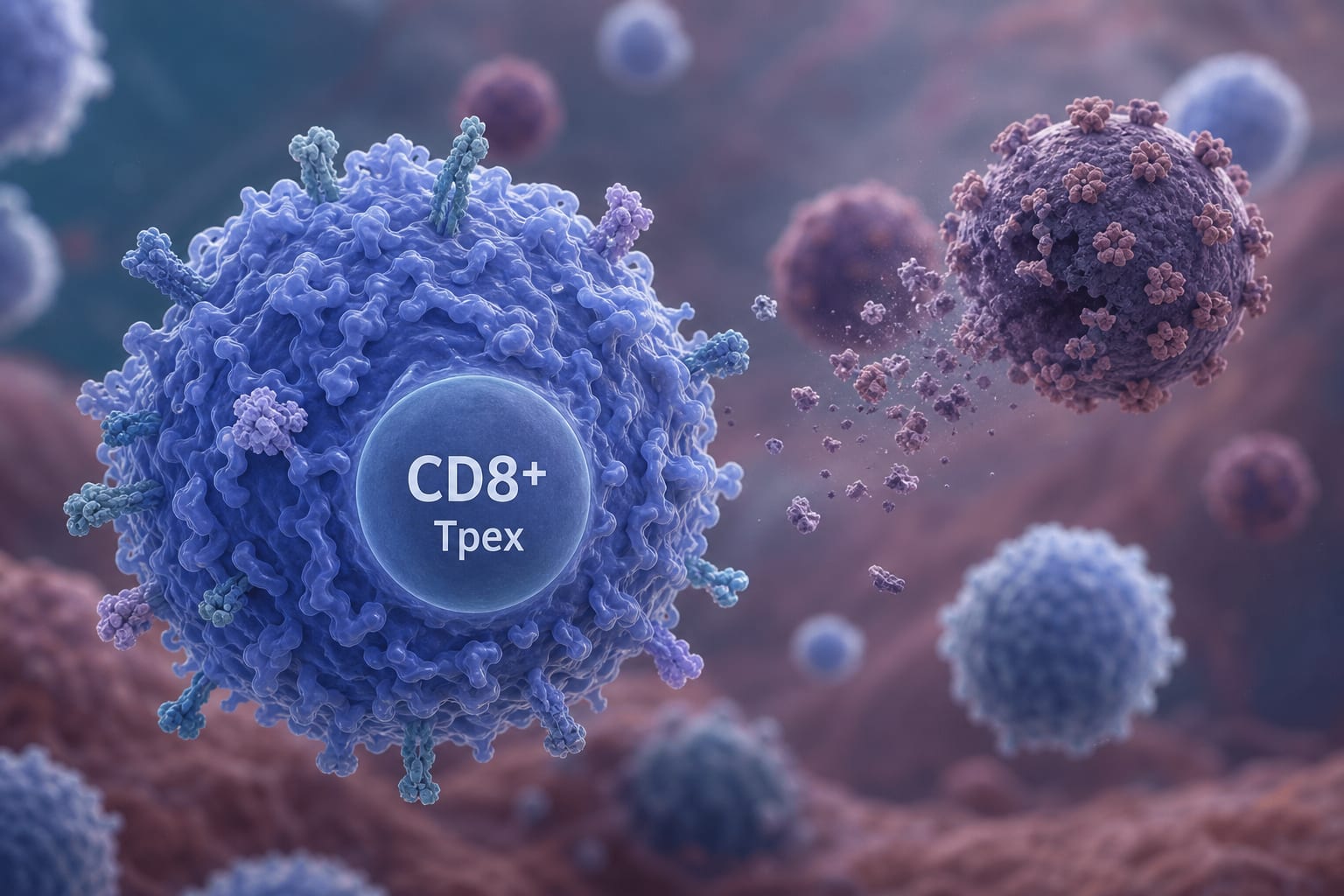
CD8+ T Cells with Stem-like Properties Maintain HBV-specific Immune Responses
Overview
Revise to define 'precursor exhausted CD8+ T cells' and their role in antiviral responses.
Background
Chronic hepatitis B virus (HBV) infection poses significant health challenges, particularly among individuals living with HIV. The immune responses, especially those mediated by CD8+ T cells, are crucial for controlling HBV, yet they are often impaired in co-infected individuals. Understanding these immune dynamics is essential for developing effective immunotherapeutic strategies.
Data Highlights
No numerical data available.
Key Findings
Individuals with HBV/HIV co-infection have a higher prevalence of precursor exhausted CD8+ T cells (Tpex).
HBV/HIV co-infected individuals demonstrate more effective antiviral responses compared to those with HBV mono-infection.
Terminally exhausted CD8+ T cells are paradoxically increased in HBV mono-infection.
Insights into CD8+ T cell dynamics can inform tailored immunotherapy designs.
Recognition of T cell exhaustion must consider the context of infection status for clinical management.
Clinical Implications
These findings suggest that clinicians should consider the unique immune profiles of patients with HBV/HIV co-infection when designing treatment plans. Early intervention strategies may be beneficial, and co-infected individuals could be suitable candidates for checkpoint-based immunotherapies.
Conclusion
The study enhances our understanding of CD8+ T cell dynamics in HBV/HIV co-infection, indicating potential pathways for improving antiviral responses through tailored immunotherapies.
by Anucha Preechanukul, Aljawharah Alrubayyi, Bo Sun, Edward Arbe-Barnes, Jonida Kokici, Frances Gorou, Sarun Prasitdumrong, Kelly A S da Costa, Natasha Fisher-Pearson, Noshin Hussain, Stephanie Kucykowicz, Indrajit Ghosh, Fiona Burns, Sabine Kinloch, Pedro Simoes, Sanjay Bhagani, Patrick T F Kennedy, Mala K Maini, Rachael Bashford-Rogers, Upkar S Gill, Dimitra Peppa