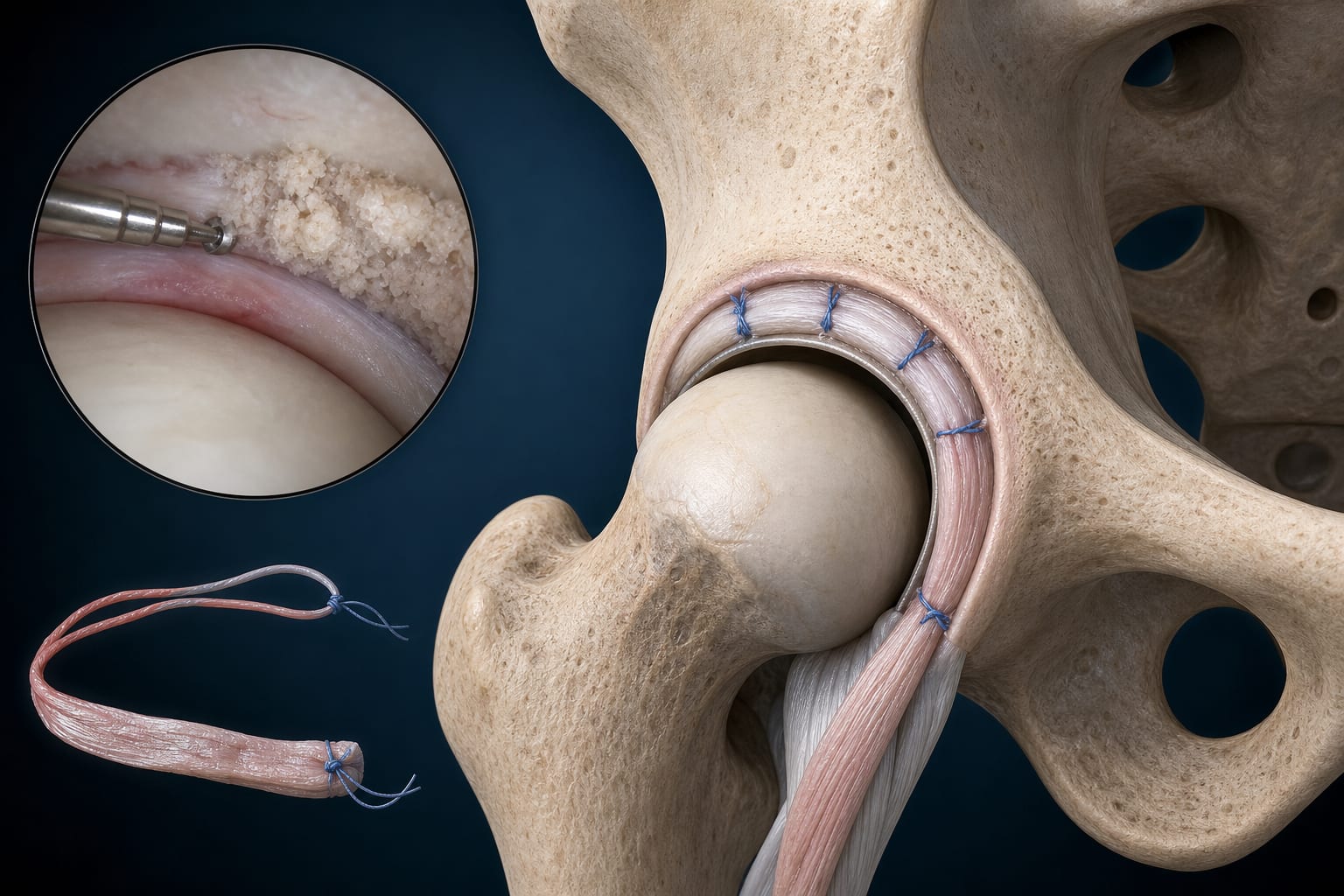
Arthroscopic surgical treatment of complex femoroacetabular impingement with massive labral calcification and gracilis autograft reconstruction: a case report and literature review - Report - MDSpire
Conexiant’s news site is now MDSpire News. Learn more
Advertisement
Arthroscopic Management of Complex Femoroacetabular Impingement with Significant Labral Calcification and Gracilis Autograft Reconstruction: A Case Study and Review of Existing Literature
Clinical Report: Arthroscopic Management of Complex Femoroacetabular Impingement
Overview
This report details a case of femoroacetabular impingement (FAI) with significant acetabular labrum calcification in a 48-year-old female. Following arthroscopic intervention, including labral reconstruction with gracilis tendon, the patient demonstrated significant functional improvement at nine months post-surgery.
Background
Femoroacetabular impingement (FAI) is a common cause of hip pain, particularly in active individuals. The presence of labral calcification complicates the diagnosis and treatment of FAI, as it is relatively rare and can lead to significant functional limitations. Current management strategies for FAI with labral calcification remain unclear, highlighting the need for effective surgical options.
Data Highlights
The patient underwent right hip arthroscopy, which included the removal of a calcified lesion and labral reconstruction. At the nine-month follow-up, significant improvement in hip function was noted, with no complications reported.
Key Findings
The patient had a notably large labral calcification measuring approximately 40 mm × 20 mm × 5 mm.
FAI is prevalent among athletes, with a reported prevalence of 85.6% among Brazilian professional soccer players.
Initial management of FAI typically involves conservative measures, with surgery reserved for severe cases.
Hip arthroscopy offers advantages over traditional open surgery, including reduced tissue trauma and shorter recovery times.
Follow-up assessments indicated significant improvement in the patient's hip function post-surgery.
Clinical Implications
The case illustrates that arthroscopic management, including labral reconstruction, can be a viable treatment option for patients with FAI and significant labral calcification. This approach may enhance patient outcomes and facilitate a return to sports.
Conclusion
This case study supports the use of hip arthroscopy with labral reconstruction as a potential treatment strategy for complex FAI cases, contributing to improved patient function and quality of life.