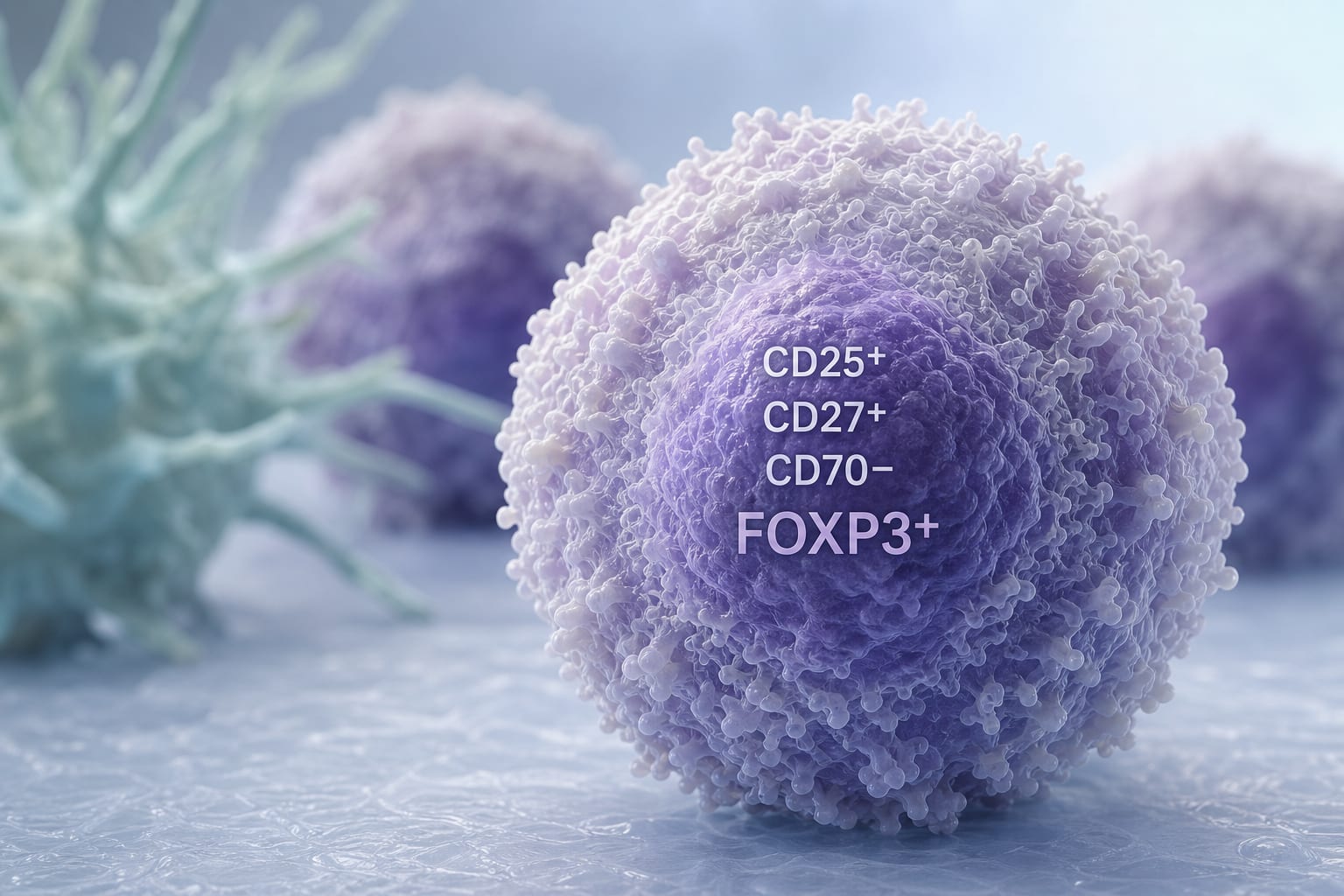
Clinical Report: Isolation and Expansion of CD25+CD27+CD70− Tregs
Overview
This study presents a novel method for isolating and expanding CD25+CD27+CD70− alloantigen-specific regulatory T cells (AS-Tregs), achieving a 434-fold expansion with over 95% purity. The expanded Tregs maintain functional stability and lineage fidelity, suggesting their potential for enhancing transplant tolerance.
Background
Regulatory T cells (Tregs) are essential for achieving immune tolerance in transplantation, as they suppress conventional T cells and modulate antigen-presenting cell activity. The clinical application of alloantigen-specific Tregs (AS-Tregs) has been limited by their low frequency and instability during ex vivo expansion. Developing effective methods for Treg isolation and expansion could significantly improve transplant outcomes and reduce reliance on systemic immunosuppression.
Data Highlights
Parameter
Value
Expansion Factor
434-fold
Purity (CD25+FOXP3+)
>95%
FOXP3-TSDR Demethylation
>60%
Key Findings
CD25+CD27+CD70− AS-Tregs can be isolated and expanded with high purity and functional stability.
The expansion protocol resulted in a 434-fold increase in Treg numbers over three weeks.
CD27+ AS-Tregs exhibited a robust immunoregulatory phenotype with high expression of Helios, CTLA-4, and CD39.
These Tregs suppressed T cell proliferation in an antigen-specific manner, even in inflammatory conditions.
Clinical Implications
The successful isolation and expansion of CD25+CD27+CD70− AS-Tregs may provide a stable and effective therapeutic option for promoting transplant tolerance. This approach could reduce the need for systemic immunosuppression, potentially improving patient outcomes in transplantation.
Conclusion
The findings support the potential of CD27+ AS-Tregs as a promising candidate for long-term Treg therapy in transplantation, offering a stable solution for enhancing allograft tolerance.
by Arimelek Cortés-Hernández, Saúl Arteaga-Cruz, Iyari I. Martínez Iturbe, Katya Rosas-Cortina, Marco A. Vigil Mora, Erick Legorreta-Anguiano, Judith E. Reyes Barrientos, Evelyn K. Álvarez-Salazar, Alejandra Cervera, Beatriz E. Sánchez-Hernández, Armando Gamboa Domínguez, Gloria Soldevila