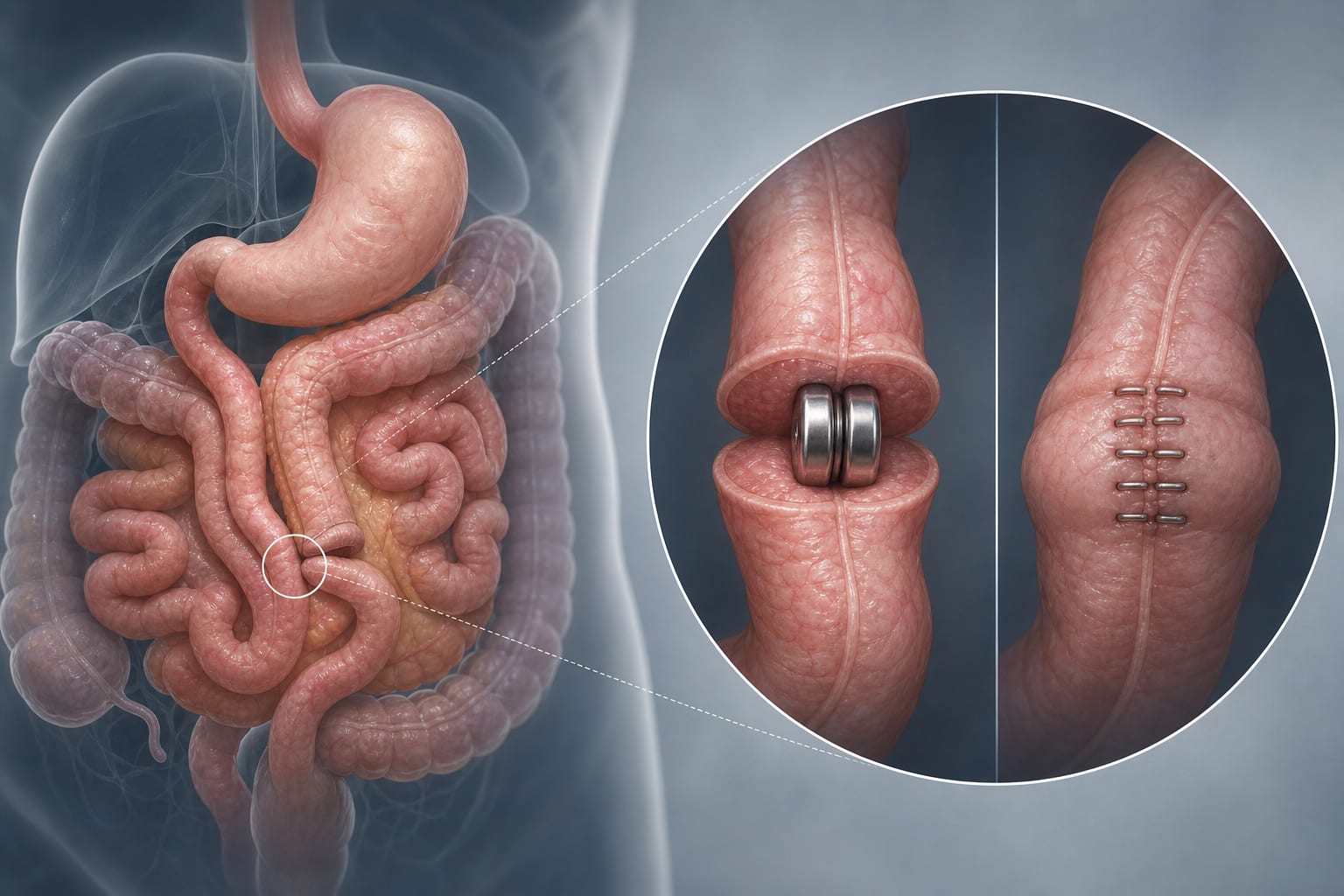
Clinical Report: Comparative Outcomes of Magnetic and Stapled Techniques in Jejuno-Ileal Bipartition After One Year
Overview
This study compares the efficacy of magnetic versus stapled jejuno-ileal bipartition techniques in patients with mild obesity and type 2 diabetes over a one-year period. The findings suggest that the magnetic technique may achieve non-inferior weight and metabolic outcomes compared to the established stapled method.
Background
Metabolic/bariatric surgery (MBS) is recognized as the most effective long-term treatment for obesity and type 2 diabetes (T2D), yet its utilization remains low globally. The introduction of minimally invasive surgical techniques, such as magnetic compression anastomosis, offers potential advantages in safety and recovery. Understanding the comparative outcomes of these techniques is crucial for optimizing treatment strategies for patients with obesity and T2D.
Data Highlights
No numerical data available in the provided material.
Key Findings
The study is a non-randomized, comparative, non-inferiority trial assessing magnetic versus stapled jejuno-ileal bipartition.
Magnetic compression anastomosis aims to create a physiologically equivalent anastomosis without enterotomy or foreign material.
Outcomes were measured at multiple time points, including 30, 60, 90, 180, and 360 days.
Magnetic jejuno-ileal bipartition is hypothesized to achieve weight and metabolic outcomes comparable to stapled techniques.
Previous studies have shown the safety and efficacy of stapled jejuno-ileostomy in improving T2D.
Clinical Implications
The findings from this study may influence the choice of surgical technique for patients with mild obesity and T2D, potentially leading to broader adoption of magnetic anastomosis. Clinicians should consider the safety profiles and outcomes of both techniques when discussing surgical options with patients.
Conclusion
This investigation provides preliminary insights into the efficacy of magnetic versus stapled jejuno-ileal bipartition techniques. Further research is needed to confirm these findings and establish long-term outcomes.