Clinical Report: Remarkable Efficacy of Everolimus in Treating Recurrent Endometrioid Adenocarcinoma Lacking NF1
Overview
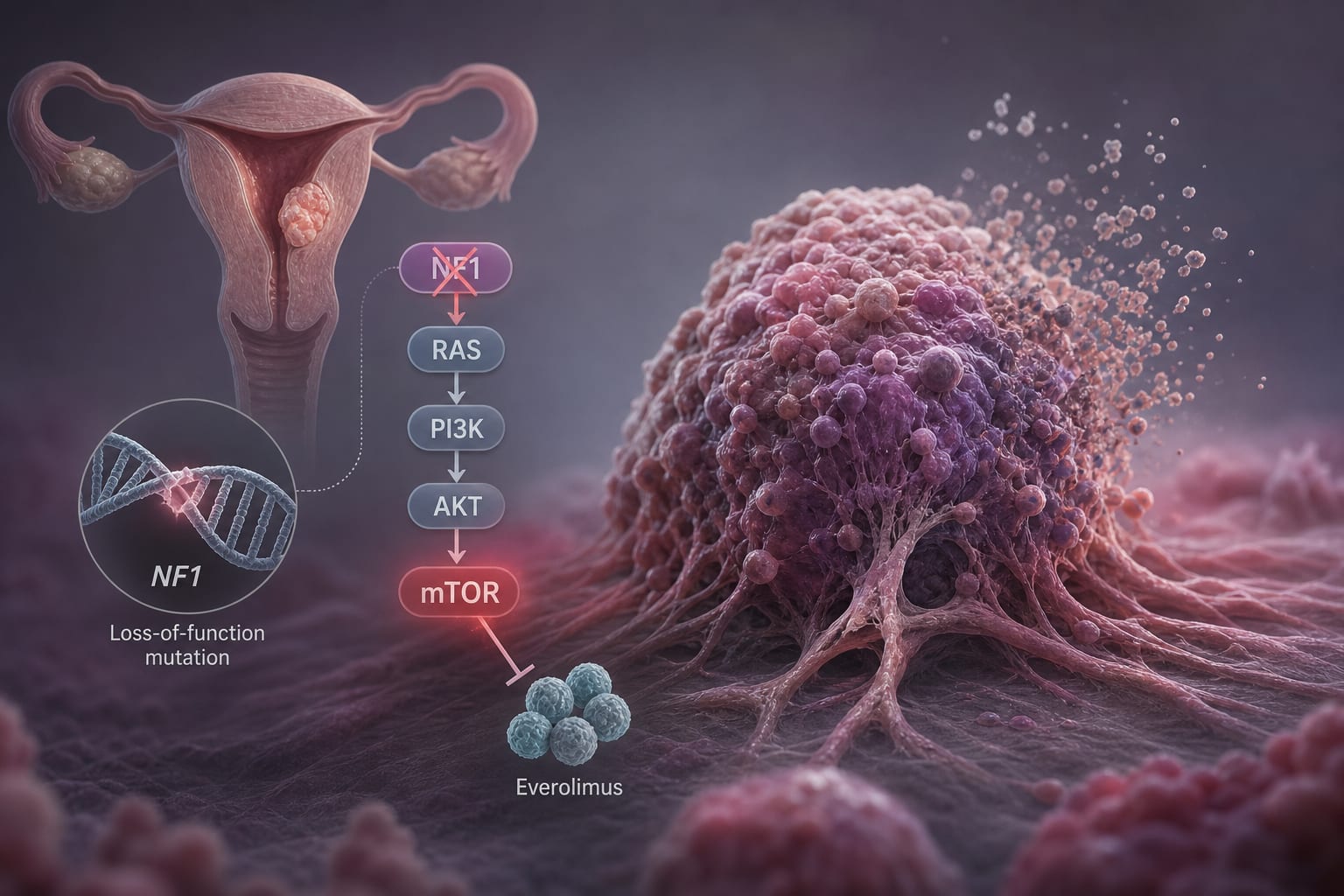
This case study reports the use of everolimus in a 64-year-old woman with recurrent endometrioid adenocarcinoma lacking NF1 mutations. Treatment was discontinued due to significant metabolic toxicity.
Background
Endometrial cancer is a prevalent malignancy in women, particularly in perimenopausal and postmenopausal populations. The disease's complexity is underscored by its multifactorial pathogenesis, including genetic mutations such as NF1.
Data Highlights
No numerical data or trial data provided in the source material.
Key Findings
A 64-year-old woman with grade I endometrioid adenocarcinoma experienced disease recurrence over three years post-surgery.
Molecular analysis revealed a loss-of-function mutation in the NF1 gene.
Everolimus treatment led to complete remission, although treatment was discontinued due to significant metabolic toxicity.
This case highlights the importance of molecular diagnostics in personalizing treatment strategies for endometrial cancer.
Clinical Implications
This case illustrates the application of everolimus in a specific clinical setting of endometrioid adenocarcinoma.
Conclusion
This case illustrates the use of everolimus in treating NF1-deficient recurrent endometrioid adenocarcinoma.