AI-Enhanced Fracture Identification in Pediatric Emergency Care
Overview
This study evaluated the AI software RBFracture for pediatric fracture detection in a real-life emergency setting and its impact on inexperienced physicians. RBFracture demonstrated reliable stand-alone performance and improved diagnostic accuracy and confidence among pediatric surgical residents.
Background
Musculoskeletal injuries are the leading cause of pediatric emergency admissions, often requiring radiographs to diagnose fractures. Pediatric fractures present unique diagnostic challenges due to growth plates and bone nuclei that mimic fractures, increasing the risk of missed diagnoses with serious clinical and medicolegal consequences. AI-supported software aims to assist frontline physicians by providing a second opinion to enhance fracture detection accuracy. However, most AI tools are trained on adult data, limiting their applicability in children, and independent validations in pediatric populations remain scarce.
Data Highlights
The study included 1673 radiographic studies from children aged 2 to <18 years in a tertiary pediatric surgical emergency department. Radiographs were analyzed by RBFracture AI software and independently reviewed by inexperienced pediatric surgical residents and a radiology resident. The reference standard combined expert pediatric radiologist readings, follow-up imaging, clinical follow-up, and intraoperative findings. The AI software highlighted potential fractures with rectangular outlines and question marks for low-confidence detections. Diagnostic confidence was rated on a 4-point scale before and after AI assistance.
Key Findings
RBFracture demonstrated reliable stand-alone fracture detection performance in a large pediatric real-life cohort.
AI assistance improved the diagnostic accuracy of inexperienced pediatric surgical residents when interpreting radiographs.
Diagnostic confidence of residents increased significantly after reviewing AI assessments.
The AI software effectively identified medicolegally relevant pediatric-specific fractures, which are often challenging to diagnose.
Questionable AI findings were conservatively treated as fractures, enhancing sensitivity.
Use of AI did not permit modification of initial findings but served as a confirmatory tool, simulating real-world clinical workflow.
Clinical Implications
Incorporating AI tools like RBFracture in pediatric emergency radiograph interpretation can enhance fracture detection accuracy and increase clinician confidence, particularly among less experienced physicians. This may reduce missed fractures, improve patient safety, and potentially decrease medicolegal risks. AI assistance should be considered as an adjunct to, not a replacement for, expert radiological evaluation.
Conclusion
RBFracture AI software shows promise as a valuable adjunct in pediatric fracture detection, improving diagnostic performance and confidence among inexperienced clinicians in real-world emergency settings. Further independent validations and integration into clinical workflows are warranted.
References
Musculoskeletal injuries as common pediatric emergency admissions [1]
Challenges in pediatric fracture diagnosis and AI software development [2,3,4,5]
RBFracture AI software and Detectron2 architecture [6]
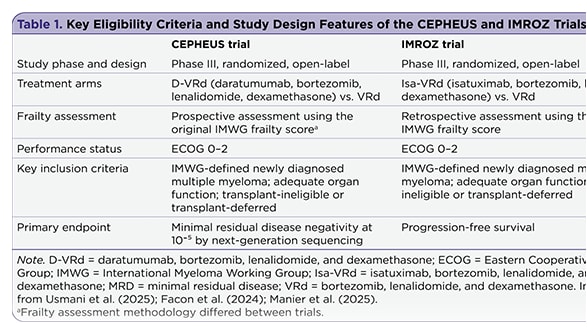
The management of newly diagnosed transplant-ineligible multiple myeloma remains challenging, in part due to the complexity of treatment decisions for frail patients. Recent subgroup analyses provide insight into whether quadruplet therapy may offer advantages over triplet therapy in this population.