Assessment of Potential Drug–Drug Interactions and Associated Factors Among Pulmonary Inpatients in a Tertiary Care Hospital: A Cross-Sectional Study - Report - MDSpire
Clinical Report: Evaluation of Possible Drug–Drug Interactions in Pulmonary Inpatients
Overview
This study found that 37.4% of pulmonary inpatients were exposed to at least one potential drug-drug interaction (pDDI).
Background
Pulmonary diseases are a major global health concern, with conditions like COPD contributing significantly to morbidity and mortality. Hospitalized patients often require complex medication regimens, increasing the risk of drug-drug interactions.
Data Highlights
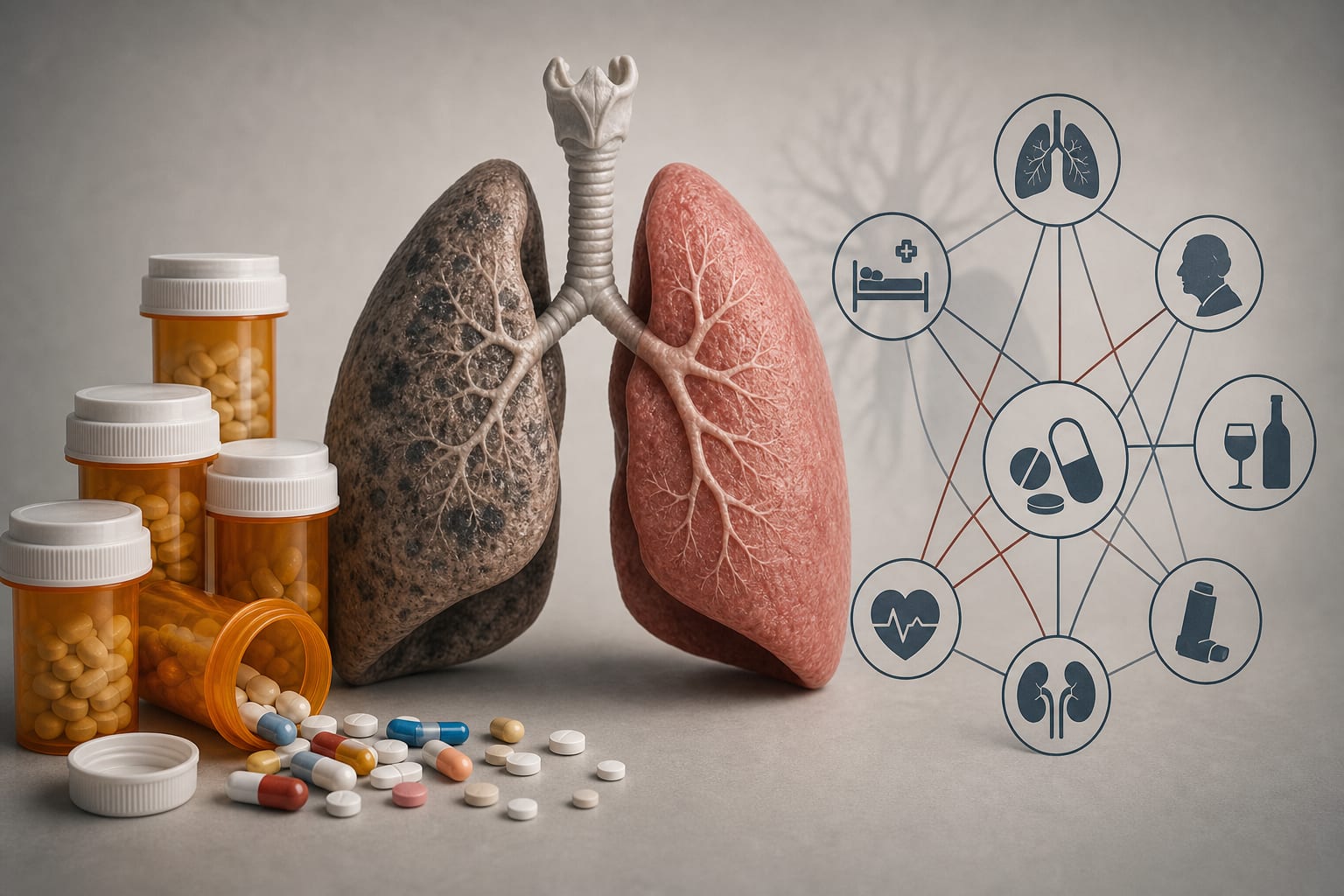
In this study, 37.4% of pulmonary inpatients experienced at least one pDDI. Key predictors included:
Polypharmacy
Prolonged hospital stay
Co-morbidities
Alcohol use
Advanced age
Key Findings
37.4% of pulmonary inpatients were exposed to at least one pDDI.
Polypharmacy was identified as a significant predictor of pDDIs.
Prolonged hospital stay correlated with increased pDDI risk.
Co-morbidities, alcohol use, and advanced age were also significant predictors.
Lexicomp identified more pDDIs than Micromedex, although both databases showed moderate agreement.
Clinical Implications
Healthcare professionals should monitor for potential drug-drug interactions among pulmonary inpatients.
Conclusion
The findings highlight the prevalence of pDDIs among pulmonary inpatients.
A cross-sectional metagenomic study found greater oral microbiome richness among adults with chronic rhinosinusitis, particularly nonallergic chronic rhinosinusitis, while associations with asthma, airway inflammation, and most lung-function measures were inconsistent.