Enhanced Sodium MRI of Human Gliomas at 3T Using Physics-Informed Generative AI
Overview
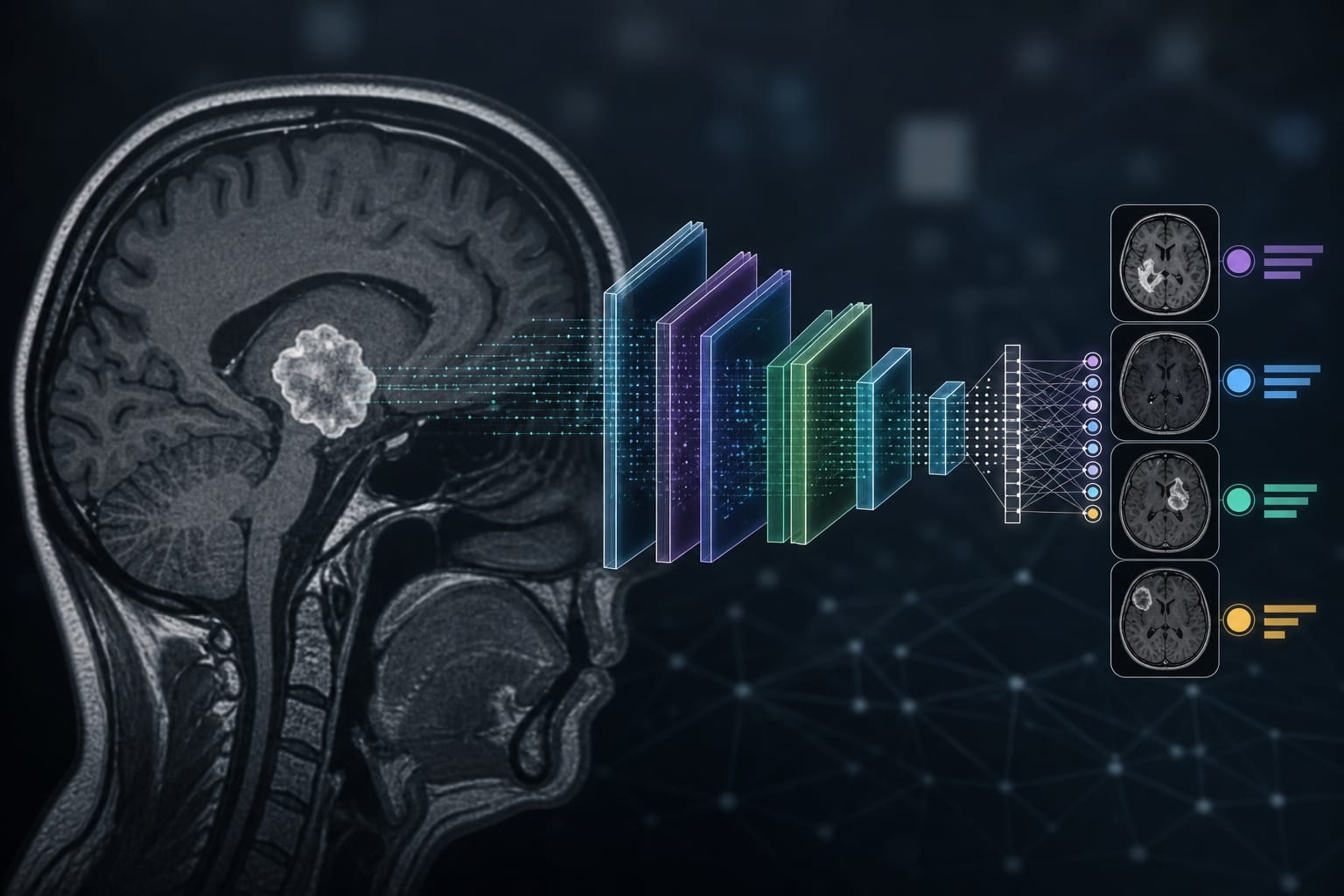
This study demonstrates that the ATHENA physics-informed GAN model significantly enhances sodium MRI quality at 3T, producing high-resolution synthetic sodium images with improved signal-to-noise ratio. The synthetic images correlate strongly with native sodium MRI and immunohistochemical markers of glioma biology, supporting their clinical relevance.
Background
Sodium (²³Na) MRI offers unique insights into brain tumor physiology by reflecting cellular microenvironment and metabolic alterations not captured by conventional proton MRI. Gliomas, especially aggressive types, show altered sodium concentrations due to disrupted ion transport and increased metabolic activity, making sodium MRI a valuable tool for tumor characterization. However, sodium MRI at 3T suffers from low sensitivity, fast T2 decay, and limited spatial resolution, hindering clinical adoption. Prior improvements focused on hardware enhancements or ultrahigh field imaging, which are costly and less accessible. Advanced computational methods like GANs have potential to overcome these limitations by enhancing image quality through learned anatomical priors and artifact correction.
Data Highlights
Parameter
Value
Validation Cohort Size
20 patients
Training Dataset
4,573 artifact-free proton MRI scans from 1,390 brain tumor patients
The ATHENA GAN model, trained solely on proton MRI data with synthetic artifacts, successfully generalized to enhance sodium MRI images without direct sodium data training.
Synthetic sodium images exhibited improved spatial resolution and signal-to-noise ratio compared to native low-resolution sodium MRI at 3T.
Strong correlations were observed between synthetic sodium images and native sodium MRI, validating the biological fidelity of the reconstructions.
Comparisons with immunohistochemical expression of the sodium-proton exchanger NHE1 in glioma tissue confirmed the clinical relevance of the enhanced sodium imaging.
The approach circumvents the need for specialized hardware or ultrahigh field scanners, potentially increasing accessibility of sodium MRI in clinical settings.
Clinical Implications
The use of physics-informed GANs like ATHENA can substantially improve the quality of sodium MRI at clinically available 3T scanners, enabling better visualization and quantification of tumor sodium concentration. This advancement may facilitate non-invasive assessment of glioma aggressiveness and treatment response without requiring costly hardware upgrades. Incorporating such AI-driven image enhancement could accelerate the clinical adoption of sodium MRI as a complementary imaging biomarker in neuro-oncology.
Conclusion
Physics-informed generative AI techniques effectively enhance sodium MRI quality at 3T, producing high-resolution images that preserve critical biological information in gliomas. This approach holds promise for expanding the clinical utility of sodium neuroimaging in brain tumor evaluation.
References
Nagel et al. 7T Sodium MRI -- Improved Imaging but Limited Availability
ATHENA Model Development and Validation, Reference 29
Sodium MRI in Brain Tumors, References 1-12
Deep Learning and GANs in MRI Enhancement, References 20-28
by Catalina Raymond, Jingwen Yao, Alfredo L. Lopez Kolkovsky, Thorsten Feiweier, Bryan Clifford, Heiko Meyer, Xiaodong Zhong, Fei Han, Nicholas S. Cho, Francesco Sanvito, Sonoko Oshima, Noriko Salamon, Linda M. Liau, Kunal S. Patel, Richard G. Everson, Timothy F. Cloughesy, Benjamin M. Ellingson