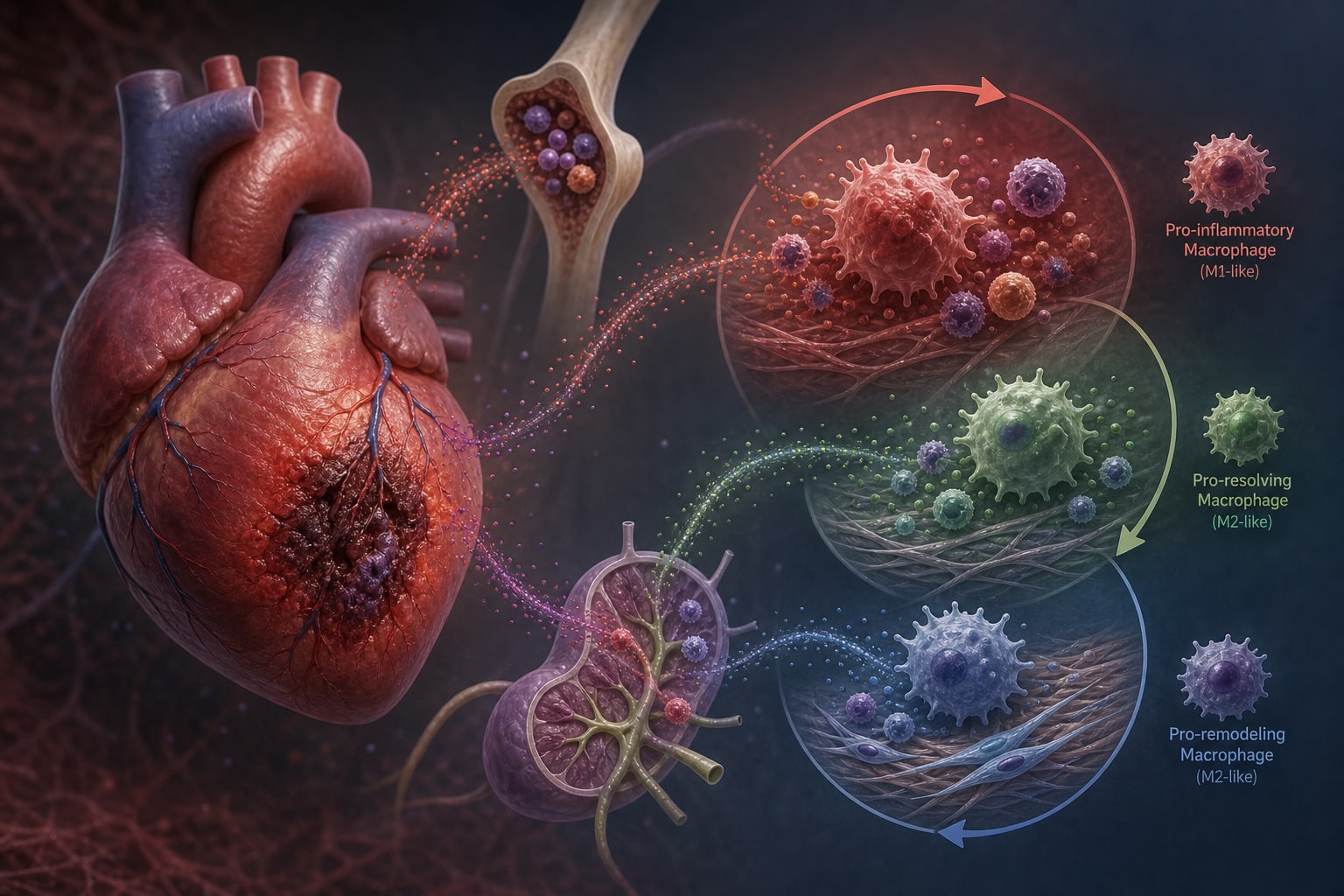
Clinical Report: Modulating the Heart-Immune Interaction Following Myocardial Infarction
Overview
This review discusses the systemic immune response triggered by myocardial infarction (MI) and proposes a framework for understanding the heart-immune axis. It highlights the potential of immunomodulatory strategies to enhance cardiac function and improve patient outcomes post-MI.
Background
Myocardial infarction is a leading cause of mortality globally, primarily affecting older adults and those with risk factors such as diabetes and smoking. The inflammatory response following MI is complex, involving interactions between the heart and various immune organs. Understanding these mechanisms is crucial for developing targeted therapies that can improve recovery and long-term outcomes.
Data Highlights
No specific numerical data or trial data presented in the article. Consider summarizing key studies or findings related to the heart-immune interaction.
Key Findings
Post-MI immune response can be divided into three phases: inflammation, resolution, and remodeling.
Bidirectional crosstalk occurs between the injured heart and immune organs via cytokine networks.
Immunomodulatory strategies focus on macrophage polarization and reducing excessive inflammation.
Conventional anti-inflammatory approaches may suppress beneficial immune responses, while targeted strategies aim to preserve cardiac repair.
Emerging therapies include targeting the CCR2/CCL2 axis and promoting regulatory T cells.
Clinical Implications
Clinicians should consider the role of the immune response in myocardial infarction recovery and explore immunomodulatory strategies as adjunct therapies. Understanding the phases of the heart-immune axis can guide treatment decisions to optimize patient outcomes.
Conclusion
The review provides a comprehensive overview of the heart-immune interaction post-MI, emphasizing the need for targeted immunomodulatory therapies to enhance cardiac repair and patient recovery.