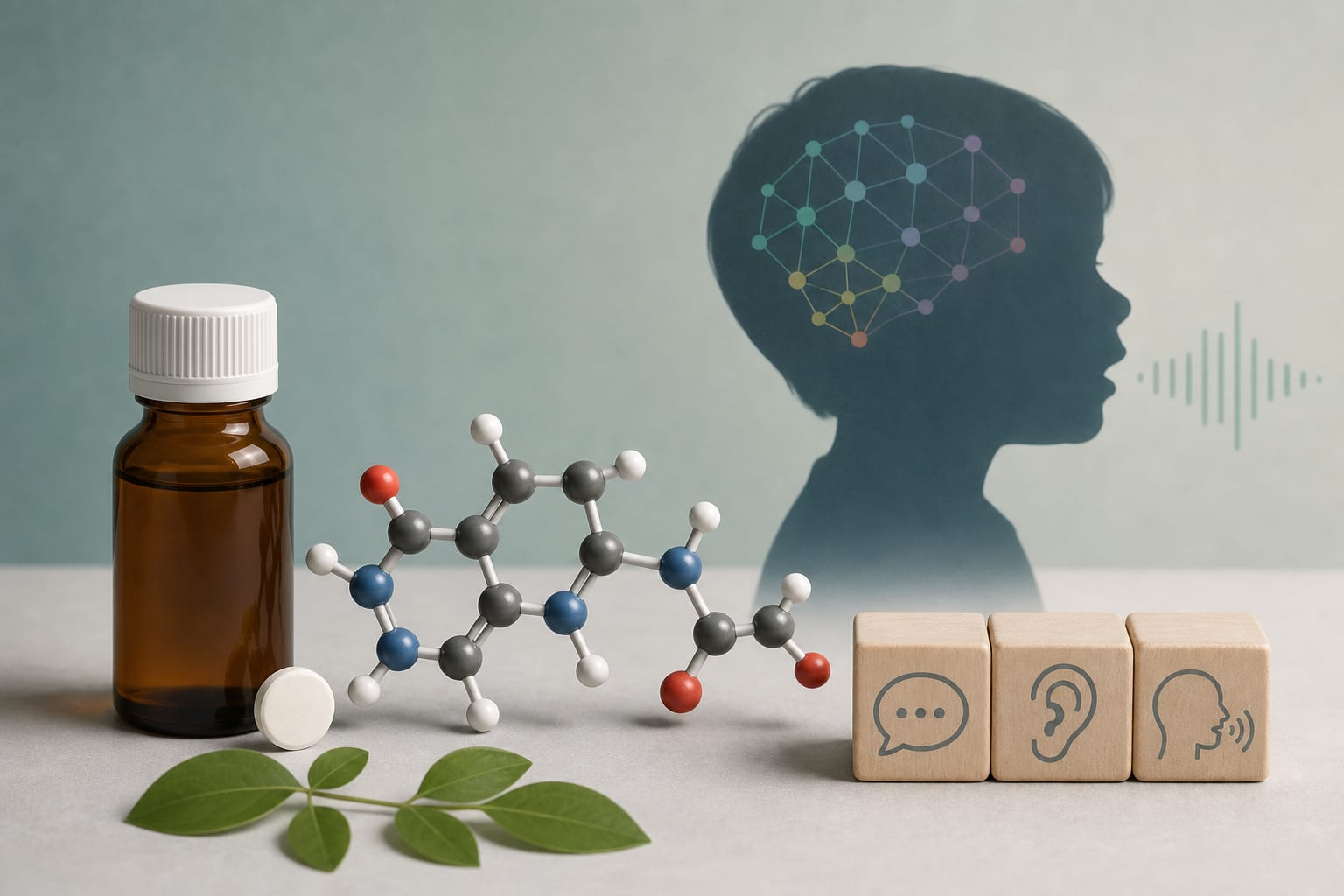
Prescription Trends of Leucovorin for Pediatric Patients Diagnosed with Autism Spectrum Disorder
-
By
-
Joshua M. Rothman
-
Brian Kwan
-
Christopher A. Longhurst
-
Anupam B. Jena
-
May 18, 2026
Clinical Report: Prescription Trends of Leucovorin for Pediatric Patients Diagnosed with Autism Spectrum Disorder
Overview
Revise to specify the timeline of the announcement and its correlation with prescription trends.
Background
Leucovorin, a form of folic acid, has been suggested as a potential treatment for speech-related deficits in children with ASD, although large-scale studies confirming its efficacy are lacking. The recent surge in interest and prescriptions following public endorsements raises concerns about the appropriateness of its use in this population. Understanding prescribing trends is crucial for ensuring safe and effective treatment practices.
Data Highlights
| Time Period | Prescriptions per 100,000 Encounters |
|---|---|
| Jan 2023 - Jan 2025 | 34.1 |
| Aug 2025 | 335.2 |
| Nov 2025 | 835.4 |
Key Findings
- Leucovorin prescription rates remained stable for two years before increasing sharply in early 2025.
- After the September 2025 announcement, prescriptions rose over 24-fold compared to the previous two years.
- Data included 838,801 patients with ASD contributing over 11 million outpatient encounters.
- Prescription rates plateaued but remained elevated in late 2025 and early 2026.
- Media coverage and public endorsements may have influenced prescribing behaviors significantly.
Clinical Implications
Highlight the importance of following clinical guidelines and the risks associated with off-label use.
Conclusion
Reinforce the need for further research and the impact of external factors on prescribing practices.
Related Resources & Content
- Associated Press Health, AP News, 2025 -- Unexpected Reaction from Physician Following Trump's Announcement on Leucovorin for Autism Treatment
- conexiant, 2025 -- FDA Approves Therapy for Cerebral Folate Deficiency
- Drugs - Real World Outcomes, Springer, 2016 -- Medication Utilization and Polypharmacy in Adults with Autism Covered by Medicaid: A Retrospective Cross-Sectional Study
- Interim Guidance from the American Academy of Pediatrics, AAP, 2025 -- Use of Leucovorin in Autistic Pediatric Patients
- Federal Register, 2025 -- Approval of Previously Withdrawn New Drug Application for WELLCOVORIN (Leucovorin Calcium) Tablets
- Child Neurology Society, 2026 -- Statement on Leucovorin Use in Autism Spectrum Disorders
- Frye et al., Molecular Psychiatry, 2016 -- Folinic acid improves verbal communication in children with autism and language impairment: a randomized double-blind placebo-controlled trial
- BMC Psychiatry (Springer) — Investigation of Plasma and Urinary Neurotransmitter Levels in Chinese Pediatric Patients with Autism Spectrum Disorder
- FDA finds little evidence that the generic drug leucovorin can help people with autism
- Interim Guidance from the American Academy of Pediatrics: Use of Leucovorin in Autistic Pediatric Patients
- Federal Register :: Approval of Previously Withdrawn New Drug Application for WELLCOVORIN (Leucovorin Calcium) Tablets
- Child Neurology Society Statement on Leucovorin Use in
- Folinic acid improves verbal communication in children with autism and language impairment: a randomized double-blind placebo-controlled trial | Molecular Psychiatry
- Folinic acid improves the score of Autism in the EFFET placebo-controlled randomized trial - PubMed
- Safety and Efficacy of High-Dose Folinic Acid in Children with Autism: The Impact of Folate Metabolism Gene Polymorphisms
- Cerebral Folate Deficiency, Folate Receptor Alpha Autoantibodies and Leucovorin (Folinic Acid) Treatment in Autism Spectrum Disorders: A Systematic Review and Meta-Analysis
Based on findings from:
Rates of Leucovorin Prescriptions for Children With Autism
Joshua M. Rothman, Brian Kwan, Christopher A. Longhurst, Anupam B. Jena. Jama Network Open, 2026.
https://jamanetwork.com/journals/jamanetworkopen/fullarticle/2849124
This content is an AI-generated, fully rewritten summary based on a published scholarly article. It does not reproduce the original text and is not a substitute for the original publication. Readers are encouraged to consult the source for full context, data, and methodology.