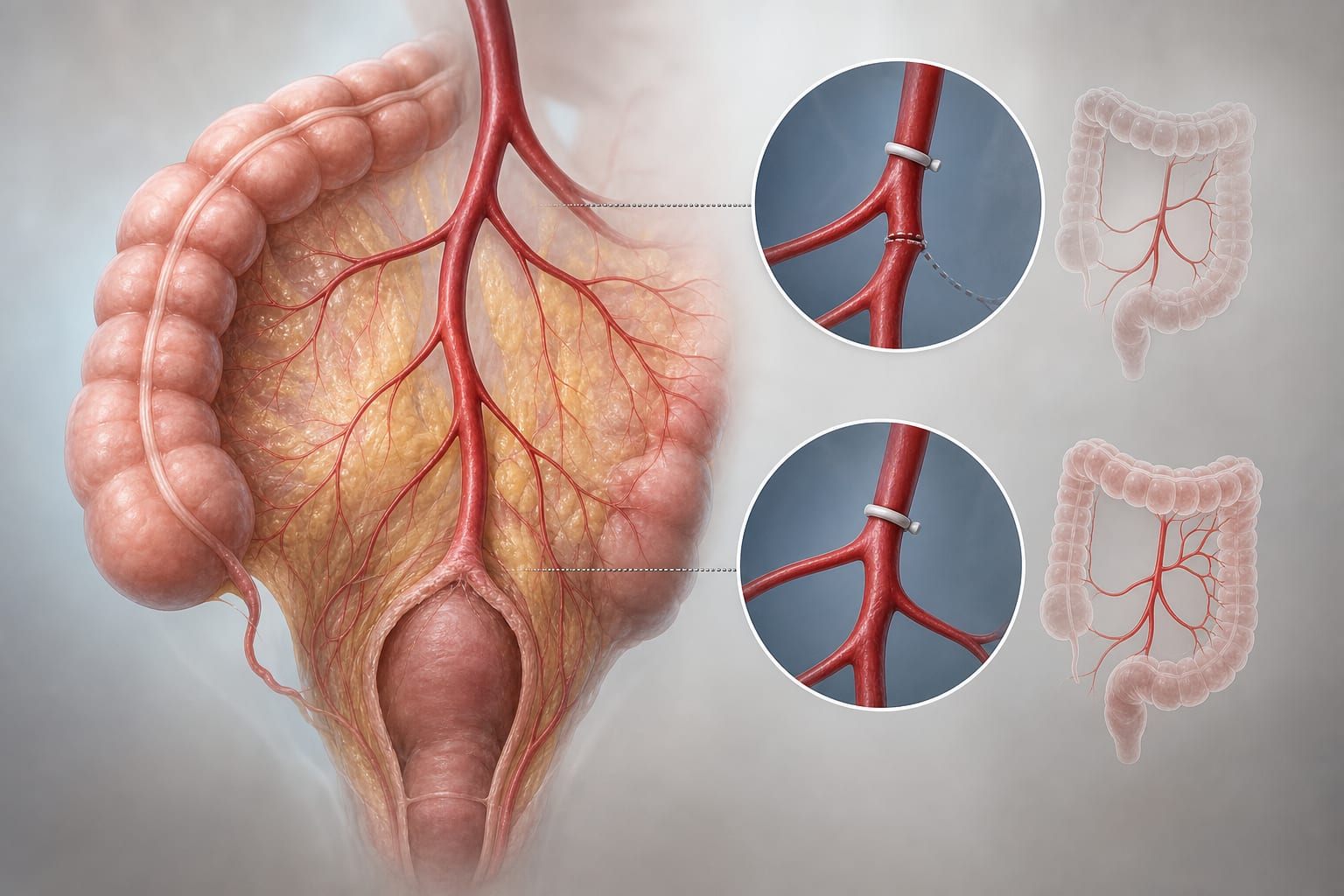
Clinical Report: Perforation of the Sigmoid Colon Likely Due to Stercoral Causes
Background
Stercoral perforation is a rare but serious complication of chronic constipation, particularly in elderly patients. It can lead to rapid progression to feculent peritonitis and sepsis.
Data Highlights
No numerical data or trial data is presented in the article.
Key Findings
Stercoral perforation is primarily caused by pressure ischemia from impacted fecal masses.
The sigmoid colon is particularly vulnerable due to high intraluminal pressure and limited blood supply.
Early diagnosis is challenging due to nonspecific symptoms; CT imaging is crucial for identification.
The patient in the case study underwent laparoscopic exploration and colostomy without bowel resection.
Postoperative care included intensive monitoring and broad-spectrum antimicrobial therapy.
Clinical Implications
Healthcare providers should maintain a high index of suspicion for stercoral perforation in elderly patients with chronic constipation presenting with acute abdominal symptoms. Early CT evaluation and individualized surgical approaches are essential for improving patient outcomes.
Conclusion
This case underscores the critical need for prompt diagnosis and management of stercoral perforation in at-risk populations, particularly the elderly.