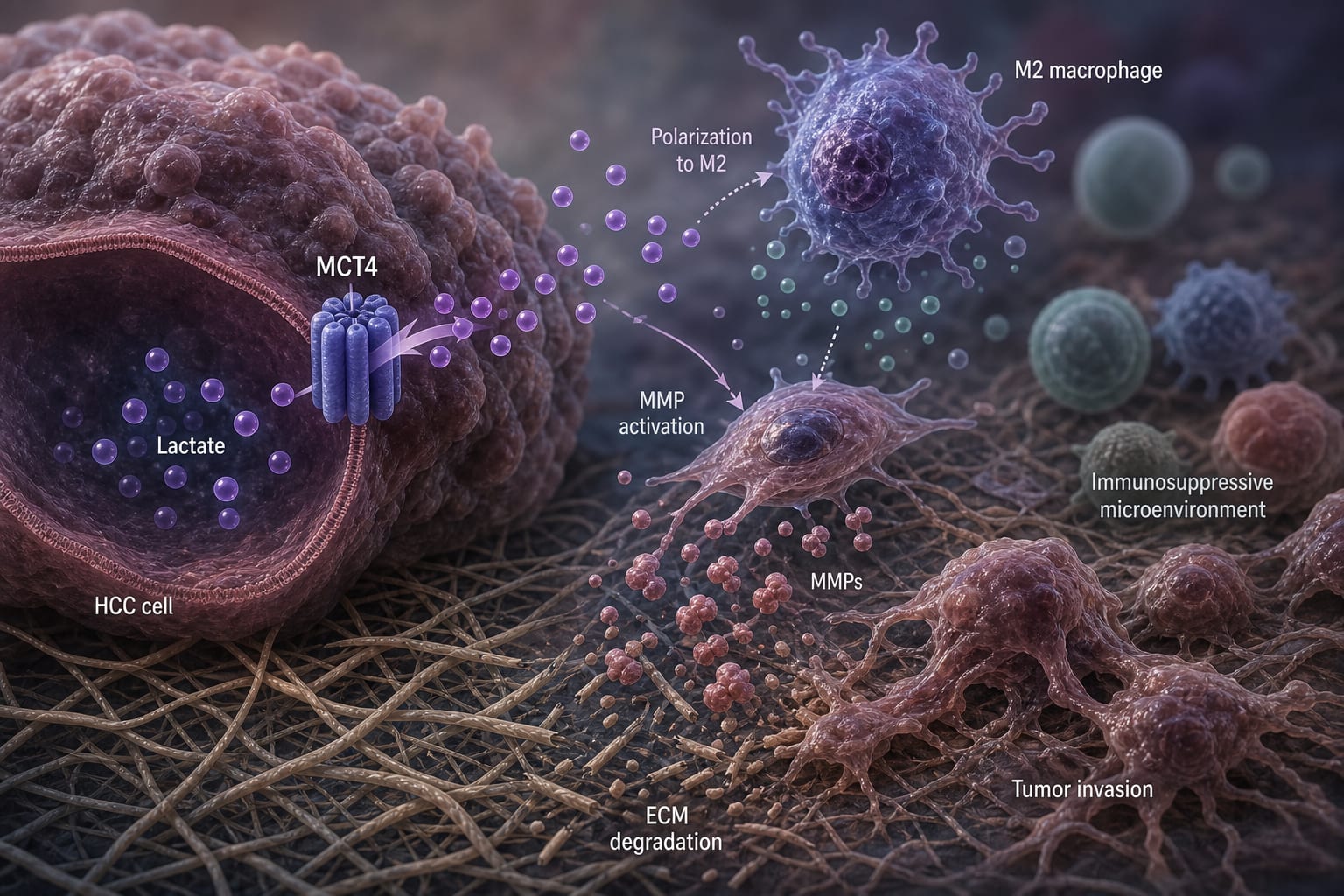
MCT4 is significantly associated with advanced tumor stages and poor survival in hepatocellular carcinoma (HCC). It is linked to matrix metalloproteinase (MMP) activation and M2 macrophage polarization.
Background
Hepatocellular carcinoma (HCC) is a leading cause of cancer-related mortality, with a five-year survival rate below 20%. Understanding the mechanisms of HCC progression is critical for identifying therapeutic targets. MCT4, a key lactate transporter, has been linked to poor prognosis in various cancers.
Data Highlights
No numerical data available in the source material.
Key Findings
MCT4 expression is significantly upregulated in HCC tissues compared to adjacent normal tissues.
High MCT4 levels correlate with advanced tumor stage and poor survival outcomes.
MCT4 knockdown reduces expression of MMP1, MMP2, and MMP9, inhibiting HCC cell migration and invasion.
MCT4 is associated with an immunosuppressive tumor microenvironment characterized by M2 macrophage polarization.
In vivo studies show that MCT4 knockdown inhibits tumor growth and reduces CD206+ M2 macrophage infiltration.
Clinical Implications
MCT4 may serve as a potential therapeutic target for HCC, aiming to restore antitumor immunity and inhibit metastasis. Understanding its role in MMP activation and immune modulation could inform future treatment strategies.
Conclusion
MCT4 plays a crucial role in HCC progression through MMP activation and M2 macrophage polarization, highlighting its potential as a therapeutic target.