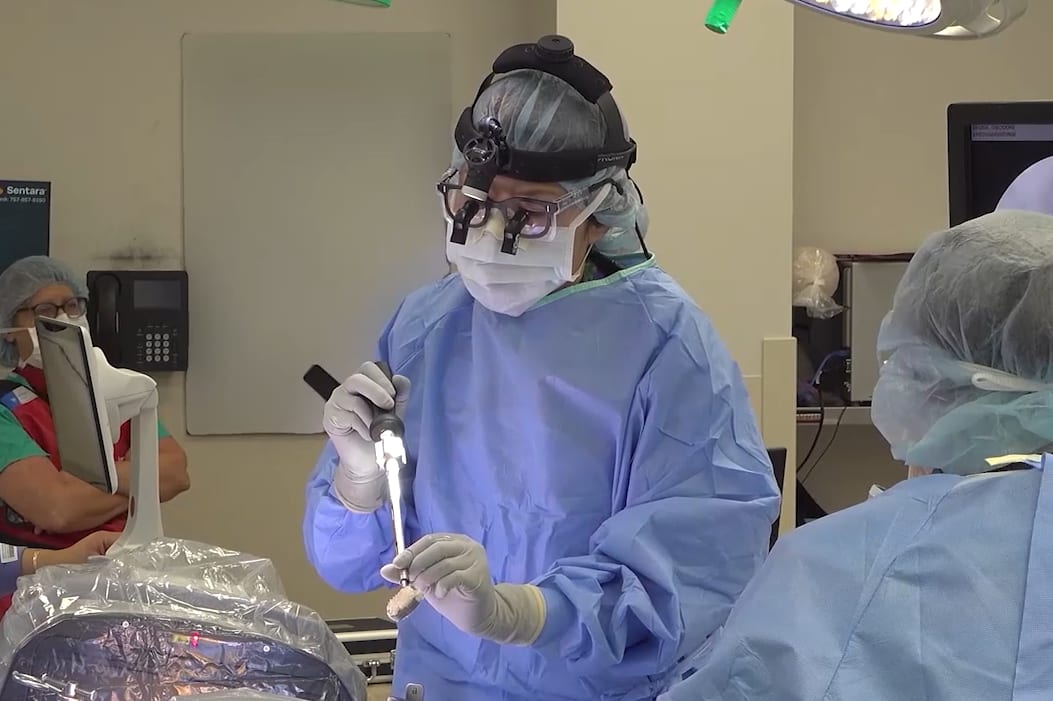
Clinical Report: Bibliometric Review of the Transorbital Approach (1948–2024)
Overview
This bibliometric review analyzes 538 English-language publications on the transorbital approach from 1948 to 2024, highlighting its evolution from early ophthalmologic and neurosurgical procedures to modern endoscopic techniques. The study maps publication trends, citation patterns, geographic and institutional contributions, and co-authorship networks, emphasizing the growing clinical relevance of endoscopic transorbital surgery since 2010.
Background
The transorbital approach is a minimally invasive surgical corridor through the orbit to access intraorbital and skull base structures. Initially documented in the 19th century for orbital tumor management, the approach evolved with neurosurgical applications beginning in 1912. Endoscopic techniques introduced in the 1980s and popularized after 2010 have expanded its use to complex skull base regions. Despite increasing clinical adoption, comprehensive bibliometric analyses of this technique have been lacking until now.
Data Highlights
Metric
Value
Total publications retrieved
976
Publications included after screening
538
Publication date range
1948–2024
Languages analyzed
English only (538)
Excluded publications
438 (non-English, unrelated topics)
Key seminal publication
Moe et al., 2010 (transorbital neuroendoscopic surgery)
Key Findings
Early transorbital surgeries were primarily ophthalmologic, aiming to treat orbital lesions without enucleation.
The first neurosurgical transorbital procedure was performed in 1912 by C.H. Frazier.
Endoscopic transorbital approaches (eTOA) gained prominence after 2010, enabling access to complex skull base regions with low complication rates.
Retrospective clinical series and comparative studies have demonstrated the safety and efficacy of eTOA for various lesions including meningiomas and trigeminal schwannomas.
Prospective clinical data remain limited but include notable cohorts such as the 107-patient series by Balakrishnan and Moe.
Bibliometric analysis reveals increasing publication trends, diverse geographic contributions, and expanding co-authorship networks in recent years.
Clinical Implications
The transorbital approach, especially the endoscopic variant, offers a minimally invasive corridor to challenging skull base and orbital lesions with favorable safety profiles. Clinicians should consider eTOA as a valuable alternative to traditional transcranial and transnasal routes, particularly for lesions in the anterior skull base and adjacent regions. Continued accumulation of prospective data and multidisciplinary collaboration will further refine indications and optimize outcomes.
Conclusion
This comprehensive bibliometric review underscores the historical evolution and growing clinical adoption of the transorbital approach, particularly endoscopic techniques, highlighting its established role and promising future in skull base surgery. Ongoing research and collaboration are essential to expand its applications and validate long-term outcomes.
References
Moe et al. 2010 -- Transorbital neuroendoscopic surgery: a safe and valuable technique
Balakrishnan and Moe 2024 -- Prospective cohort of 107 patients undergoing transorbital surgery
Norris and Cleasby 1981 -- Endoscope-assisted orbital surgery case series
Frazier 1912 -- First neurosurgical transorbital procedure
Page MJ et al. 2021 -- PRISMA 2020 flow diagram for literature selection
For years, chronic stroke patients heard familiar feedback regarding their ability to regain strength and mobility after ischemic strokes caused upper-extremity deficits.
In this procedural case review, vascular surgeon Dr. Samuel Steerman and neurosurgeon Dr. Shannon Clark collaborate to perform an anterior lumbar interbody fusion (ALIF).