Biomarkers predicting good prognosis among patients receiving immunosuppressive treatment in IgA nephropathy: the promising role of serum TGF-β1 and MCP-1 - Report - MDSpire
Advertisement
Biomarkers predicting good prognosis among patients receiving immunosuppressive treatment in IgA nephropathy: the promising role of serum TGF-β1 and MCP-1
Prognostic Biomarkers for Favorable Outcomes in IgA Nephropathy Patients
Overview
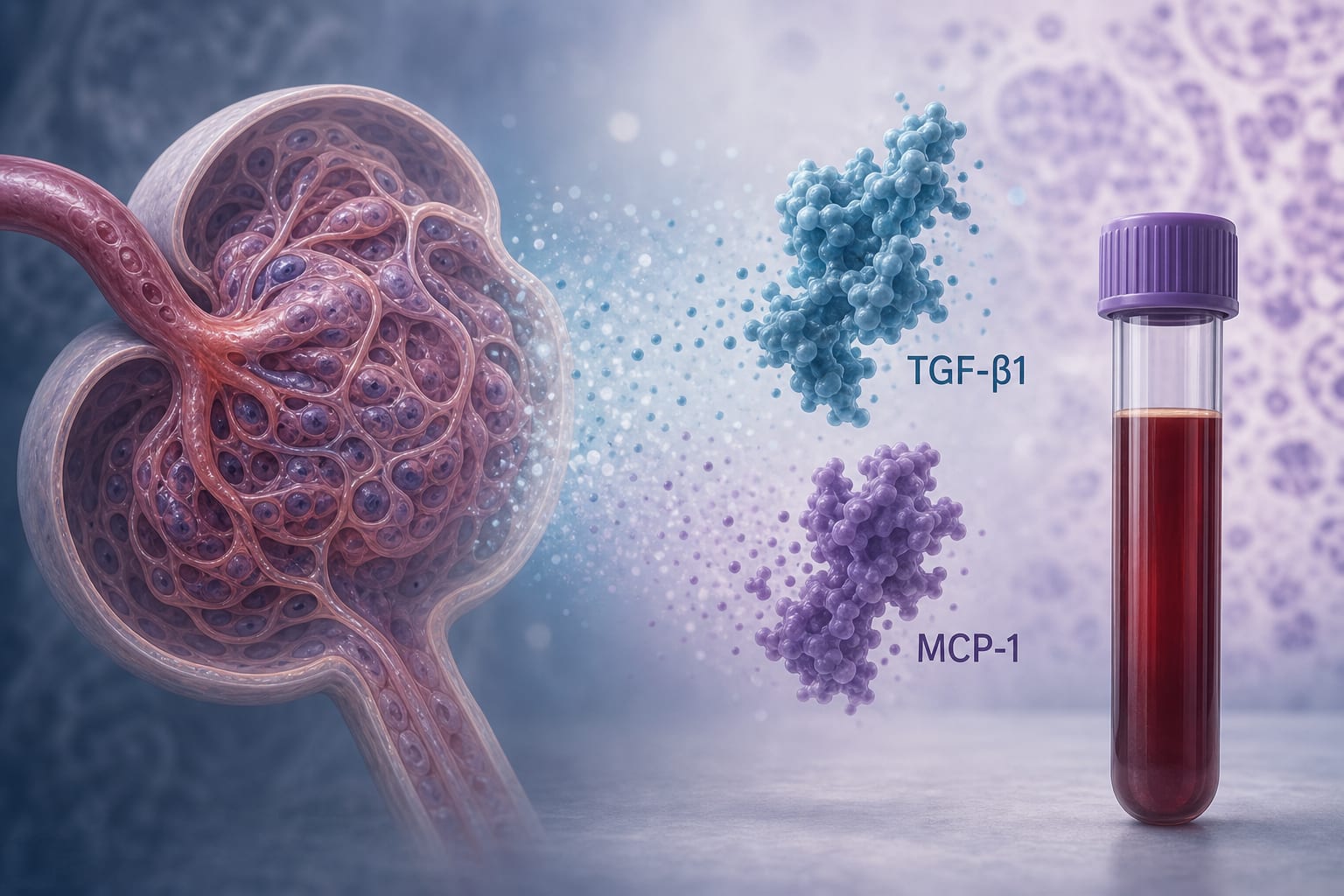
This study identifies serum TGF-β1 and MCP-1 as potential biomarkers for predicting favorable outcomes in IgA nephropathy (IgAN) patients undergoing immunosuppressive therapy.
Background
IgA nephropathy is the most prevalent form of primary glomerulonephritis, with a highly variable clinical course that can lead to end-stage kidney disease in a significant proportion of patients. Identifying reliable prognostic markers is essential for optimizing treatment strategies and improving patient outcomes, particularly in the context of immunosuppressive therapy.
Data Highlights
Parameter
Good Prognosis
Patients with good prognosis
120 (59.4%)
10-year follow-up risk of ESKD
Significantly lower
Higher serum TGF-β1 (aOR)
1.16 (95% CI, 1.04–1.31)
Lower serum MCP-1 (aOR)
0.99 (95% CI, 0.97–1.00)
Less intrarenal CD20+ cell infiltration (aOR)
0.22 (95% CI, 0.07–0.73)
Key Findings
59.4% of patients exhibited a good prognosis after immunosuppressive therapy.
Higher serum TGF-β1 levels were associated with a favorable prognosis.
Lower serum MCP-1 levels independently predicted good prognosis in treated patients.
Less intrarenal CD20+ cell infiltration indicated a better prognosis in patients receiving supportive care only.
Multivariable analyses identified several independent predictors of good prognosis, including immunosuppressive therapy and lower urine protein-to-creatinine ratio.
Clinical Implications
The identification of serum TGF-β1 and MCP-1 as prognostic biomarkers may assist clinicians in making informed treatment decisions for IgAN patients.
Conclusion
Serum TGF-β1 and MCP-1 levels may serve as prognostic indicators in IgAN.
The procedure was performed under a HOPE Act research protocol at an NYU Langone Health center the institution said is among the limited number of US transplant centers equipped and approved to perform HOPE lung transplants.