Longitudinal trajectories of urinary albumin-to-creatinine ratio and risk of proteinuria among Chinese patients with type 2 diabetes: a single−center retrospective cohort study - Report - MDSpire
Advertisement
Longitudinal trajectories of urinary albumin-to-creatinine ratio and risk of proteinuria among Chinese patients with type 2 diabetes: a single−center retrospective cohort study
Clinical Report: Patterns of Urinary Albumin-to-Creatinine Ratio Over Time
Overview
This study identifies distinct urinary albumin-to-creatinine ratio (UACR) trajectories in Chinese individuals with type 2 diabetes and assesses their association with proteinuria risk.
Background
Monitoring urinary albumin-to-creatinine ratio (UACR) is crucial for assessing kidney damage in patients with type 2 diabetes mellitus (T2DM). Diabetic kidney disease (DKD) is a major complication of T2DM, affecting a significant proportion of patients and leading to increased morbidity and mortality.
Data Highlights
UACR Trajectory
Proteinuria Risk (HR)
95% CI
Mid-range normal
48.40
14.67-159.67
Rising with fluctuation
509.56
157.01–1653.70
Key Findings
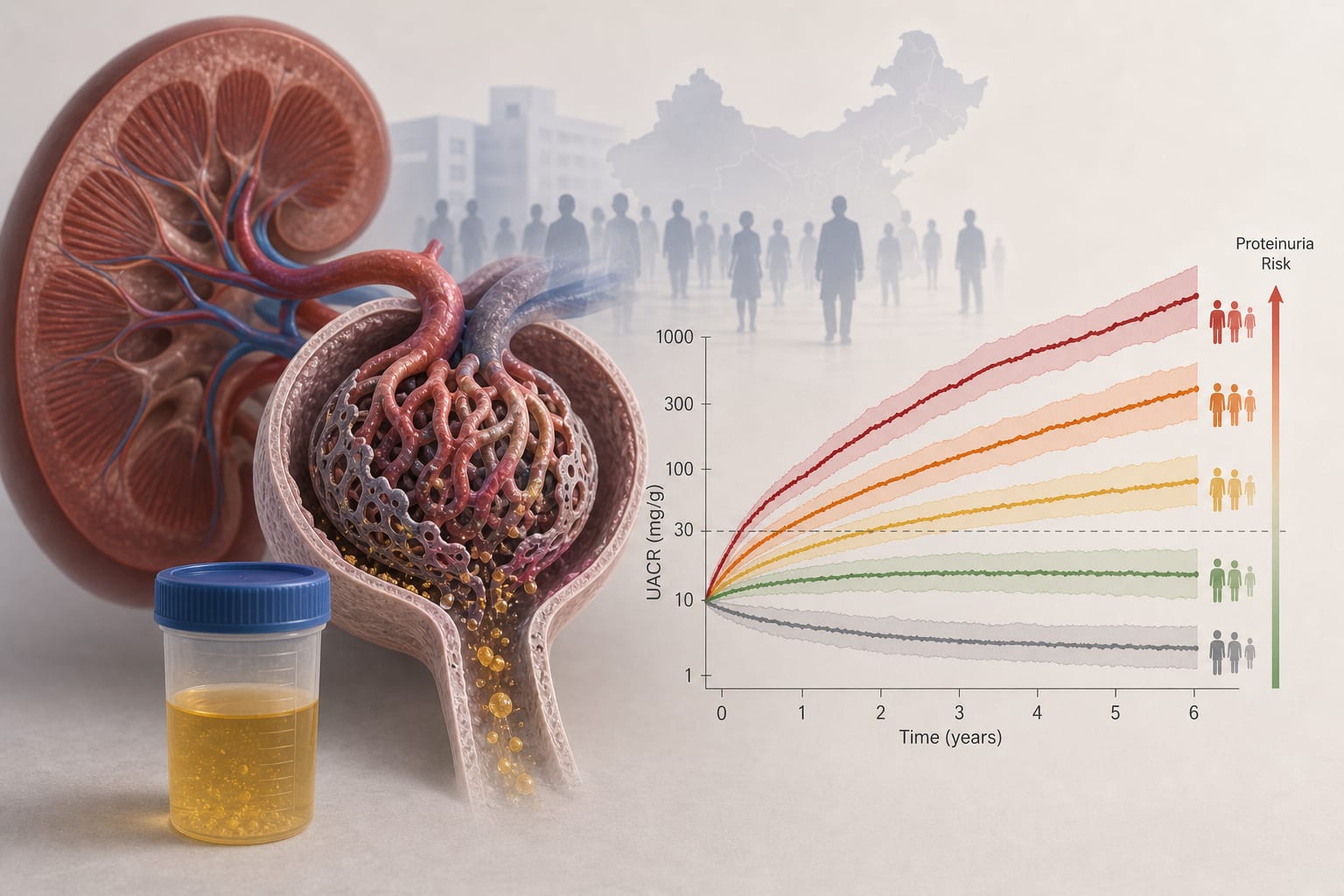
Three distinct UACR trajectories were identified: low-normal, mid-range normal, and rising with fluctuation.
Mid-range normal UACR trajectory is associated with a significantly increased proteinuria risk (HR = 48.40).
The rising with fluctuation UACR trajectory shows an even higher proteinuria risk (HR = 509.56).
Eleven significant features were identified as predictors of UACR trajectories, including baseline UACR and various clinical parameters.
Group-based trajectory modeling (GBTM) effectively captures the dynamic changes in UACR over time.
Clinical Implications
The identification of distinct UACR trajectories can inform assessments of proteinuria risk in patients with T2DM.
Conclusion
The study highlights the importance of UACR trajectory patterns in predicting proteinuria risk among individuals with T2DM.