Postoperative hydrocephalus in patients with infratentorial brain metastases may be influenced by preoperative treatment: a single-center cohort study - Report - MDSpire
Advertisement
Postoperative hydrocephalus in patients with infratentorial brain metastases may be influenced by preoperative treatment: a single-center cohort study
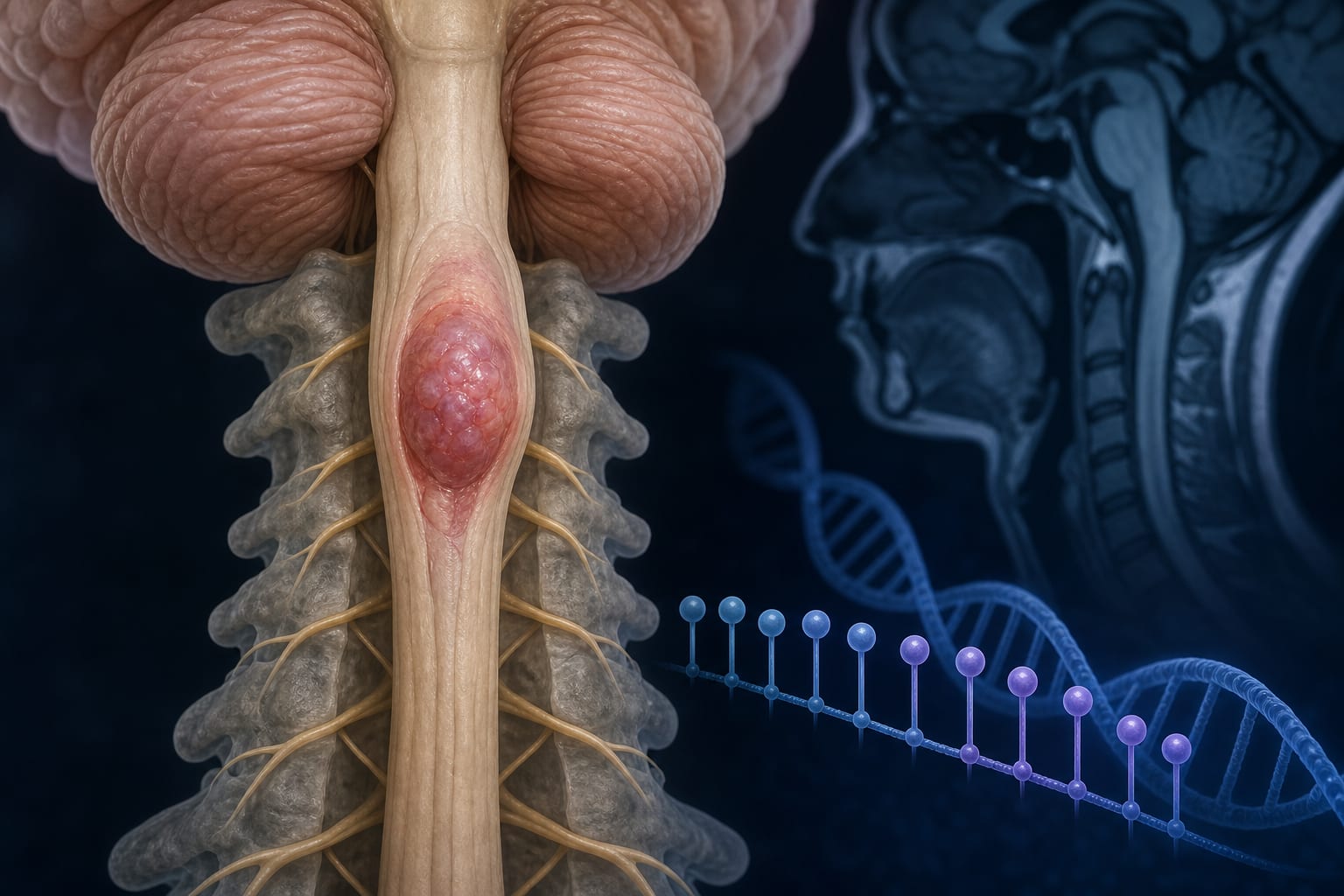
Influence of Preoperative Treatment on Postoperative Hydrocephalus in Infratentorial Brain Metastases
Overview
This single-center retrospective study analyzed 235 patients with infratentorial brain metastases undergoing surgery to identify predictors of postoperative hydrocephalus. Preoperative hydrocephalus was present in 34.62% of patients, and postoperative hydrocephalus occurred in 18.38%, with tumor proximity to the fourth ventricle and preoperative hydrocephalus being significant risk factors.
Background
Brain metastases are the most common intracranial tumors, affecting 20–30% of cancer patients, with lung and breast cancers being the most frequent sources. Infratentorial brain metastases are associated with higher postoperative complication rates, including hydrocephalus, a serious and potentially life-threatening condition. Hydrocephalus in this context is often due to mechanical obstruction of cerebrospinal fluid flow, especially when tumors involve or occlude the fourth ventricle. Understanding clinical predictors of postoperative hydrocephalus is critical for improving management strategies.
Data Highlights
Parameter
Value
Number of patients
235
Median age (IQR)
66 years (56–74)
Sex distribution
122 female, 113 male
Cancer types
Lung 35.32%, Breast 20.85%, GIT 17.87%, Melanoma 5.96%, Others 20%
Preoperative hydrocephalus rate
34.62%
Postoperative hydrocephalus rate
18.38%
Key Findings
Preoperative hydrocephalus was diagnosed in approximately one-third (34.62%) of patients with infratentorial brain metastases.
Postoperative hydrocephalus occurred in 18.38% of patients, requiring interventions such as external ventricular drainage or shunt placement.
Tumor proximity to or occlusion of the fourth ventricle significantly increased the risk of postoperative hydrocephalus.
Preoperative radiotherapy, including stereotactic radiosurgery or whole brain radiotherapy, was considered but its impact on hydrocephalus was not detailed.
Postoperative complications such as CSF leak, infection, or bleeding were recognized contributors to hydrocephalus development.
No significant differences in tumor volume or survival time were found between cancer types, except for sex distribution in breast cancer patients.
Clinical Implications
Clinicians should carefully evaluate preoperative imaging for hydrocephalus and tumor involvement of the fourth ventricle to identify patients at higher risk for postoperative hydrocephalus. Early recognition and management of hydrocephalus can improve outcomes. Surgical planning and postoperative monitoring should incorporate these risk factors to optimize patient care.
Conclusion
Postoperative hydrocephalus is a common and serious complication in patients undergoing surgery for infratentorial brain metastases, strongly associated with preoperative hydrocephalus and tumor proximity to the fourth ventricle. Awareness of these predictors can guide clinical decision-making and improve management strategies.
References
Nieder et al. 2020 -- Brain metastases: epidemiology and clinical management
Fabi et al. 2018 -- Patterns of brain metastases in lung and breast cancer
Kasper et al. 2021 -- Gastrointestinal cancer brain metastases: clinical outcomes
Patel et al. 2019 -- Postoperative radiotherapy in brain metastases
Soffietti et al. 2017 -- Radiotherapy approaches for brain metastases
Kocher et al. 2011 -- Survival in supratentorial vs infratentorial brain metastases
Weller et al. 2015 -- Complications in infratentorial brain tumor surgery
Smith et al. 2013 -- Hydrocephalus mechanisms in brain tumors
Jones et al. 2016 -- Imaging predictors of postoperative hydrocephalus
Brown et al. 2014 -- Postoperative complications and hydrocephalus
Lee et al. 2018 -- Incidence of hydrocephalus in infratentorial brain metastases
Garcia et al. 2019 -- Management strategies for postoperative hydrocephalus
by Luisa Mona Kraus, Maria Goldberg, Eugen Ursu, Kayra Demirbag, Simon Paul Backhaus, Ghaith Altawalbeh, Denise Bernhardt, Chiara Negwer, Stephanie Combs, Bernhard Meyer, Arthur Wagner