A phase II clinical trial of neoadjuvant chemotherapy combined with immunotherapy and different radiotherapy fractionation regimens in HR+/HER2- breast cancer - Report - MDSpire
Advertisement
A phase II clinical trial of neoadjuvant chemotherapy combined with immunotherapy and different radiotherapy fractionation regimens in HR+/HER2- breast cancer
Clinical Report: A Phase II Study Assessing Neoadjuvant Chemotherapy with Immunotherapy
Overview
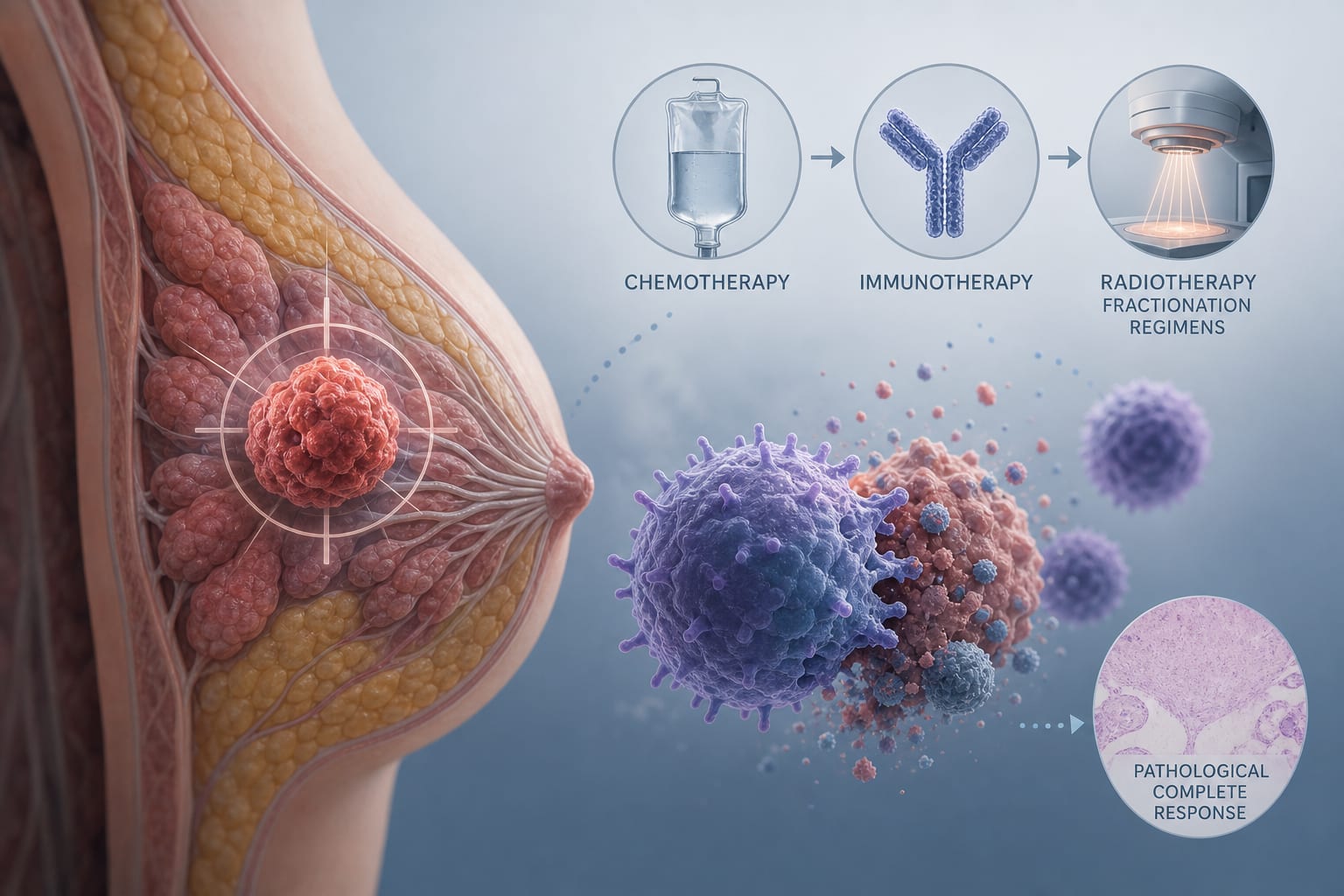
This phase II study evaluates the feasibility, safety, and preliminary efficacy of combining Toripalimab with chemotherapy and varied radiotherapy fractionation in treatment-naïve patients with early-stage HR+/HER2- breast cancer. The study consists of three cohorts differentiated by radiotherapy fractionation schedules. The primary endpoint is pathological complete response (pCR), with secondary endpoints including survival outcomes and safety.
Background
Breast cancer is the most commonly diagnosed malignancy among women, with HR+/HER2- subtype being the most prevalent. This subtype has limited sensitivity to neoadjuvant systemic therapy, resulting in low pCR rates. Enhancing neoadjuvant efficacy in HR+/HER2- disease is crucial for improving long-term outcomes.
Data Highlights
No numerical data available in the provided source.
Key Findings
The study investigates three distinct radiotherapy fractionation schedules combined with Toripalimab and chemotherapy.
A total of 45 patients will be enrolled, with 15 patients in each of the three cohorts.
The primary endpoint is pathological complete response (pCR), with secondary endpoints including objective response rate and survival outcomes.
Radiotherapy is hypothesized to enhance the efficacy of immunotherapy through immune modulation.
Clinical Implications
The study aims to provide preliminary data on the safety and efficacy of a novel multimodal neoadjuvant strategy. The results may inform future randomized trials aimed at improving outcomes in HR+/HER2- breast cancer.
Conclusion
This exploratory study will contribute to understanding the integration of immunotherapy and varied radiotherapy fractionation in HR+/HER2- breast cancer treatment. The findings will guide future research directions.