Trends in urolithiasis mortality in the United States, 1999–2024: a Joinpoint regression analysis of age, sex, race, and regional disparities - Report - MDSpire
Conexiant’s news site is now MDSpire News. Learn more
Advertisement
Analysis of Mortality Trends Associated with Urolithiasis in the United States from 1999 to 2024: A Joinpoint Regression Study Examining Age, Gender, Ethnicity, and Geographic Variations
Clinical Report: Analysis of Mortality Trends Associated with Urolithiasis
Overview
This study analyzes mortality trends associated with urolithiasis in the U.S. from 1999 to 2024, revealing a significant increase in mortality rates, particularly post-2014. Disparities were noted across demographic and geographic groups.
Background
Urolithiasis is a common urinary tract disease that has been traditionally associated with low mortality rates. However, recent trends indicate a concerning rise in mortality, necessitating a closer examination of demographic and geographic disparities.
Data Highlights
Year
Age-Adjusted Mortality Rate (per 100,000)
1999
0.22
2014
0.72
2024
0.72
Key Findings
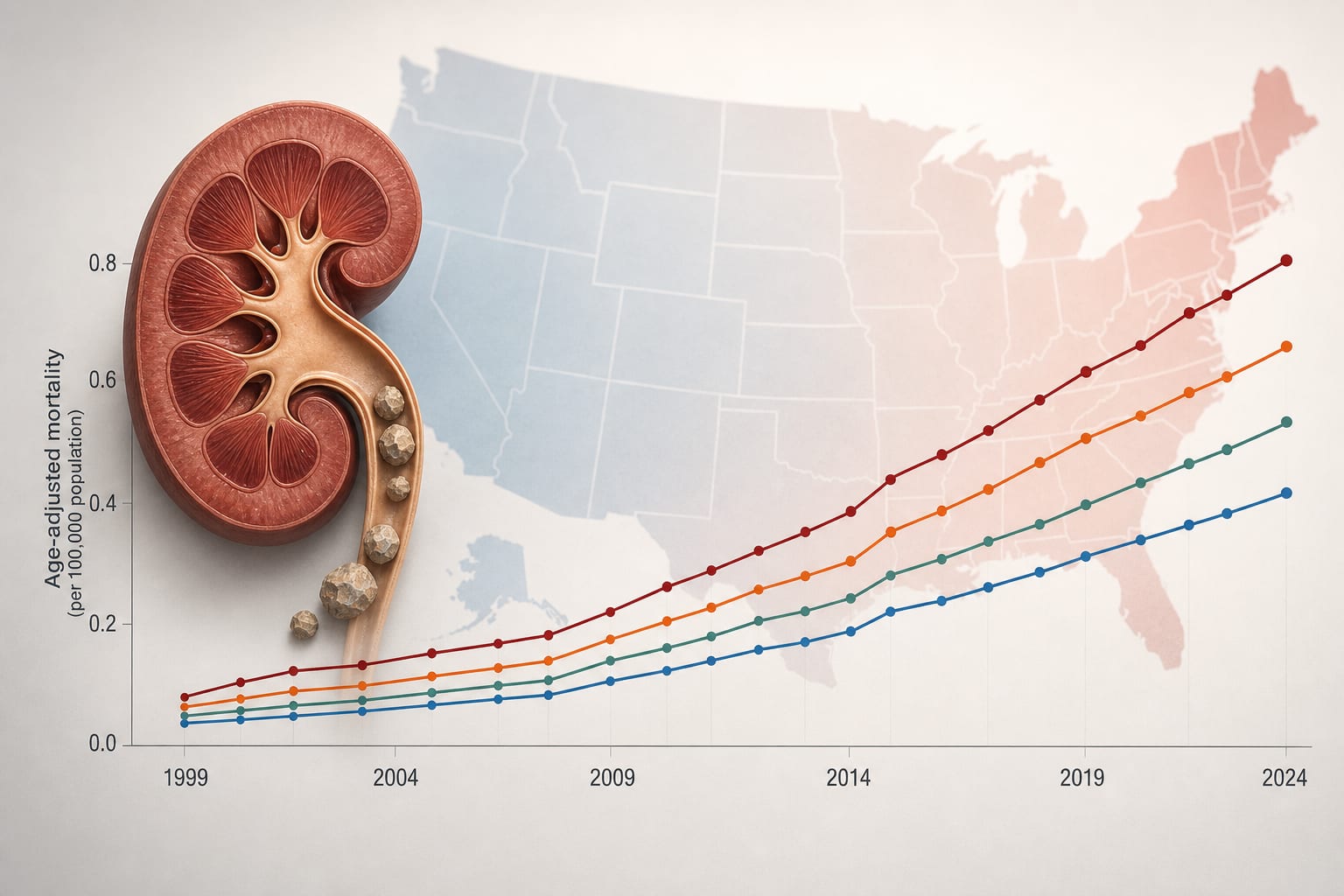
Urolithiasis mortality rose from 0.22 to 0.72 per 100,000 population from 1999 to 2024.
Annual percent change in mortality was 1.94% from 1999-2014 and accelerated to 8.54% from 2014-2024.
The Northeast had the highest age-adjusted mortality rate at 0.85 per 100,000.
Females had a higher age-adjusted mortality rate than males by 2024 (0.80 vs. 0.68 per 100,000).
Non-Hispanic white individuals had the highest mortality rate at 0.86 per 100,000.
The highest mortality rate was observed in individuals aged 85 years and older, at 5.72 per 100,000.
Clinical Implications
The rising mortality rates associated with urolithiasis, particularly among older adults and non-Hispanic white individuals, highlight the disparities observed across different regions and demographic groups.
Conclusion
The significant increase in urolithiasis mortality since 2014 indicates a need for further examination of the trends and disparities.