Clinical Report: Dopamine's Epigenetic Influence on Inflammation in Macrophages
Overview
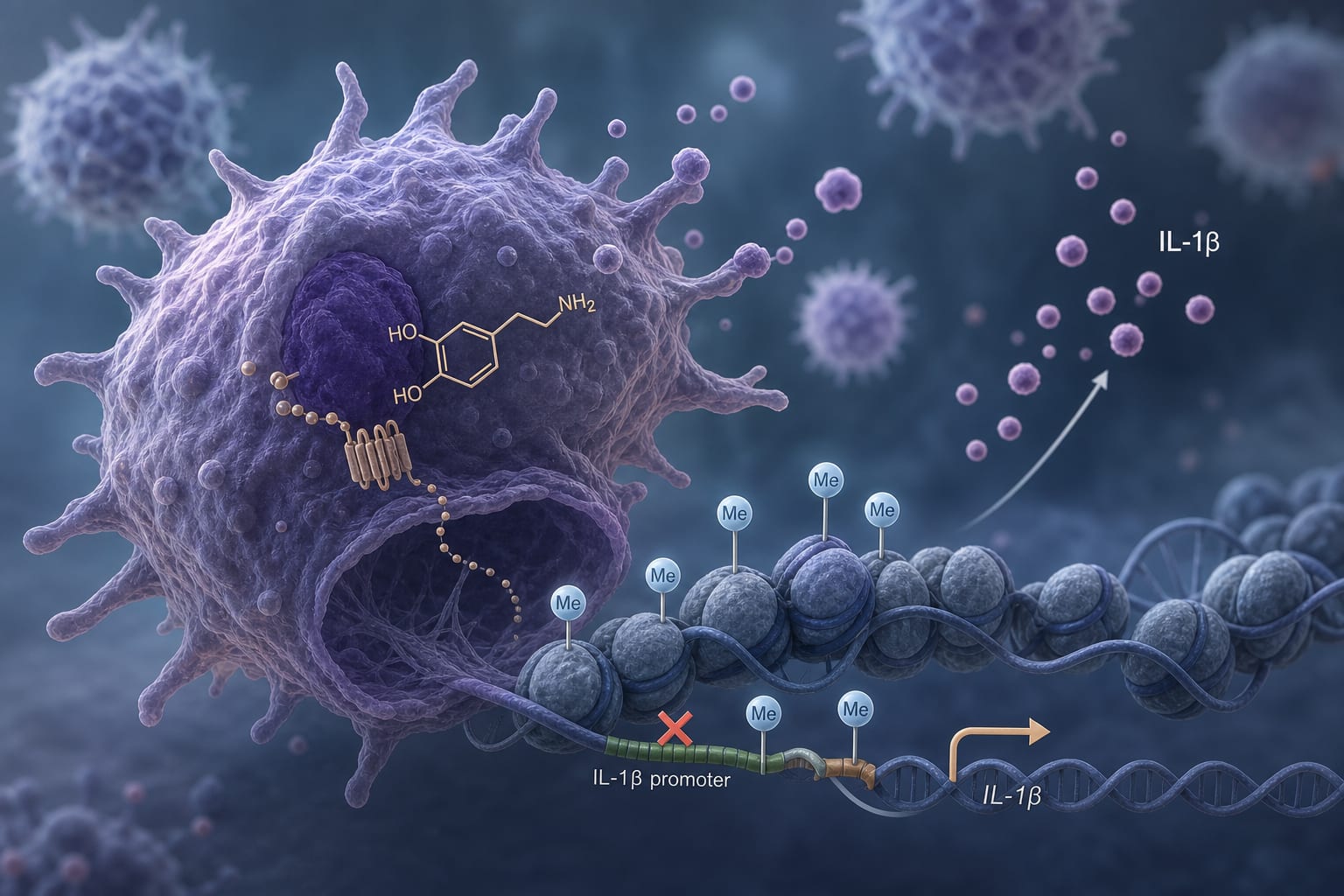
This study demonstrates that dopamine modulates inflammation in primary human macrophages through epigenetic mechanisms, specifically increasing DNA methylation at the IL-1β promoter and enhancing IL-1β gene expression.
Background
Dopamine is primarily recognized for its functions in the central nervous system, but it also plays a significant role in immune regulation. Understanding how dopamine influences immune cells, particularly macrophages, is crucial.
Data Highlights
Dopamine treatment increased DNA methylation at the IL-1β proximal promoter and upregulated IL-1β gene expression in primary human macrophages. Additionally, dopamine enhanced the expression of epigenetic regulators such as TET2, HDAC2, and HDAC6.
Key Findings
Dopamine increases DNA methylation at the IL-1β promoter in a DNMT-dependent manner.
IL-1β gene expression is concurrently increased following dopamine treatment.
Key epigenetic regulators, including TET2, HDAC2, and HDAC6, are upregulated by dopamine.
Baseline dopamine receptor expression and donor demographics influence macrophage sensitivity to dopamine.
Dopamine signaling is linked to epigenetic remodeling in macrophages, affecting inflammatory responses.
Clinical Implications
The findings indicate that dopamine may modulate inflammation in macrophages.
Conclusion
Dopamine modulates macrophage inflammation through epigenetic mechanisms.