Does the order matter? Comparing the order of stem placement and fracture reduction in revision total hip arthroplasty for Vancouver B2 and B3 periprosthetic femur fractures - Report - MDSpire
Advertisement
Does the order matter? Comparing the order of stem placement and fracture reduction in revision total hip arthroplasty for Vancouver B2 and B3 periprosthetic femur fractures
Clinical Report: Impact of Stem Placement Sequence on Fracture Reduction in rTHA
Overview
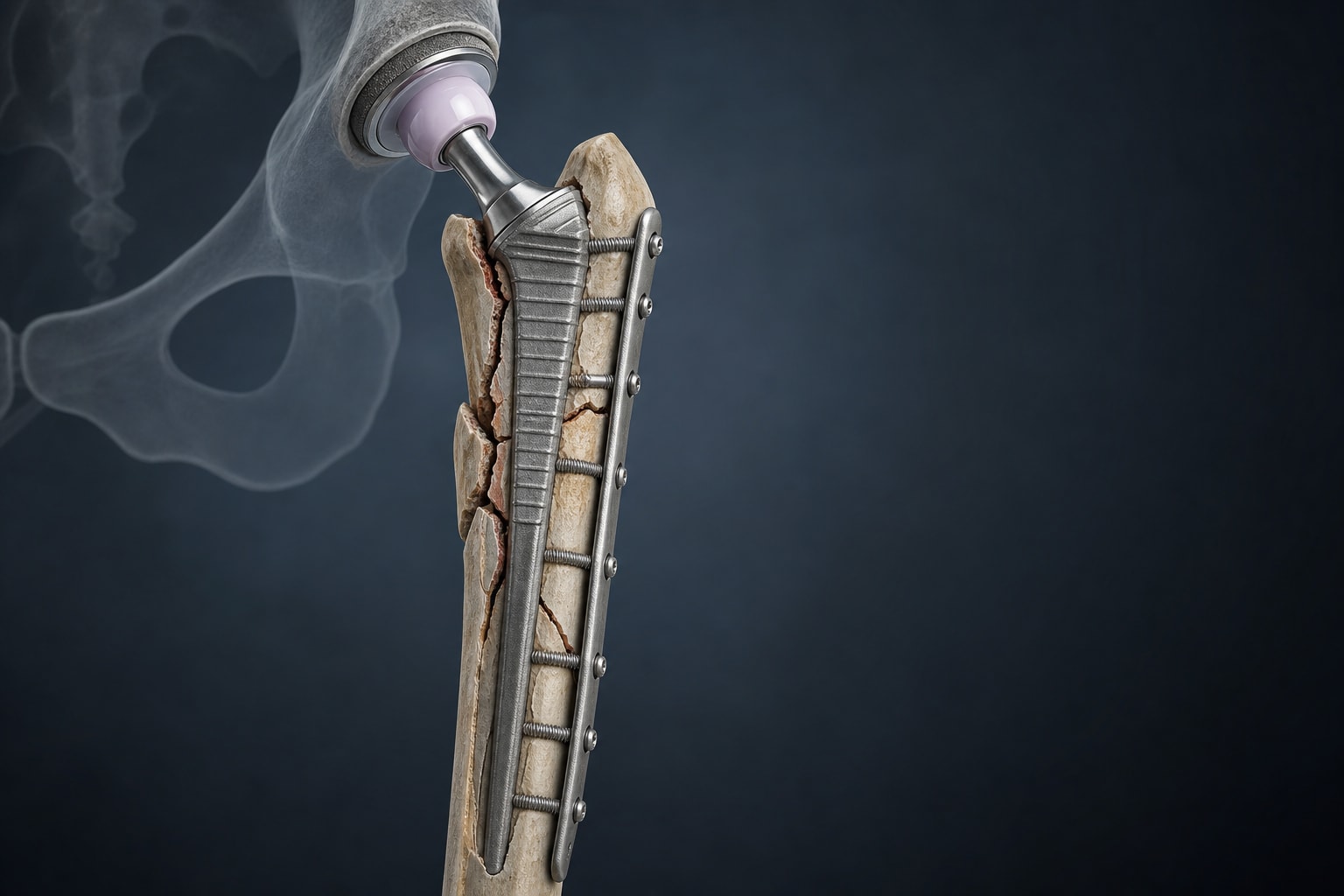
This study evaluates the influence of the sequence of femoral stem placement and fracture reduction on outcomes in revision total hip arthroplasty for Vancouver B2 and B3 periprosthetic femur fractures. The findings indicate that the order of these procedures may affect radiographic subsidence and clinical outcomes.
Background
The increasing demand for total hip arthroplasty (THA) is projected to rise by 174% by 2030, leading to a higher incidence of periprosthetic femur fractures (PPFF). Understanding the optimal surgical techniques for revision THA (rTHA) is critical, as improper management can lead to complications such as stem subsidence and hip instability. The Vancouver classification system is essential for guiding treatment decisions in these complex cases.
Data Highlights
No numerical data available in the source material.
Key Findings
The study included 46 patients with Vancouver B2 and B3 PPFF, divided into two cohorts based on the order of stem placement and fracture reduction.
The cohort undergoing stem placement prior to fracture reduction (stem first) consisted of 19 patients, while the reduced first cohort included 27 patients.
Outcomes assessed included radiographic subsidence, implant survivorship at 2 years, and clinical complications.
There remains a risk of failure and progression to re-revision operations despite high treatment success rates with tapered fluted stems.
Optimal surgical technique is crucial for minimizing complications associated with PPFF in rTHA.
Clinical Implications
Surgeons should consider the sequence of stem placement and fracture reduction in rTHA for PPFF, as it may influence clinical outcomes and complications. Further research is needed to establish standardized protocols for these procedures to enhance patient outcomes.
Conclusion
The order of femoral stem placement and fracture reduction in rTHA for Vancouver B2 and B3 fractures may significantly impact patient outcomes. Continued investigation into optimal surgical techniques is warranted.