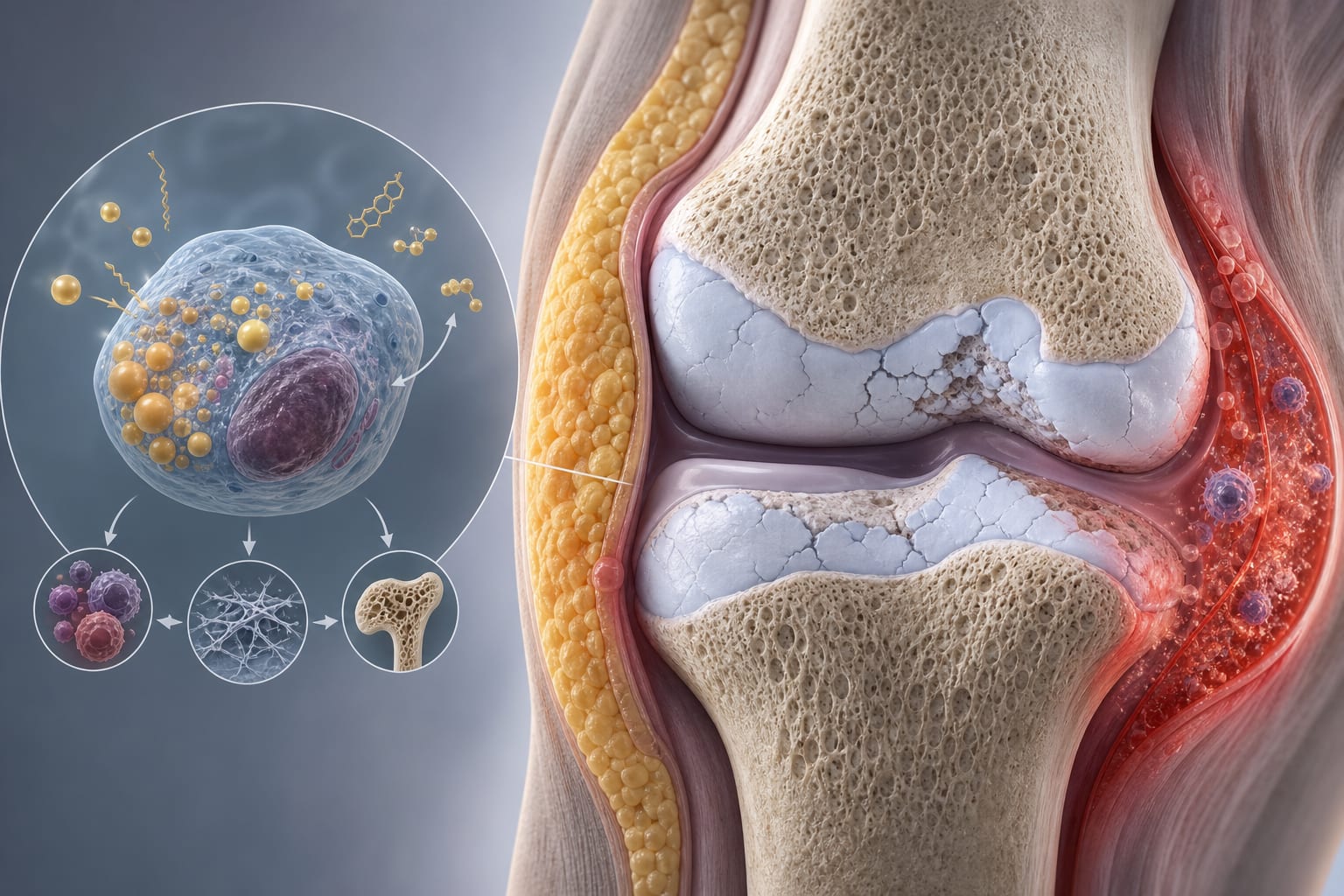
Clinical Report: The Role of Non-coding RNAs in Osteoarthritis: Mechanisms and Future Directions
Overview
Non-coding RNAs (ncRNAs) are critical regulators in the pathogenesis of osteoarthritis (OA), influencing various biological processes such as inflammation and cartilage degradation. This report summarizes the roles of different ncRNA classes, particularly microRNAs, in OA progression.
Background
Osteoarthritis is the most common degenerative joint disease, leading to significant pain and disability. Understanding the molecular mechanisms of OA is essential for developing effective treatments.
Data Highlights
No numerical data or trial data is provided in the source material.
Key Findings
ncRNAs, including microRNAs, long non-coding RNAs, and circular RNAs, play significant roles in OA pathogenesis.
miR-140-5p is identified as a key cartilage-protective miRNA that inhibits ADAMTS5-mediated extracellular matrix degradation.
Other miRNAs such as miR-146a, miR-21, and miR-34a are involved in regulating inflammatory signaling and chondrocyte survival.
Many lncRNAs and circRNAs lack extensive validation in primary human OA tissues, relying mainly on transcriptomic profiling and cell-based studies.
Circulating ncRNAs show potential as biomarkers for OA, although current studies face methodological challenges.
ncRNA-based therapeutics are being explored, with various delivery systems showing promise in preclinical models.
Clinical Implications
The findings indicate that ncRNAs may have roles in OA, but further validation is needed.
Conclusion
Non-coding RNAs represent an area of research in osteoarthritis that requires further investigation.
Federal prosecutors allege that a Florida physician and research staff fabricated clinical trial records that were submitted into database systems used to evaluate investigational drugs.