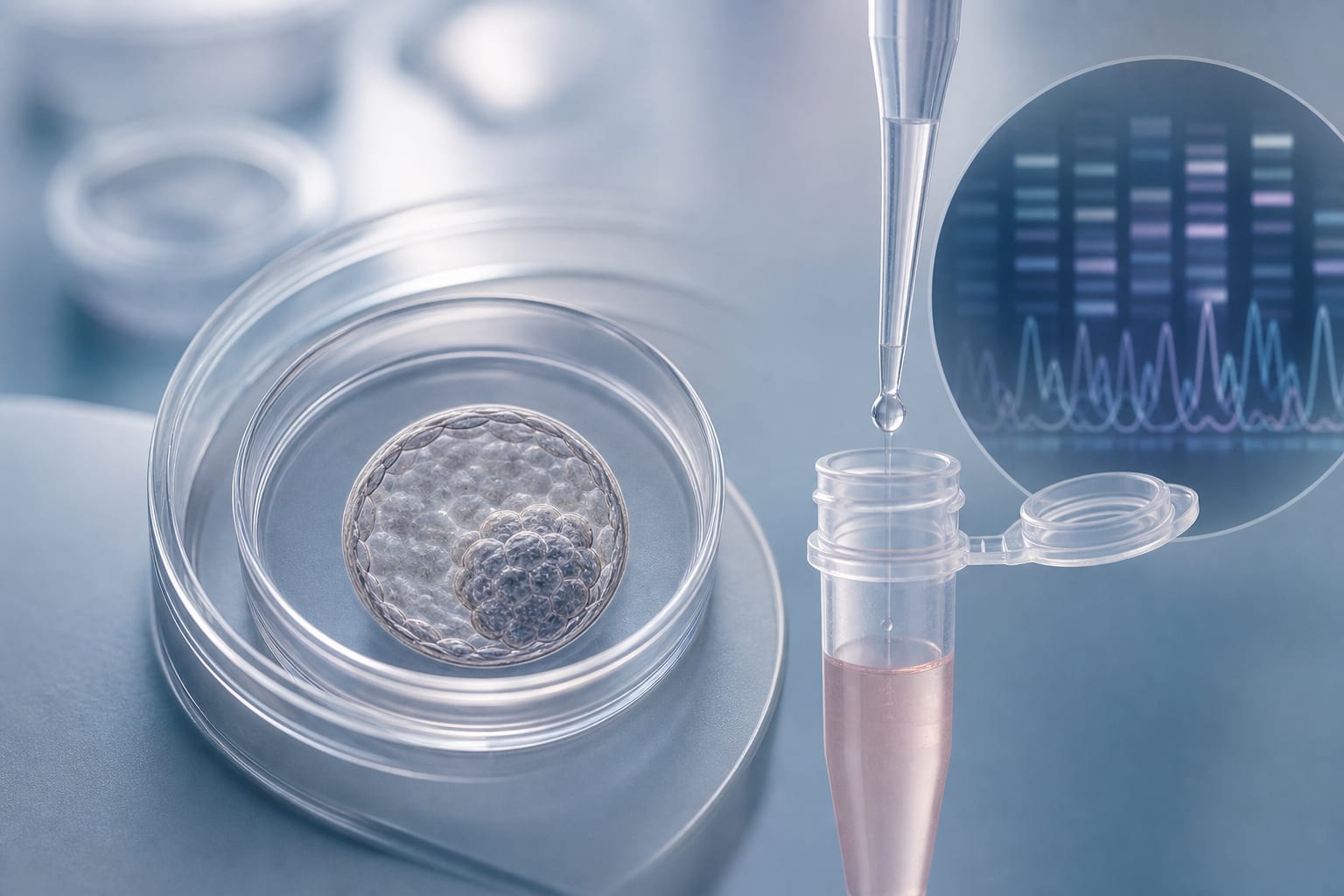
Clinical Report: Evaluation of Noninvasive Chromosomal Screening via Blastocyst Culture Media
Overview
This study evaluates the performance of noninvasive chromosomal screening (NICS) using spent embryo culture medium (SECM) from frozen-thawed embryos compared to fresh embryos. The findings indicate that frozen-thawed embryos exhibit superior sensitivity, positive predictive value, and clinical consistency in chromosomal detection.
Background
Preimplantation genetic testing for aneuploidy (PGT-A) is crucial for embryo selection in assisted reproductive technology, yet traditional trophectoderm biopsy can compromise embryo integrity. Noninvasive approaches like NICS using SECM present a promising alternative, particularly for patients with frozen embryos. Understanding the efficacy of NICS in this context is essential for improving clinical outcomes in assisted reproduction.
Data Highlights
Parameter
Frozen-Thawed Embryos
Fresh Embryos
Detection Success Rate
98.08%
98.08%
Sensitivity
97.30%
78.05%
Positive Predictive Value
100%
72.73%
Clinical Consistency
97.37%
68.75%
Complete Chromosomal Inconsistency Rate
2.63%
35.94%
Key Findings
The overall detection success rate of NICS was 98.08%.
Frozen-thawed embryos showed significantly higher sensitivity (97.30% vs 78.05%) compared to fresh embryos.
Positive predictive value for frozen-thawed embryos was 100%, while it was 72.73% for fresh embryos.
Clinical consistency was higher in frozen-thawed embryos (97.37% vs 68.75%).
Frozen-thawed embryos had a lower rate of complete chromosomal inconsistency (2.63% vs 35.94%).
Clinical Implications
The findings suggest that NICS using SECM from frozen-thawed embryos can enhance embryo selection processes in assisted reproductive technology. This noninvasive method may reduce the need for invasive biopsies, thereby preserving embryo integrity and improving clinical outcomes.
Conclusion
NICS based on frozen-thawed SECM demonstrates superior performance compared to fresh embryos, indicating its potential as a reliable noninvasive method for genetic assessment in assisted reproduction.