Two temporally validated diagnostic models for arterial stiffness using routine clinical indicators: a practical tool for resource-limited settings - Report - MDSpire
Advertisement
Two temporally validated diagnostic models for arterial stiffness using routine clinical indicators: a practical tool for resource-limited settings
Clinical Report: Development and Validation of Diagnostic Models for Arterial Stiffness
Overview
This study developed and validated two diagnostic models for assessing arterial stiffness using standard clinical indicators. The models demonstrated excellent performance in both derivation and validation cohorts.
Background
Arterial stiffness is a critical predictor of cardiovascular diseases, yet its assessment is often impractical in resource-limited settings. Traditional methods like carotid-femoral pulse wave velocity require specialized equipment, making them less accessible for widespread use. Therefore, developing simple and effective diagnostic models using easily obtainable clinical indicators is important.
Data Highlights
Model
AUC (Derivation Cohort)
AUC (Validation Cohort)
Model 1
0.926
0.916
Model 2
0.927
0.916
Key Findings
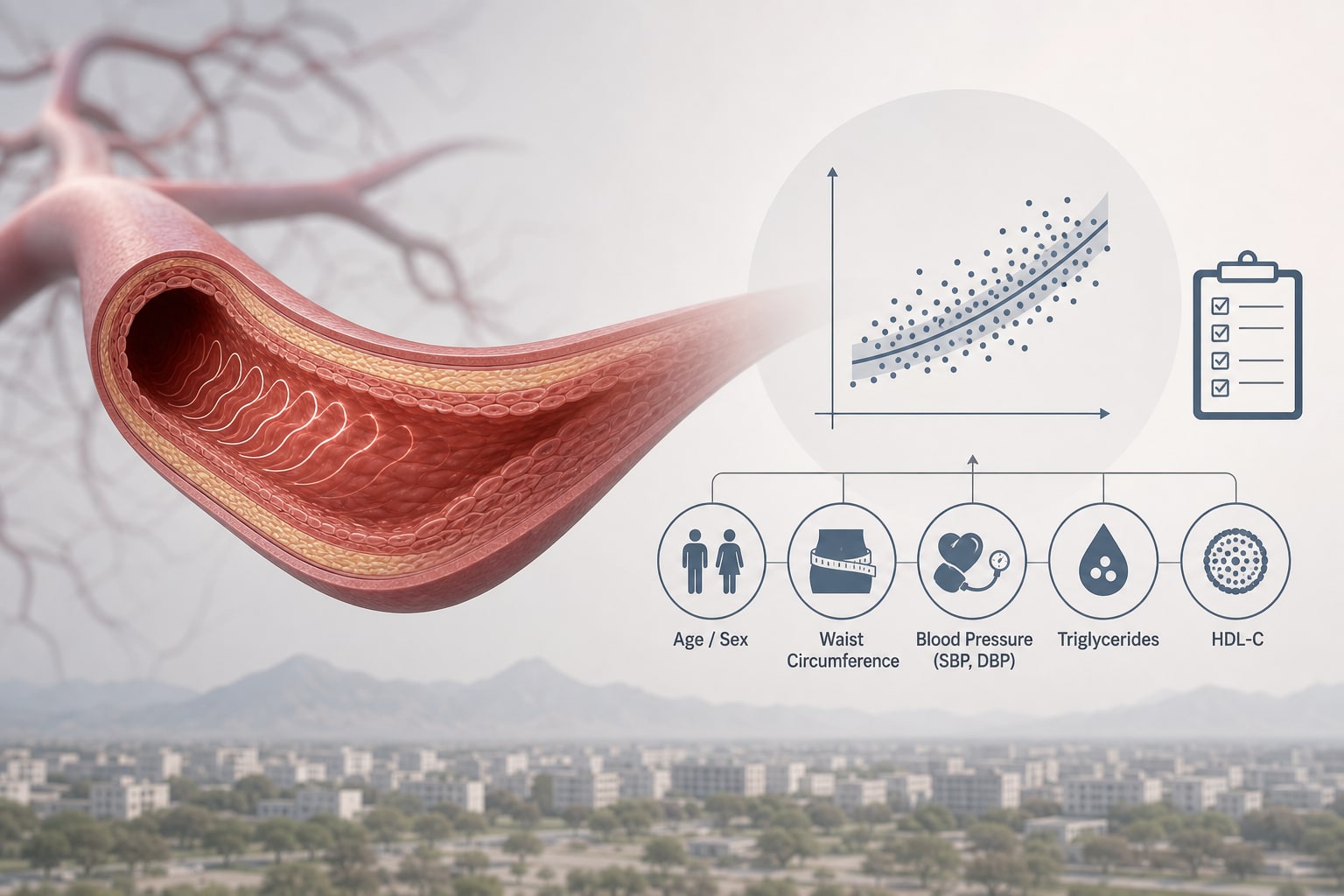
Model 1 included sex, age, waist circumference, systolic and diastolic blood pressure.
Model 2 added triglycerides and high-density lipoprotein cholesterol to Model 1.
Both models achieved AUCs of 0.926 and 0.927 in the derivation cohort.
In the validation cohort, both models maintained an AUC of 0.916.
Calibration curves showed good agreement between predicted and observed risks.
Clinical Implications
The developed models have been validated in an independent cohort.
Conclusion
The study presents two validated models that assess arterial stiffness using standard clinical indicators.