Clinical Report: Follicular T Cells in the Immune Microenvironment of Ovarian Cancer
Overview
This review highlights the role of follicular T cell subsets in the immune response to ovarian cancer, particularly high-grade serous ovarian cancer (HGSOC). It emphasizes the dysregulation of the follicular T cell axis as a potential contributor to immune suppression and resistance to immunotherapy.
Background
Ovarian cancer, especially HGSOC, has a poor response to immune checkpoint inhibitors, indicating a need for a deeper understanding of the immune microenvironment. Traditional models focusing on CD8⁺ T cells may not adequately explain the mechanisms of immune resistance. The role of tertiary lymphoid structures (TLS) and follicular T cells in shaping antitumor immunity is increasingly recognized.
Data Highlights
This review systematically summarizes the differentiation programs and regulatory mechanisms of follicular T cells in ovarian cancer.
Key Findings
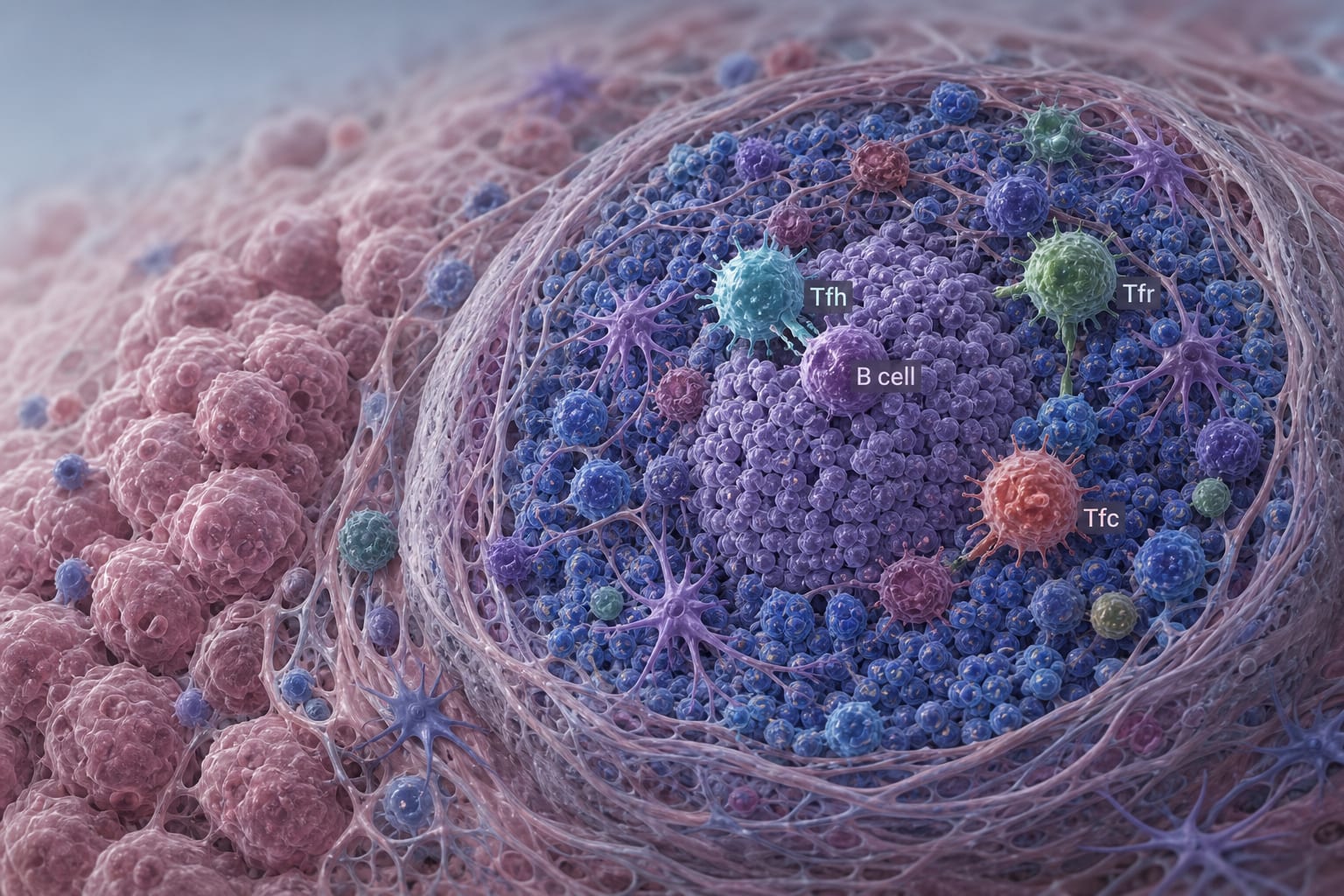
Follicular T cell subsets include follicular helper T cells (Tfh), follicular regulatory T cells (Tfr), and CXCR5⁺ follicular-like cytotoxic CD8⁺ T cells (Tfc).
Dysregulation of the Tfr/Tfh ratio and TLS maturation may contribute to immune suppression in ovarian cancer.
Follicular T cells are involved in B-cell activation and antigen presentation, influencing local immune microenvironment remodeling.
Therapeutic strategies targeting follicular T cell responses include immune checkpoint modulation and chemokine axis targeting.
Follicular immune features may serve as biomarkers for predicting immunotherapy response and patient stratification.
Clinical Implications
Understanding the role of follicular T cells in ovarian cancer could inform the development of new therapeutic strategies aimed at overcoming immunotherapy resistance. Monitoring the Tfr/Tfh ratio and TLS maturation may provide insights into patient prognosis and treatment response.
Conclusion
This review proposes a follicular T cell-centered framework for understanding immune responses in ovarian cancer, highlighting potential therapeutic avenues to address immunotherapy resistance.