Ultrasound combined with serum parathyroid hormone for assessing autologous parathyroid graft viability after endoscopic thyroidectomy: a retrospective study - Report - MDSpire

Ultrasound combined with serum parathyroid hormone for assessing autologous parathyroid graft viability after endoscopic thyroidectomy: a retrospective study

  • By

  • Qi Zhang

  • Tingbao Cao

  • Qiongyu Yang

  • Zhiheng Yan

  • Yupeng Zhang

  • Zhao Jin

  • Zesheng Wang

  • Kunpeng Qu

  • June 29, 2026

  • 0 min

Share

Clinical Report: Evaluation of Autologous Parathyroid Graft Viability Post-Endoscopic Thyroidectomy

Overview

This study evaluates the viability of autologous parathyroid grafts after endoscopic thyroidectomy using ultrasound and serum parathyroid hormone (PTH) measurements. Findings indicate significant increases in PTH concentration ratios and specific ultrasonographic features at the graft site.

Background

Hypoparathyroidism is a common complication following thyroidectomy, necessitating strategies to preserve parathyroid function. Autologous parathyroid transplantation has emerged as a technique to mitigate this risk, yet effective assessment of graft viability remains crucial. This study aims to enhance the understanding of graft viability through combined imaging and biochemical methods.
Data Highlights

Time PointPTH Ratio
Postoperative (3 months)28.89-fold increase

Key Findings

  • 38 patients underwent endoscopic unilateral radical thyroidectomy with autologous parathyroid transplantation.
  • PTH concentration on the transplantation side peaked at 3 months postoperatively.
  • The PTH ratio remained consistently >1.5-fold after the initial peak.
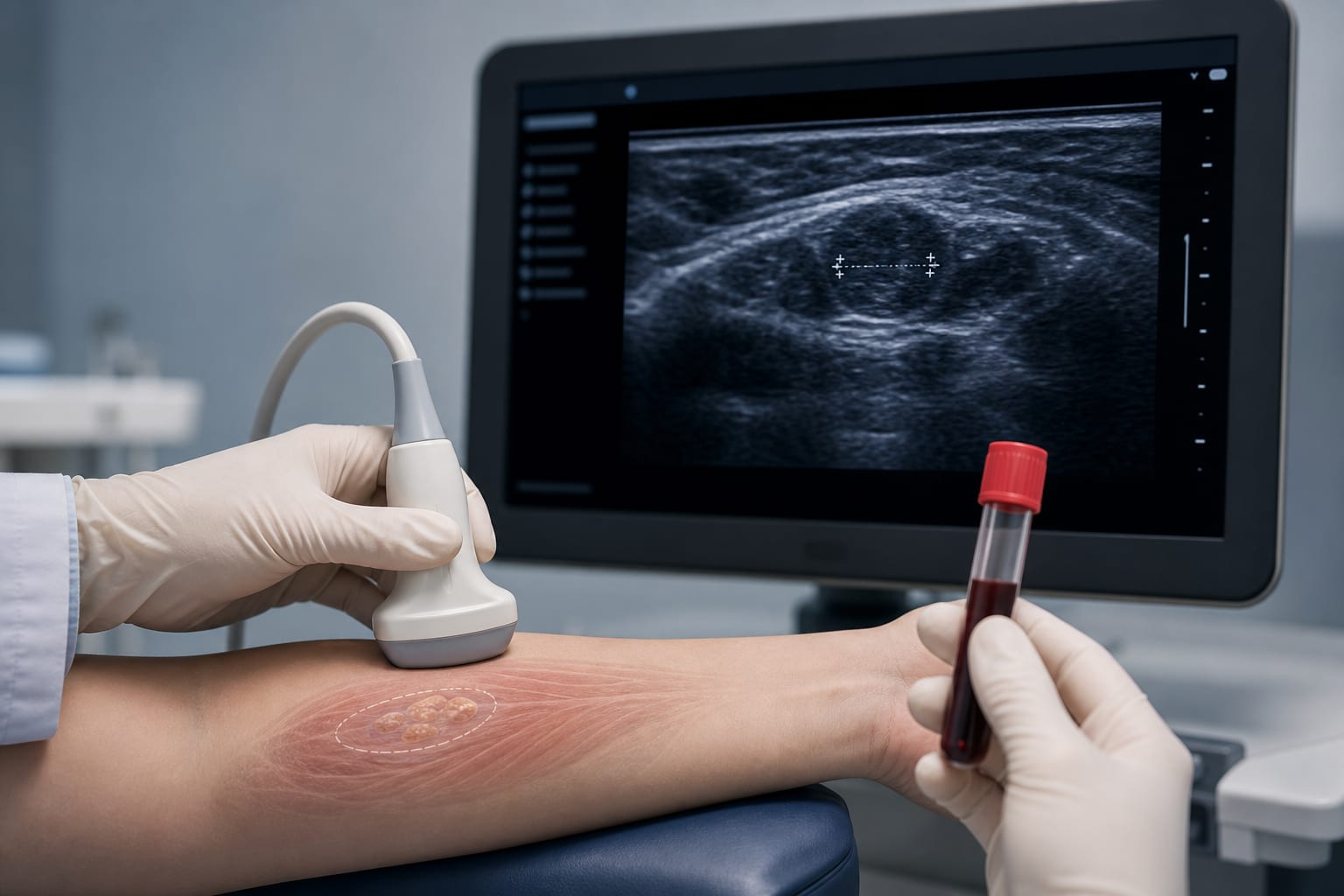
  • Ultrasonography revealed hypoechoic nodules at the graft site with blood flow signals detected by CDFI.
  • The study utilized the homogenate injection method for parathyroid transplantation.

Clinical Implications

The combination of ultrasonography and serum PTH measurement provides a method for assessing the viability of transplanted parathyroid glands.

Conclusion

The findings support the use of combined imaging and biochemical assessments for evaluating autologous parathyroid graft viability.

Related Resources & Content

  1. Minimally Invasive Total Parathyroidectomy with Autotransplantation of Partial Parathyroid Tissue in Secondary Hyperparathyroidism, Surgical Endoscopy, 2009 -- Innovative Surgical Technique
  2. Autofluorescence Patterns in Parathyroid Adenomas Observed with Near-Infrared Imaging, Surgical Endoscopy, 2024 -- Autofluorescence Patterns
  3. Enhanced Visual Detection of Unintentionally Removed Parathyroid Glands Through Near Infrared Autofluorescence Imaging Guidance, Surgical Endoscopy, 2021 -- Imaging Guidance
  4. Standardizing the reporting of postoperative hypoparathyroidism following thyroidectomy: consensus statement, PMC, 2025 -- Consensus Statement
  5. The outcomes of parathyroid gland autotransplantation during thyroid surgery: a systematic review, PubMed, 2025 -- Systematic Review
  6. Utilization of Autofluorescence Technology Enhances Parathyroid Function Preservation in Thyroid Surgical Procedures
  7. Standardizing the reporting of postoperative hypoparathyroidism following thyroidectomy: consensus statement from the European Society of Endocrine Surgeons, the American Association of Endocrine Surgeons, and the International Association of Endocrine Surgeons - PMC
  8. The outcomes of parathyroid gland autotransplantation during thyroid surgery: a systematic review, meta-analysis and trial sequential analysis - PubMed

Original Source(s)

Related Content