Clinical Report: Alzheimer's Disease with Idiotypic Vulnerability
Overview
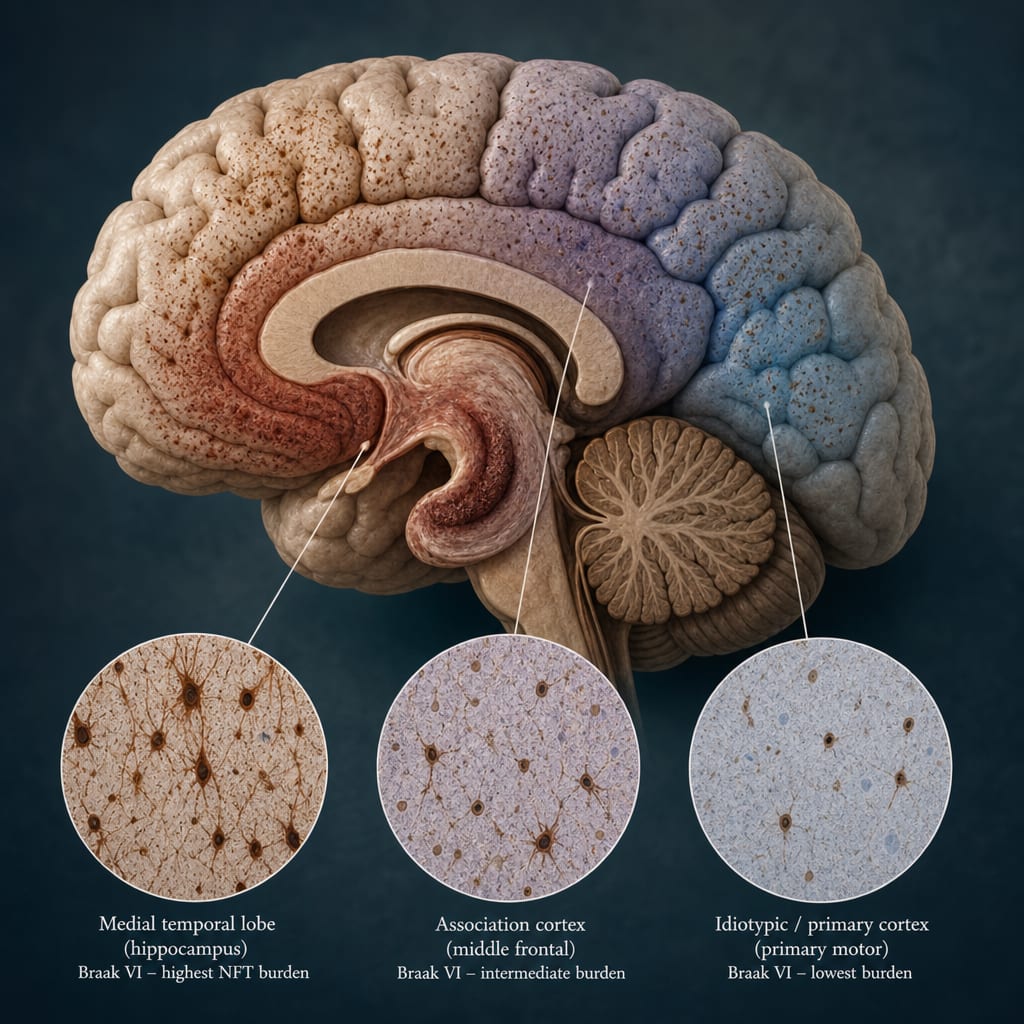
This report discusses the identification of a clinically significant subtype of Alzheimer's disease (AD) characterized by neurofibrillary tangles (NFTs) and highlights the heterogeneity of AD presentations. The findings suggest that distinct tau subtypes are associated with varying clinical characteristics and disease progression.
Background
Alzheimer's disease is the leading cause of dementia, and understanding its heterogeneity is crucial for diagnosis and treatment. The presence and distribution of neurofibrillary tangles, a hallmark of AD, can vary significantly among patients, influencing clinical outcomes and therapeutic approaches. Identifying subtypes based on tau pathology may enhance the precision of clinical management.
Data Highlights
No specific numerical data provided in the source material.
Key Findings
["Heterogeneity in Alzheimer's disease is evident, with distinct subtypes based on NFT distribution.", 'Three main subtypes identified: hippocampal-sparing, limbic-predominant, and typical AD.', 'Hippocampal-sparing subtype prevalence is higher in non-amnestic AD compared to amnestic AD.', 'Clinical characteristics and cognitive decline rates differ significantly among the identified subtypes.', 'Histological studies report a typical Braak subtype in 72-85% of amnestic AD cases.', 'Recent tau-PET imaging studies reveal a more varied distribution of tau subtypes compared to histological findings.']
Clinical Implications
Clinicians should consider the subtype of Alzheimer's disease when assessing patients, as this may influence cognitive profiles and treatment responses. Understanding the distribution of neurofibrillary tangles can guide more personalized therapeutic strategies and improve patient outcomes.
Conclusion
Recognizing the distinct subtypes of Alzheimer's disease characterized by neurofibrillary tangles is essential for advancing clinical practice and tailoring interventions. Further research is needed to explore the implications of these subtypes on disease management.
by John L. Robinson, Helen Cai, Nicholas J. Loh, Omar Vazquez, Zahra Khodakaramimaghsoud, EunRan Suh, Vivianna M. Van Deerlin, Paul A. Yushkevich, Dawn Mechanic-Hamilton, Sharon X. Xie, Daniel T. Ohm, David A. Wolk, David J. Irwin, Jeffrey S. Phillips, Edward B. Lee
Bringing together structural and functional brain imaging data, Cedars-Sinai investigators have created a “traffic map” to illustrate which pathways are most frequently used for interactions between different regions of the brain and enable the regions to communicate with each other.