Clinical Report: A Modern Overview of Primary Membranous Nephropathy
Overview
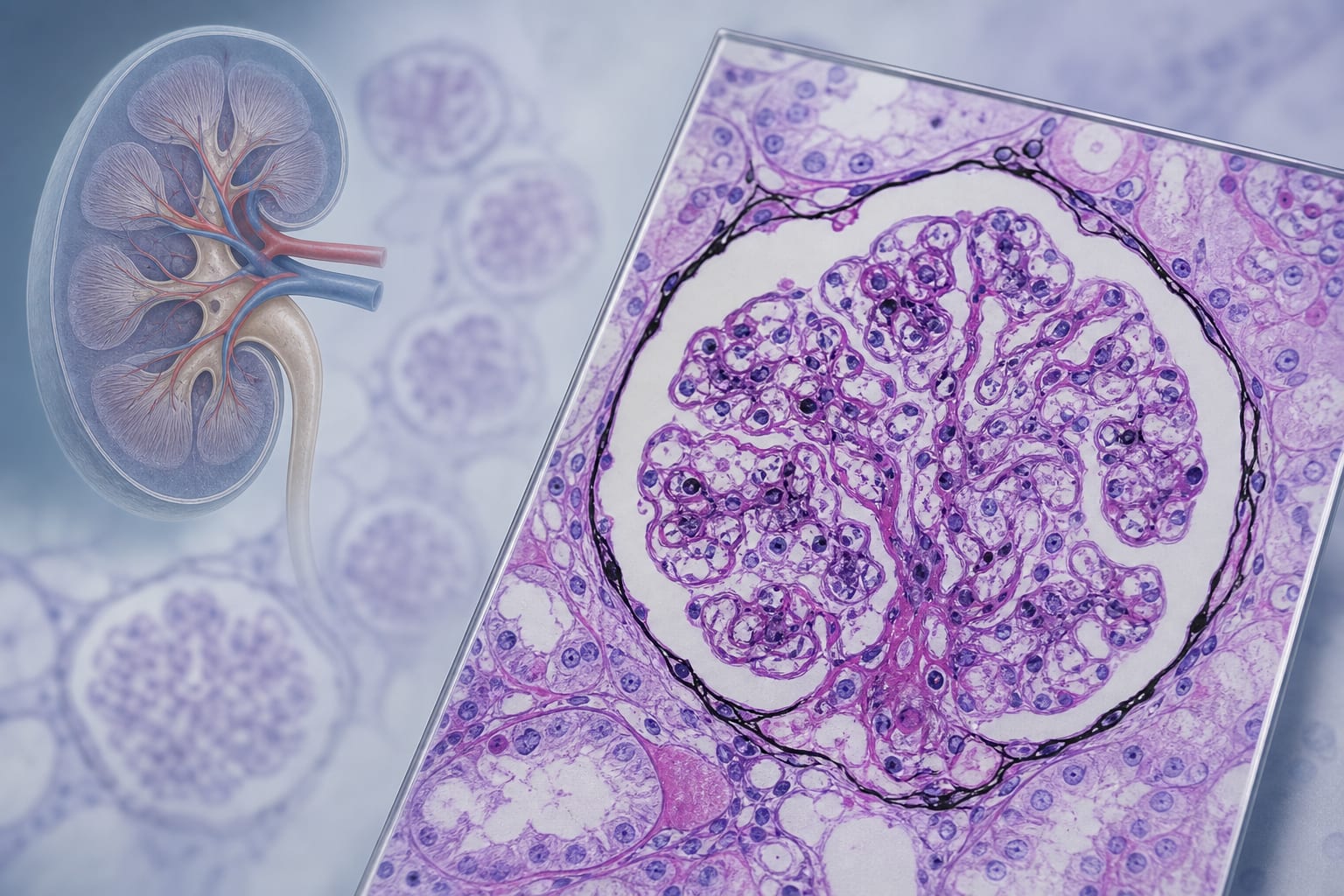
Primary membranous nephropathy (PMN) is an autoimmune disease characterized by autoantibodies targeting podocyte-associated antigens, primarily phospholipase A2-receptor (PLA2R).
Background
PMN is the most common cause of nephrotic syndrome in Caucasian adults, with an incidence of 6–10 per million. It typically presents with nephrotic syndrome and can lead to significant renal impairment, including end-stage kidney disease (ESKD).
Data Highlights
No numerical data provided in the source material.
Key Findings
PMN is caused by autoantibodies against podocyte antigens, mainly PLA2R.
About one-third of patients may experience spontaneous remission, while another third progress to ESKD.
Immunosuppression is based on KDIGO risk stratification, with low-risk cases monitored and high-risk cases treated with steroids or rituximab.
PLA2R titers can be used to monitor treatment response and predict relapses.
Rituximab resistance may occur due to anti-rituximab antibodies or chronic scarring.
Transplantation is the optimal therapy for ESKD, but recurrence of PMN is common post-transplant.
Clinical Implications
Monitoring PLA2R titers is essential for assessing treatment response and anticipating relapses.
Conclusion
PMN remains a complex autoimmune condition requiring careful management and monitoring. Continued research into treatment strategies is necessary to improve patient outcomes.