Clinical Report: TIFA: A Central Signaling Node Connecting Inflammation, Innate Immunity, and Human Disease
Overview
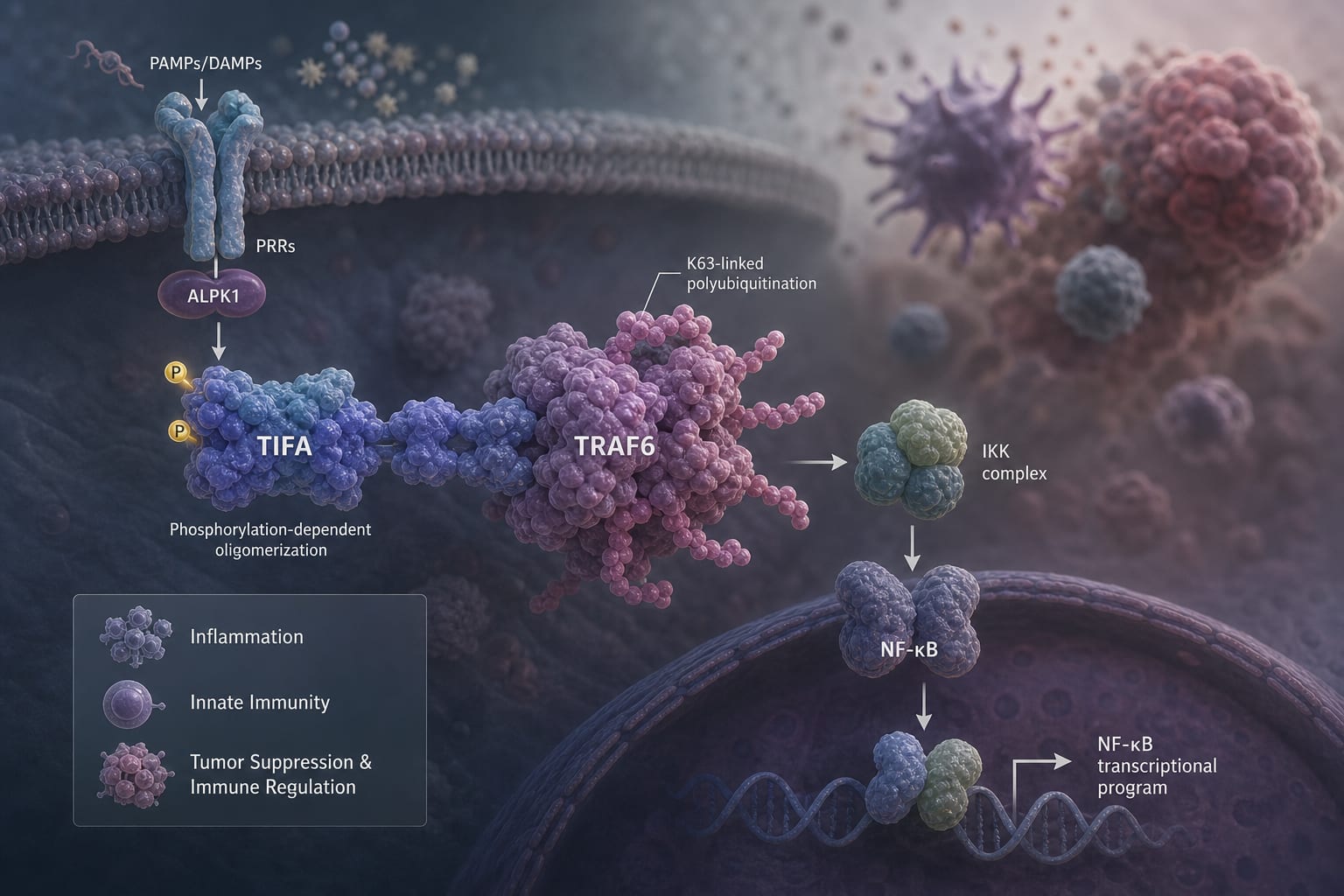
TIFA is an adaptor protein that plays a crucial role in innate immune signaling and inflammation. It facilitates the oligomerization and ubiquitination of TRAF6, activating NF-κB-dependent pathways.
Background
Understanding TIFA's role in immune signaling is essential due to its involvement in various diseases, including chronic inflammation and cancer.
Data Highlights
No numerical data available in the source material.
Key Findings
TIFA mediates phosphorylation-dependent protein–protein interactions, crucial for immune signaling.
It promotes the oligomerization of TRAF6, activating NF-κB-dependent inflammatory pathways.
TIFA's structure includes an FHA domain that recognizes phosphorylated motifs, facilitating intermolecular binding.
TIFA exhibits context-dependent roles, acting as an oncogenic factor in some scenarios while serving as a tumor suppressor in others.
ALPK1-TIFA signaling is critical for sensing microbial metabolites and initiating immune responses.
Clinical Implications
The understanding of TIFA's signaling mechanisms may provide insights into therapeutic targets for inflammatory diseases and cancers. Its dual role in tumorigenesis suggests that context-specific approaches may be necessary in treatment strategies.
Conclusion
TIFA serves as a pivotal node in immune signaling, with significant implications for understanding and treating various human diseases. Further exploration of its mechanisms may enhance therapeutic interventions.