Association between elevated serum amyloid a levels and clinical outcomes in intracerebral haemorrhage: a retrospective study - Report - MDSpire

Association between elevated serum amyloid a levels and clinical outcomes in intracerebral haemorrhage: a retrospective study

  • By

  • Jixin He

  • Tongzhang Xu

  • Rong Wu

  • Ying Hu

  • Dan Zhao

  • Wenbo Zhang

  • Fangfang Wang

  • Jie Cao

  • Min Jiang

  • Xiaoping Yin

  • Moxin Wu

  • July 9, 2026

  • 0 min

Share

Clinical Report: Link Between Increased Serum Amyloid A Levels and Clinical Outcomes Following Intracerebral Hemorrhage

Overview

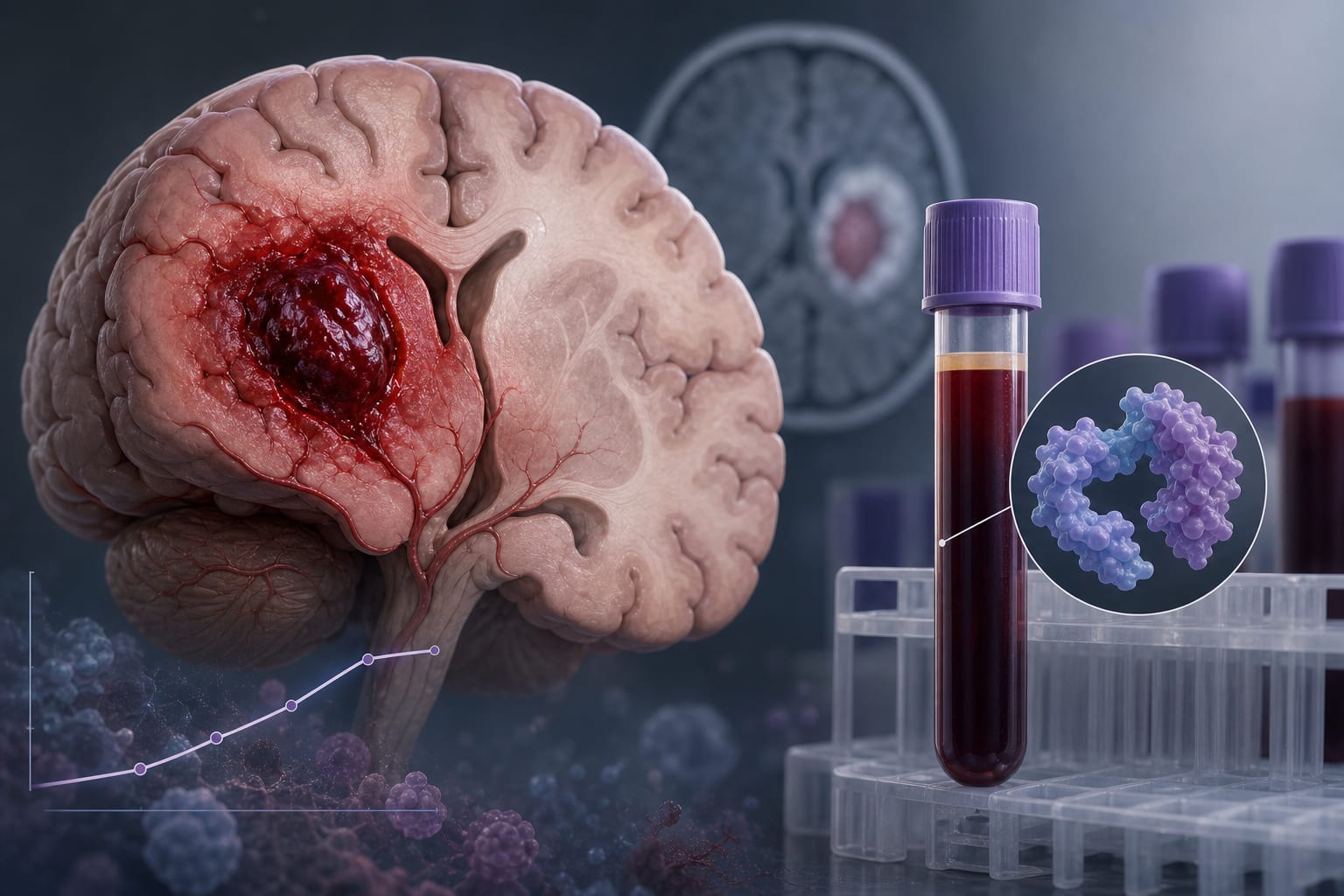
This study investigates the relationship between serum amyloid A (SAA) levels and clinical outcomes in patients following intracerebral hemorrhage (ICH). Elevated SAA levels were found to correlate with disease severity and poor prognosis.

Background

Intracerebral hemorrhage (ICH) is a critical cerebrovascular event associated with high morbidity and mortality rates. Understanding biomarkers that can predict outcomes following ICH is essential for improving patient management and treatment strategies. Serum amyloid A (SAA) is an acute-phase protein that may provide insights into the inflammatory response and prognosis in ICH patients.

Data Highlights

ParameterICH PatientsHealthy Controlsp-value
SAA Levels (mg/L)3.12.4< 0.001

Key Findings

  • SAA levels were significantly higher in ICH patients compared to healthy controls (3.1 vs. 2.4 mg/L, p < 0.001).
  • Positive correlation between SAA levels and disease severity as measured by NIHSS (r = 0.106, p = 0.029) and negative correlation with GCS (r = -0.128, p = 0.003).
  • SAA levels were independently associated with poor prognosis following ICH.
  • The area under the curve (AUC) for SAA levels in predicting hematoma expansion was 0.694 (95% CI: 0.630–0.758).
  • SAA levels were significantly elevated on days 3 and 7 compared to admission levels (p < 0.001).

Clinical Implications

Monitoring SAA levels in ICH patients may provide valuable prognostic information.

Conclusion

Elevated SAA levels in ICH patients are associated with poorer clinical outcomes.

Related Resources & Content

  1. Acta Neuropathologica — Pathological insights into cerebral amyloid angiopathy underlying intracerebral haemorrhage: population-based autopsy study
  2. Frontiers in Neurology — Distinct prognostic value of aspartate-to-alanine aminotransferase ratio (AAR) in traumatic brain injury versus hemorrhagic stroke: a cohort study of 1,069 patients
  3. Acta Neuropathologica — Plasma Biomarkers Associated with Alzheimer’s Disease: Links to Neuropathological Changes and Cognitive Decline
  4. European Stroke Organisation (ESO) and European Association of Neurosurgical Societies (EANS) guideline on stroke due to spontaneous intracerebral haemorrhage
  5. Trial of Early Minimally Invasive Removal of Intracerebral Hemorrhage | New England Journal of Medicine
  6. Acta Neuropathologica — Diminished vascular amyloid accumulation at sites of microhemorrhages in cerebral amyloid angiopathy
  7. European Stroke Organisation (ESO) and European Association of Neurosurgical Societies (EANS) guideline on stroke due to spontaneous intracerebral haemorrhage
  8. Trial of Early Minimally Invasive Removal of Intracerebral Hemorrhage | New England Journal of Medicine
  9. Failed resolution of inflammation in intracerebral haemorrhage | Nature Reviews Neurology

Original Source(s)

Related Content