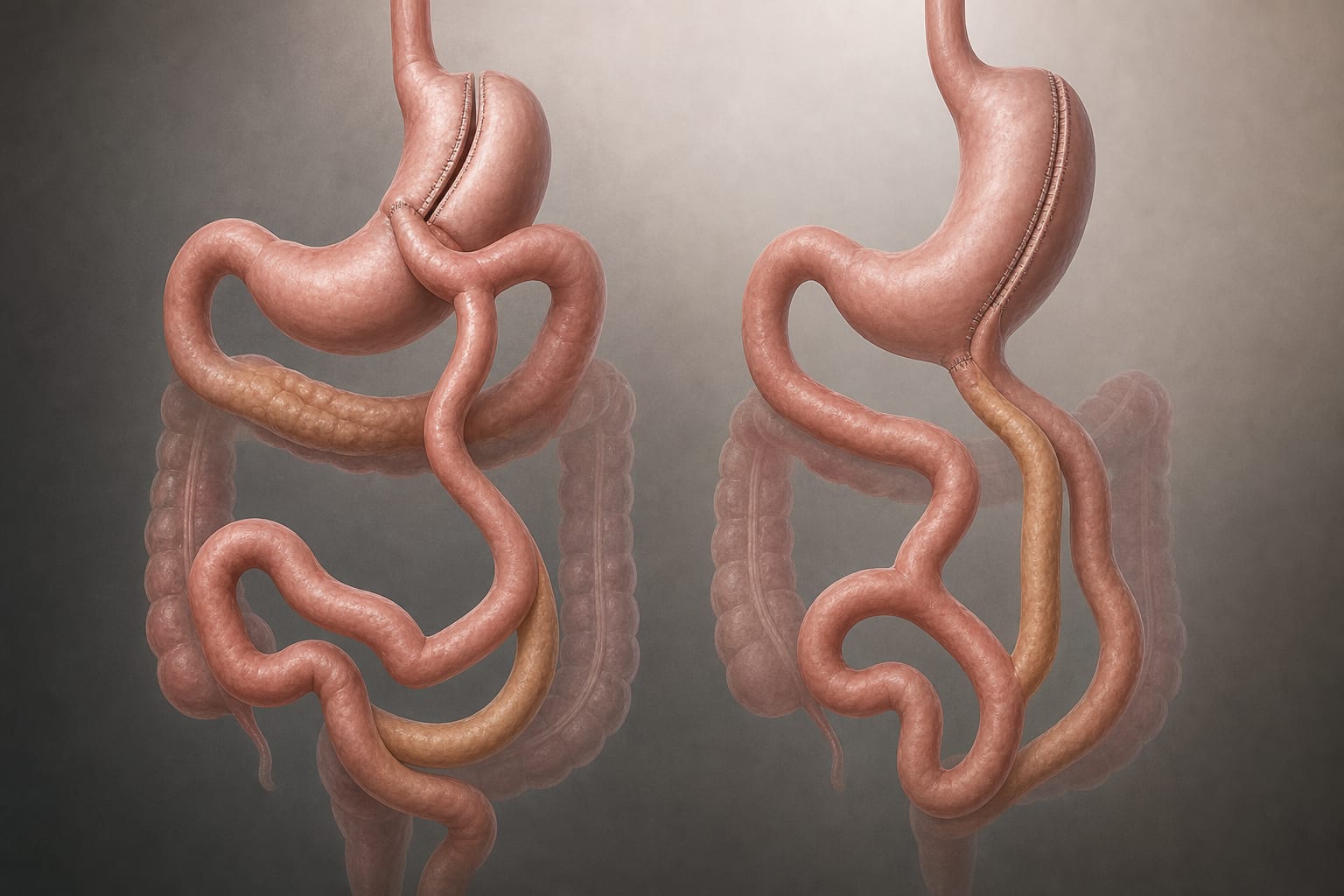
Correction to: One Anastomosis Gastric Bypass Versus Single Anastomosis Sleeve Jejunal Bypass: Does Duodenal Exclusion Matter? - Report - MDSpire

Correction to: One Anastomosis Gastric Bypass Versus Single Anastomosis Sleeve Jejunal Bypass: Does Duodenal Exclusion Matter?

  • By

  • Patrick Noel

  • Carlos Augusto Scussel Madalosso

  • Paulo Reis

  • Rui Ribeiro

  • Laurent Layani

  • Moises Jacobs

  • Victor Ramos Mussa Dib

  • May 18, 2026

  • 0 min

Share

Clinical Report: Correction to Comparison of OAGB and SASJ Bypass

Overview

This report addresses a correction in the citation of a reference related to the comparison of One Anastomosis Gastric Bypass (OAGB) and Single Anastomosis Sleeve Jejunal Bypass (SASJ). It emphasizes the importance of accurate referencing in clinical literature to ensure the integrity of research findings.

Background

The comparison of OAGB and SASJ is significant in the field of bariatric surgery, as both procedures are utilized for weight loss and metabolic improvement. Accurate citations and corrections in published studies are crucial for guiding clinical practice and ensuring that healthcare professionals rely on the most current and correct information. This correction highlights the ongoing need for vigilance in the publication process.

Data Highlights

No numerical or trial data is presented in the correction article.

Key Findings

  • The correction pertains to the citation of a reference in a previous publication on OAGB.
  • OAGB is recognized as an effective primary and revisional metabolic/bariatric procedure.
  • Long-term outcomes of OAGB include concerns about bile reflux and micronutrient deficiencies.
  • Current guidelines emphasize the need for individualized surgical approaches and vigilant follow-up.
  • OAGB shows comparable weight loss and metabolic outcomes to Roux-en-Y Gastric Bypass (RYGB) but with a higher risk of reflux symptoms.

Clinical Implications

Healthcare professionals should ensure they are referencing the most accurate and updated literature when considering surgical options for patients. The correction underscores the importance of maintaining high standards in research publication to support clinical decision-making.

Conclusion

Accurate citations are essential in clinical research, and this correction serves as a reminder of the importance of precision in the scientific literature. Ongoing evaluation of surgical techniques will continue to inform best practices in bariatric surgery.

Related Resources & Content

  1. Ortíz-Gómez, J., et al., BMC Surg, 2025 -- One anastomosis gastric bypass (OAGB): a scoping review
  2. Obesity Surgery (Springer) — Publisher Correction: Ring-Augmented versus Non-Ring-Augmented One-Anastomosis Gastric Bypass as Revisional Surgery after Sleeve Gastrectomy: a Comparative Cohort Study
  3. Surgical Endoscopy — Comparing Linear and Circular Techniques: An Overview of Anastomotic Ulcers Following Gastric Bypass Surgery
  4. Obesity Surgery — Amendment: Insights on Technical Aspects of One Anastomosis Gastric Bypass from the Israeli Society of Metabolic and Bariatric Surgery
  5. Obesity Surgery — Revisional Surgery Using Single-Anastomosis Sleeve Jejunal (SAS-J) Bypass Following Initial Restrictive Bariatric Interventions
  6. Primary and Revisional One Anastomosis Gastric Bypass: A Systematic Review and GRADE-Based IFSO Position Statement
  7. One-Anastomosis Versus Roux-en-Y Gastric Bypass in the Resolution of Comorbidities: A Non-inferiority Meta-analysis and Meta-regression - PubMed
  8. Two-year outcomes of single anastomosis sleeve jejunal bypass (SASJ) vs sleeve gastrectomy: a Taiwanese multi-center study - PubMed

Original Source(s)

Related Content