Clinical Report: Importance of Lesion Visibility in Contrast-Enhanced Mammography
Overview
Revise to state that lesion conspicuity may not be a reliable predictor of malignancy.
Background
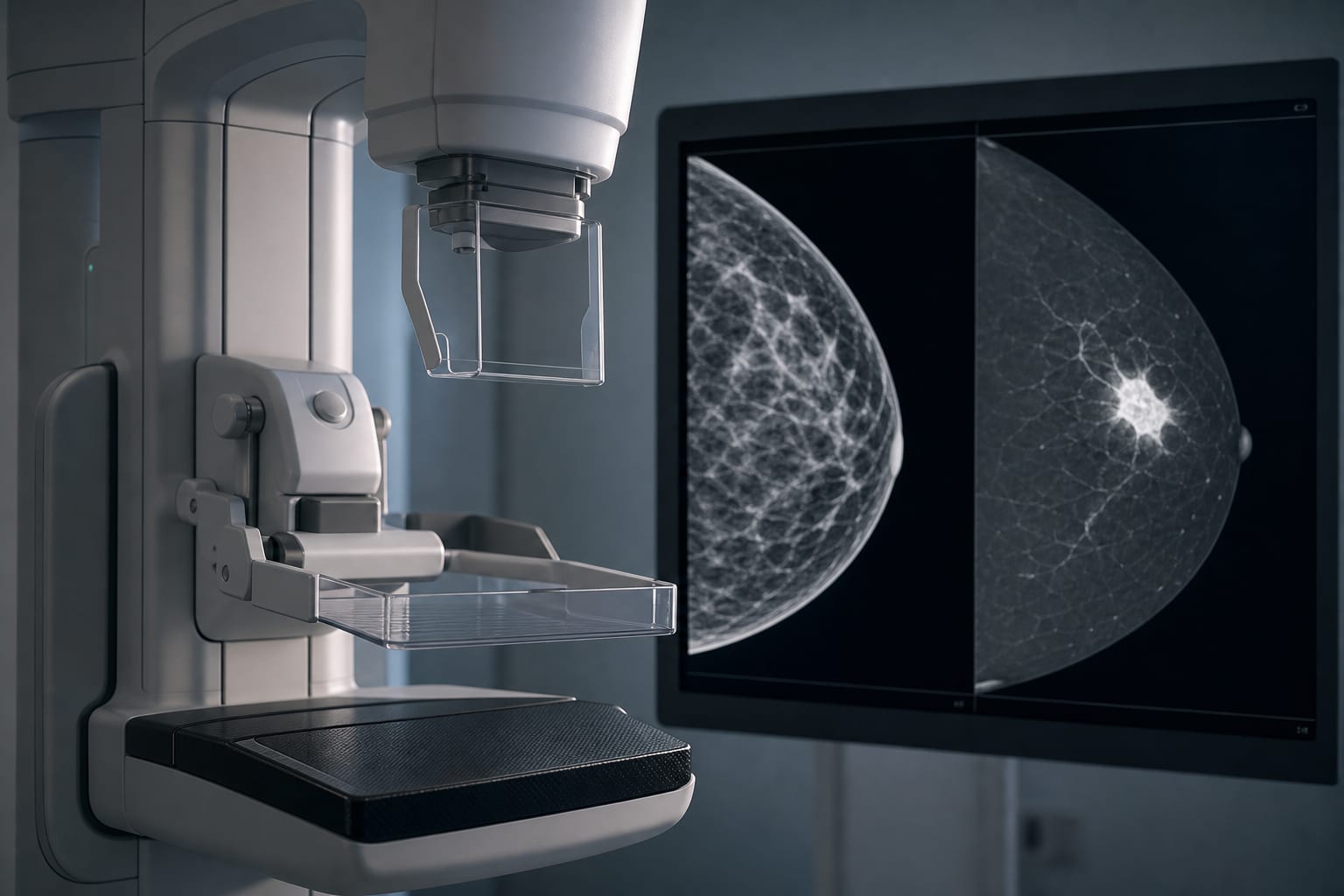
Contrast-enhanced mammography (CEM) has emerged as a significant tool in breast cancer screening and diagnosis since its FDA approval in 2011. Understanding lesion conspicuity, defined as the degree of enhancement relative to background parenchymal enhancement, is crucial for accurate interpretation of CEM images. This study aims to clarify the relationship between lesion conspicuity and malignancy risk, which is vital for improving diagnostic accuracy.
Data Highlights
No numerical data or trial data was provided in the source material.
Key Findings
Lesion conspicuity is graded as low, moderate, or high based on enhancement relative to background.
The study included 476 CEM examinations with 563 enhancing lesions for analysis.
Independent reviews by experienced radiologists were conducted to assess lesion conspicuity.
The criteria for predicting benignity versus malignancy based on CEM findings are still being defined.
Emerging evidence suggests that conspicuity alone may not be a reliable predictor of malignancy.
Clinical Implications
Clinicians should consider the limitations of lesion conspicuity in predicting malignancy when interpreting CEM results. Further studies are needed to establish more reliable criteria for assessing breast lesions in CEM.
Conclusion
The study underscores the complexity of interpreting lesion conspicuity in CEM and its uncertain role in malignancy prediction. Ongoing research is essential to enhance diagnostic accuracy in breast imaging.
by Tali Amir, Carol H. Lee, Molly P. Hogan, Sarah Eskreis-Winkler, Varadan Sevilimedu, Daniel J. Long, Noam Nissan, Victoria L. Mango, Kimberly N. Feigin, Maxine S. Jochelson, Christopher E. Comstock, Janice S. Sung