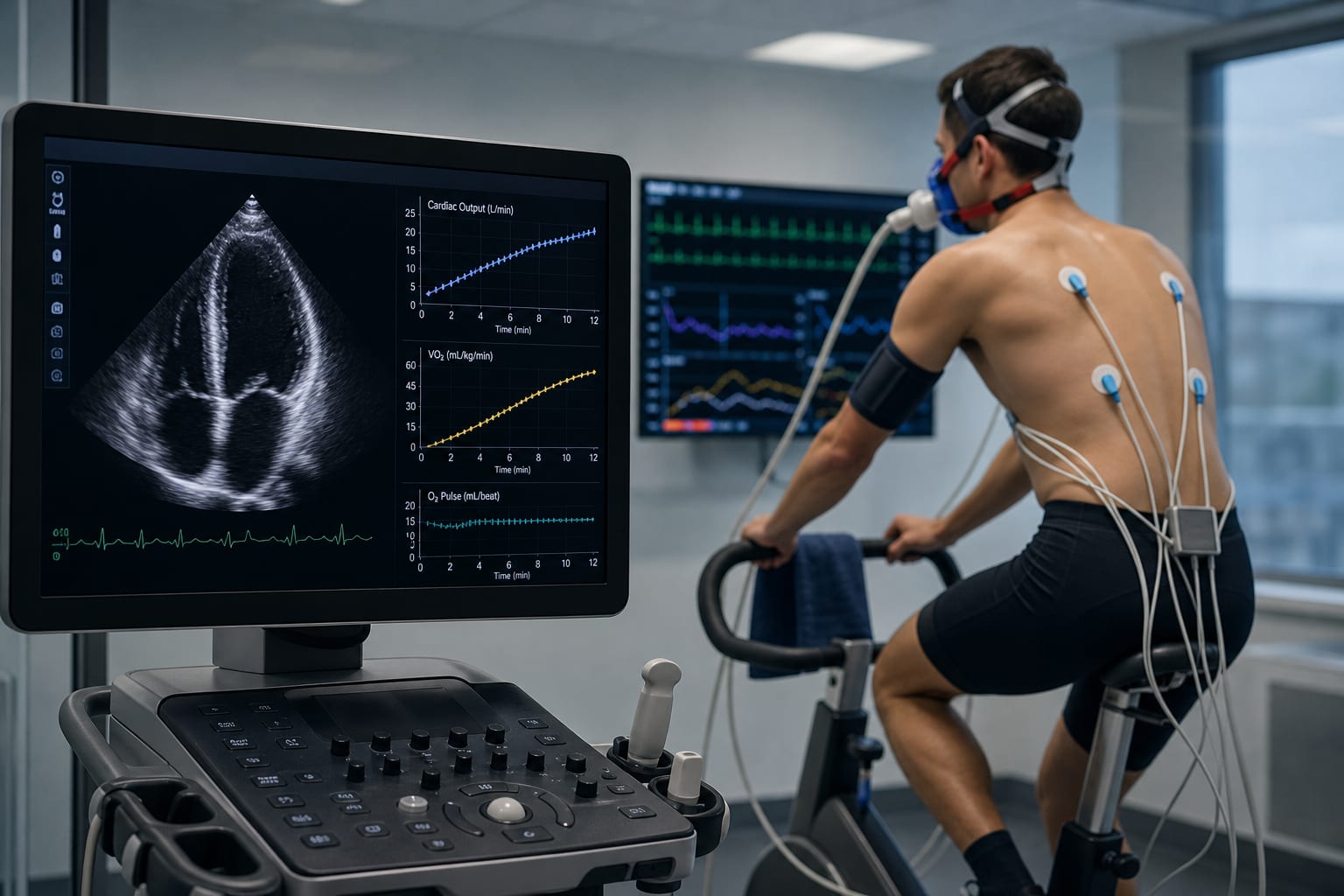
Clinical Report: Evaluating Exercise Testing in Athletes for ACM Diagnosis
Background
Arrhythmogenic cardiomyopathy (ACM) is a hereditary condition that poses significant risks, including sudden cardiac death, particularly in athletes. The overlap between physiological adaptations in athletes and pathological changes in ACM complicates diagnosis, necessitating refined diagnostic criteria and risk assessment strategies. Current diagnostic frameworks may not adequately address the unique challenges presented by highly trained athletes.
Data Highlights
No numerical data or trial data provided in the source material.
Key Findings
ACM diagnosis in athletes is complicated by the overlap with physiological adaptations of the athletic heart.
Nearly one-third of elite athletes exhibit right ventricular dilatation, complicating diagnostic clarity.
Exercise testing may reveal regional wall motion abnormalities or inadequate ejection fraction increases, indicating potential underlying pathology.
A Qc/VO2 slope <5 during exercise may suggest central limitations indicative of subclinical ACM.
Future studies should focus on combined CPET and stress echocardiography to improve diagnostic accuracy in suspected ACM cases.
Clinical Implications
Clinicians should consider integrating exercise testing into the diagnostic evaluation of athletes suspected of ACM.
Conclusion
The integration of advanced exercise testing modalities may provide critical insights into the diagnosis and management of ACM in athletes, addressing current diagnostic challenges and improving patient outcomes.