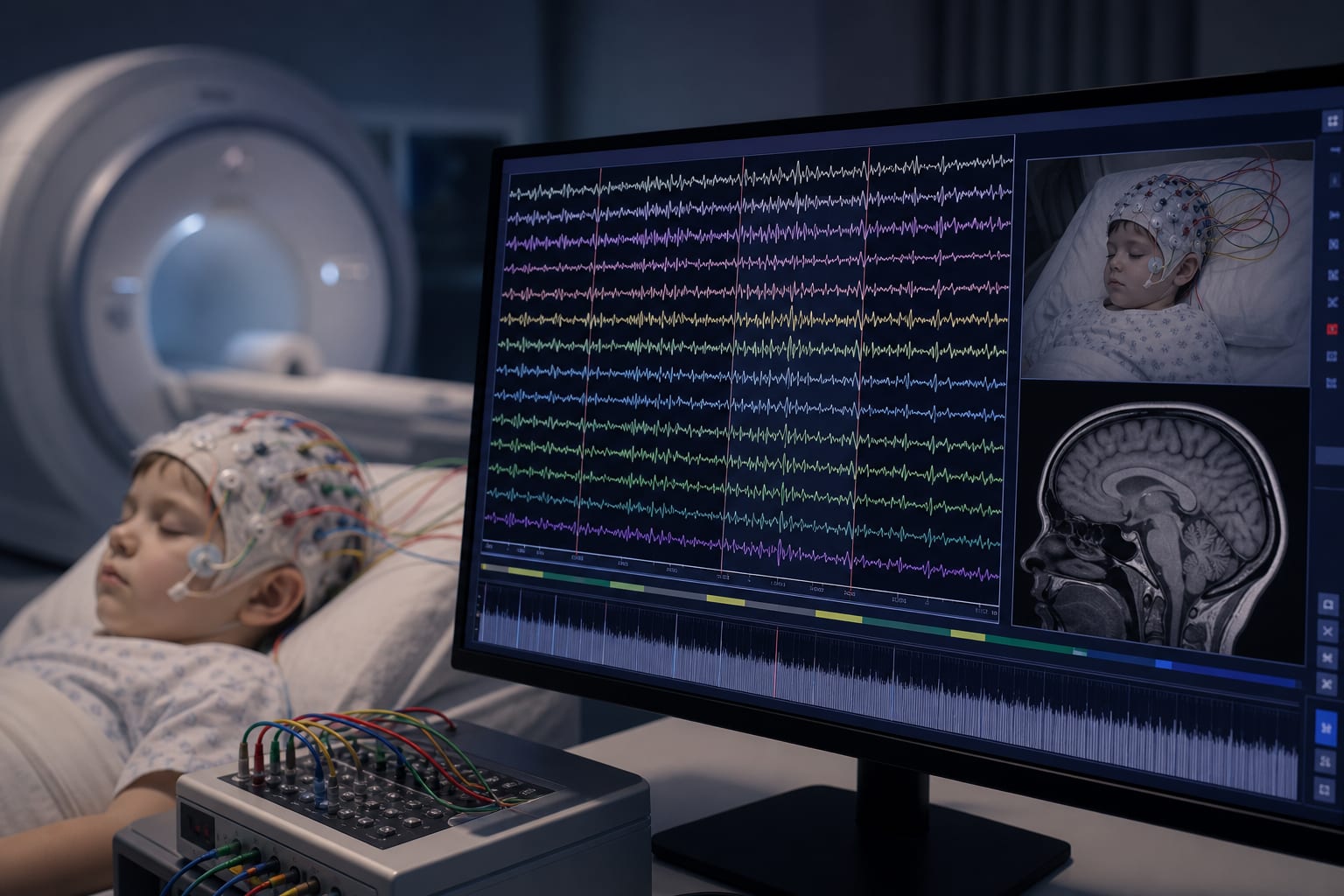
Clinical Report: Advancements in MRI-guided Laser Interstitial Thermal Therapy for Drug-Resistant Epilepsy
Overview
This comprehensive review evaluates the application of MRI-guided laser interstitial thermal therapy (MRgLITT) for drug-resistant epilepsy (DRE), highlighting a seizure freedom rate between 18.87% and 75.86%. The review underscores the critical lack of standardized clinical guidelines and the very low certainty of evidence due to the absence of randomized studies.
Background
Drug-resistant epilepsy (DRE) affects approximately 30%–40% of epilepsy patients, necessitating effective treatment options. Surgical interventions, particularly MRgLITT, have emerged as promising alternatives, yet the lack of standardized guidelines presents challenges in clinical application. Understanding the efficacy and safety of MRgLITT is crucial for improving patient outcomes in DRE.
Data Highlights
Outcome
Rate
Seizure Freedom Rate
18.87% - 75.86%
Visual Field Deficit Complications
2.17% - 7.5%
Intracranial Hemorrhage Complications
0.96% - 8.6%
Key Findings
Seizure freedom rates for MRgLITT range from 18.87% to 75.86%.
Fourteen systematic reviews scored “Critically low” on the AMSTAR-2 tool.
The most common complications include visual field deficits (2.17%–7.5%) and intracranial hemorrhage (0.96%–8.6%).
All outcomes reported a “very low” certainty of evidence due to the absence of randomized studies.
The primary outcomes assessed were seizure freedom and perioperative complications rates.
Clinical Implications
The findings indicate a need for further research to establish definitive conclusions regarding MRgLITT for DRE. Clinicians should be aware of the variability in outcomes and the potential complications associated with this therapy.
Conclusion
This review highlights the promising yet uncertain role of MRgLITT in treating DRE, emphasizing the necessity for more robust studies to clarify its efficacy and safety.
by Carlos Quispe-Vicuña, Fernando Terry, Miguel Cabanillas-Lazo, Alejandro Enríquez-Marulanda, Niels Pacheco-Barrios, Forough Yazdanian, J. Pierre Zila-Velasque, David R. Soriano-Moreno, Christian Moran-Mariños, Evan Luther, Lekhaj Daggubati, Martin Merenzon, Jaime Lopez-Calle, Jorge G. Burneo, Ricardo J. Komotar, Ziev B. Moses, John D. Rolston, Carlos Alva-Diaz