Drug-induced liver injury as a strong independent predictor of in-hospital mortality in tuberculous meningitis: potential age-related effect modification suggested in a large lifespan cohort - Report - MDSpire
Advertisement
Drug-induced liver injury as a strong independent predictor of in-hospital mortality in tuberculous meningitis: potential age-related effect modification suggested in a large lifespan cohort
Liver Injury Induced by Medications as a Significant Predictor of Mortality
Overview
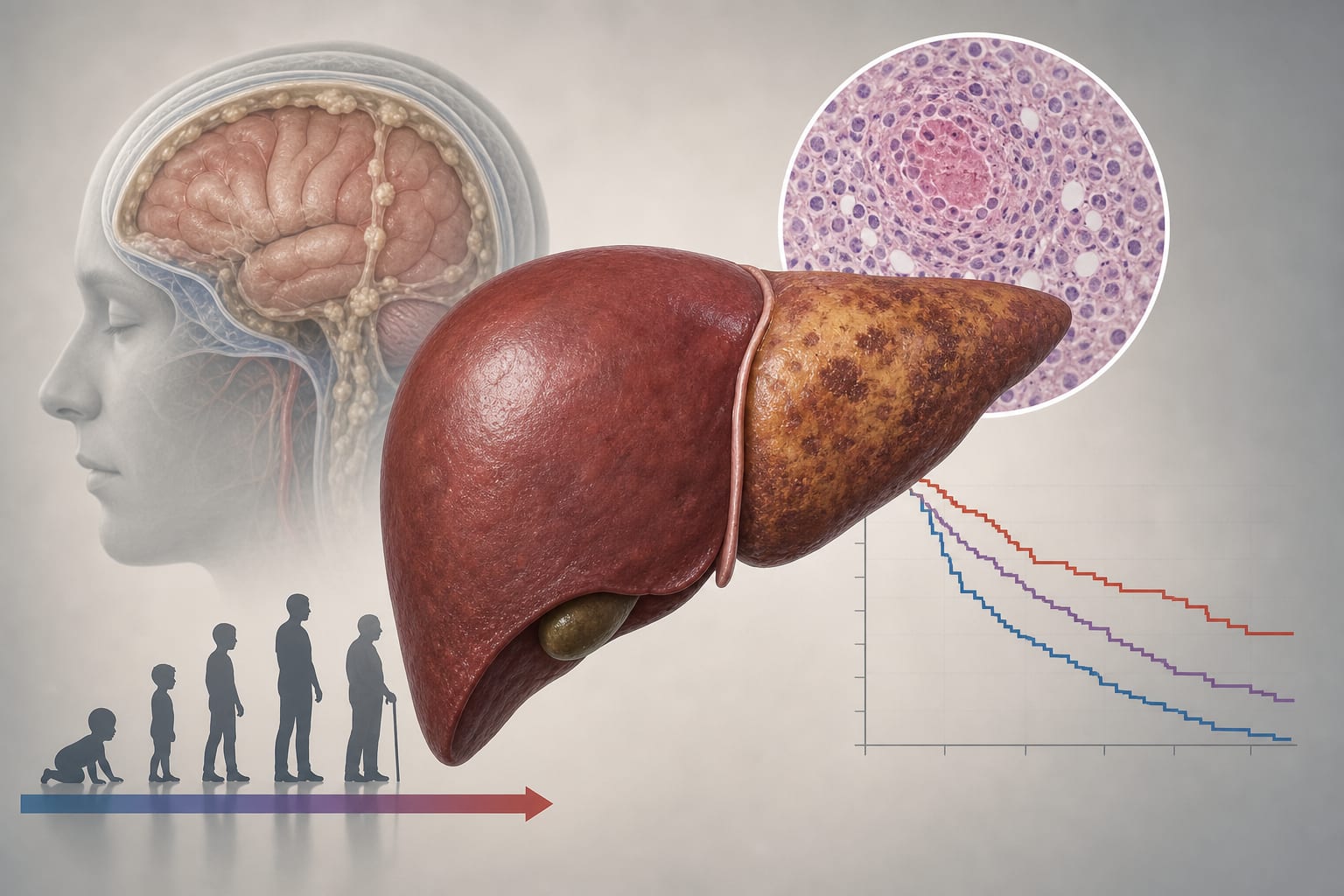
This study identifies drug-induced liver injury (DILI) as a significant independent predictor of in-hospital mortality in patients with tuberculous meningitis (TBM). The findings suggest that DILI occurs in a notable proportion of TBM patients and is associated with a markedly increased risk of mortality, particularly highlighting potential age-related modifications.
Background
Tuberculous meningitis (TBM) is a severe manifestation of tuberculosis with high mortality rates. Drug-induced liver injury (DILI) is a common complication during anti-tuberculosis treatment, potentially leading to treatment interruptions and worse outcomes. Understanding the relationship between DILI and mortality is crucial for improving patient management and outcomes in TBM.
Data Highlights
Measure
Value
In-hospital mortality rate
11.9% (187/1,574)
DILI occurrence
13.8% (217/1,574)
Adjusted odds ratio for DILI and mortality
8.536 (95% CI 5.970–12.245; P < 0.001)
Median time to DILI onset
23 days (IQR 18–29)
ΔAUC with DILI included
0.144
Key Findings
DILI was independently associated with in-hospital mortality in TBM patients.
The adjusted odds ratio for mortality associated with DILI was 8.536.
DILI occurred in 13.8% of the studied cohort.
All DILI non-survivors had DILI precede death.
Adding DILI to mortality risk models significantly improved predictive accuracy.
Clinical Implications
Healthcare providers should closely monitor liver function in TBM patients undergoing anti-tuberculosis therapy due to the high risk of DILI. Early identification and management of DILI may improve patient outcomes and reduce mortality rates.
Conclusion
DILI is a critical factor influencing in-hospital mortality in TBM patients, warranting vigilant monitoring and timely intervention. The potential age-related modifications in this association require further investigation.