Clinical Report: Development of a Digital Simulation Educational Framework for Medical Imaging
Overview
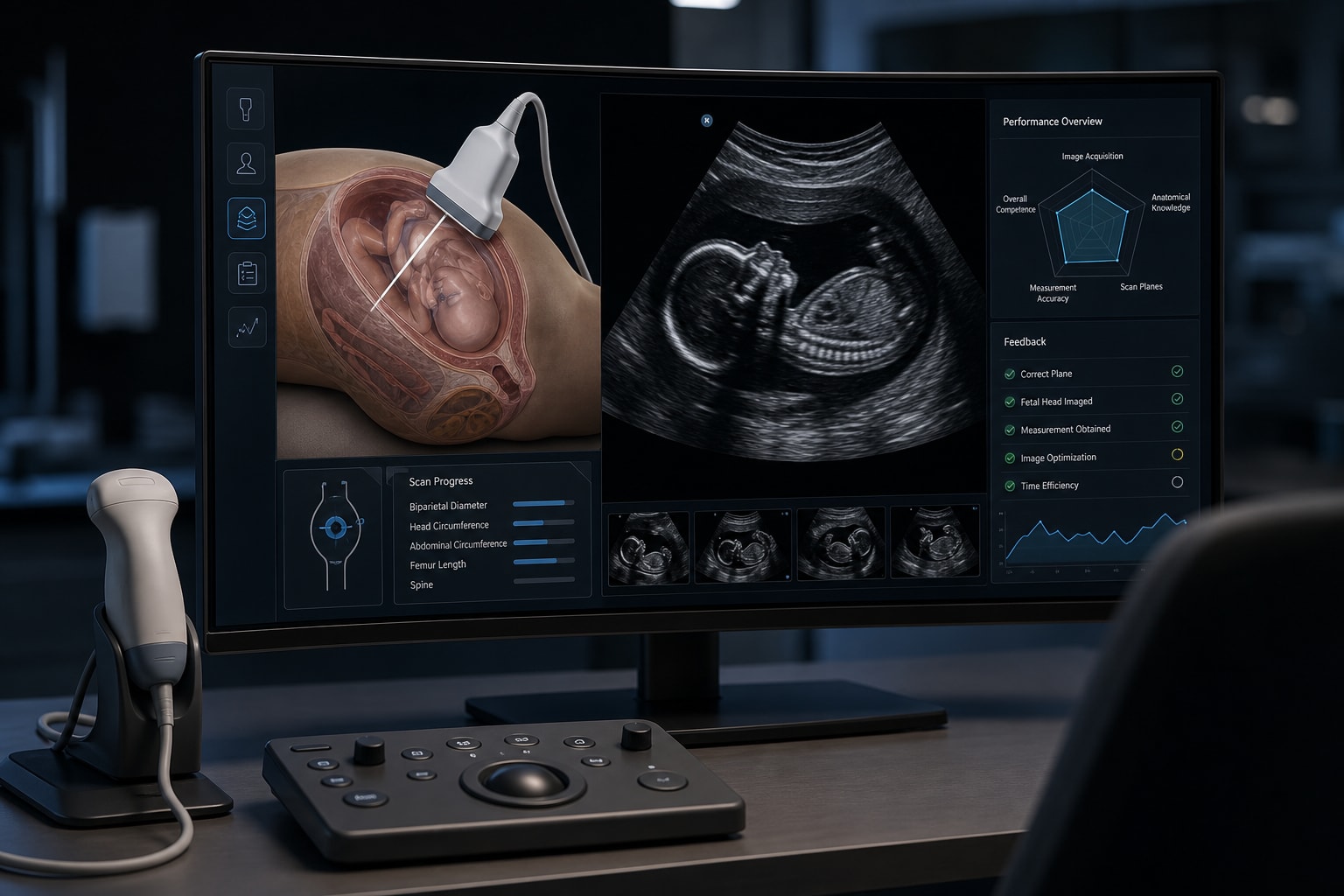
This study evaluates a virtual simulation teaching system for medical imaging, demonstrating improvements in skills among participants with varying levels of experience.
Background
Medical imaging education is crucial for developing competent clinical imaging professionals. This study highlights the effectiveness of a specialty-oriented virtual simulation teaching system in improving clinical competencies.
Data Highlights
Group
Pre-training Score
Post-training Score
p-value
All Subjects
54.19 ± 18.03
66.62 ± 12.41
< 0.001
Residents
42.38 ± 15.41
59.95 ± 12.63
< 0.05
Junior Technicians
63.4 ± 12.13
73.07 ± 8.34
< 0.05
Senior Technicians
72.50 ± 7.89
73.83 ± 7.41
0.117
Key Findings
The study showed skill improvement in fetal scanning after virtual simulation training.
Residents and junior technicians exhibited notable improvements post-training.
Senior technicians did not show significant improvement, indicating varying training needs based on experience.
Key components of an effective virtual simulation system include user needs identification and engaging interaction modalities.
Clinical Implications
Tailoring training approaches based on the experience level of participants may optimize educational outcomes.
Conclusion
The study supports the application of virtual simulation in medical imaging education.