Clinical Report: Changes in the Lactylation Profile of Sperm in Men with Varicocele-Related Asthenozoospermia
Overview
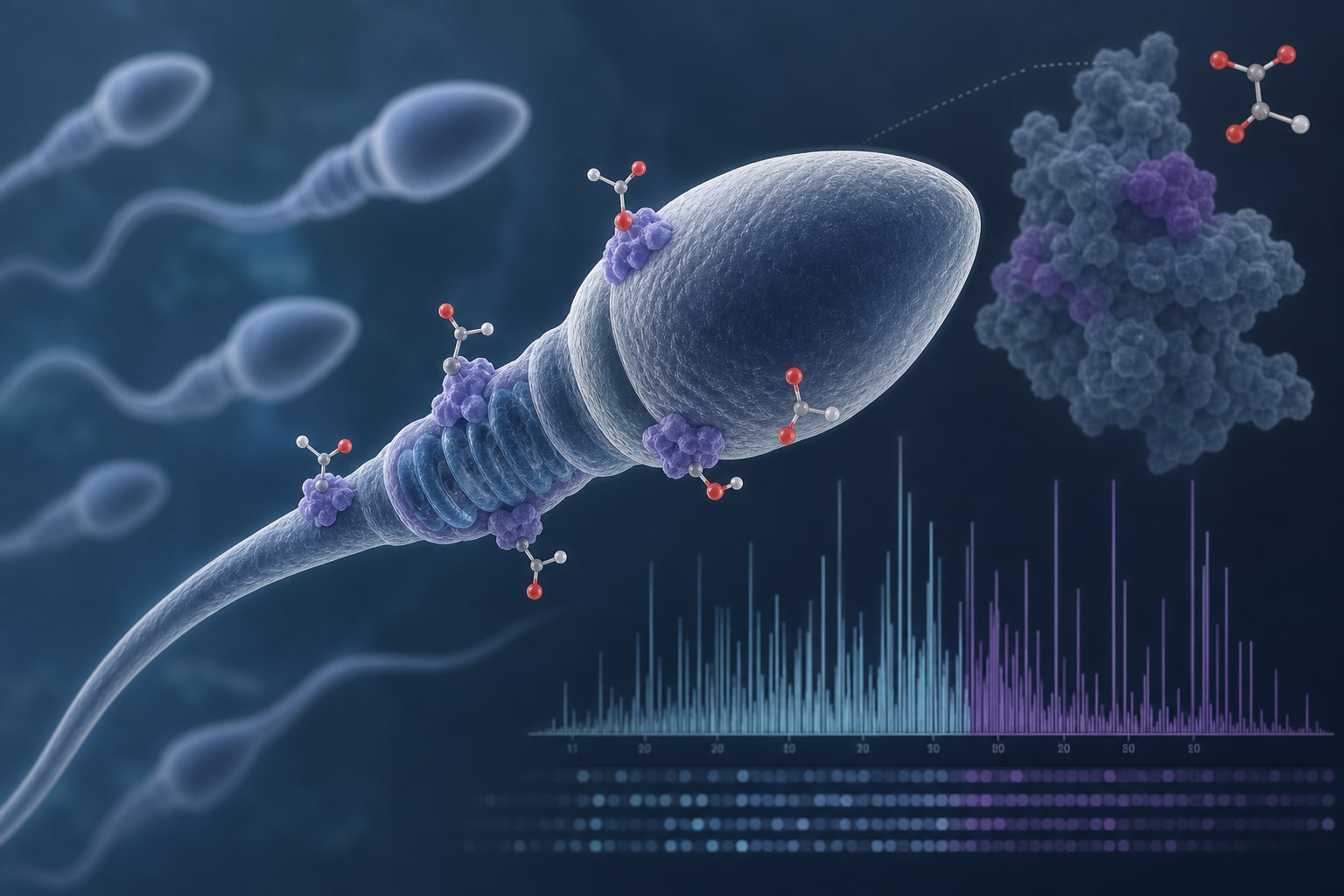
This study investigates the lactylation profile of sperm in men with varicocele-related asthenozoospermia, revealing significant alterations in protein lactylation associated with impaired sperm motility.
Background
Varicocele is a prevalent cause of male infertility, particularly linked to asthenozoospermia, which is characterized by reduced sperm motility. Understanding the molecular mechanisms underlying this condition is crucial.
Data Highlights
Parameter
Pre-treatment
Post-treatment
Intracellular L-lactate
Decreased
Not specified
Seminal plasma L-lactate
Elevated
Not specified
Number of lactylation sites identified
2,699
Not specified
Number of differentially lactylated proteins
133
Not specified
Key Findings
Disrupted lactate metabolism was observed in asthenozoospermic sperm.
Decreased intracellular L-lactate and elevated seminal plasma L-lactate were noted.
A global reduction in protein lactylation was identified, particularly in the sperm midpiece and tail.
133 differentially lactylated proteins were enriched in pathways critical for sperm motility.
Key proteins such as TEKT3, AKAP4, and TUBA1A showed significant downregulation in lactylation abundance.
Clinical Implications
The findings indicate alterations in lactylation in men with varicocele-related asthenozoospermia.
Conclusion
This study provides insights into the lactylation landscape of human sperm in the context of varicocele-associated asthenozoospermia.