Correction: A Comprehensive Literature Review of Idiopathic Retinal Vasculitis, Aneurysms, and Neuroretinitis (IRVAN) Syndrome, a Rare Retinal Vasculopathy
-
By
-
Haidara Asaad
-
Raghad Hasan
-
October 7, 2026
Clinical Report: Correction to the IRVAN Syndrome Literature Review
Overview
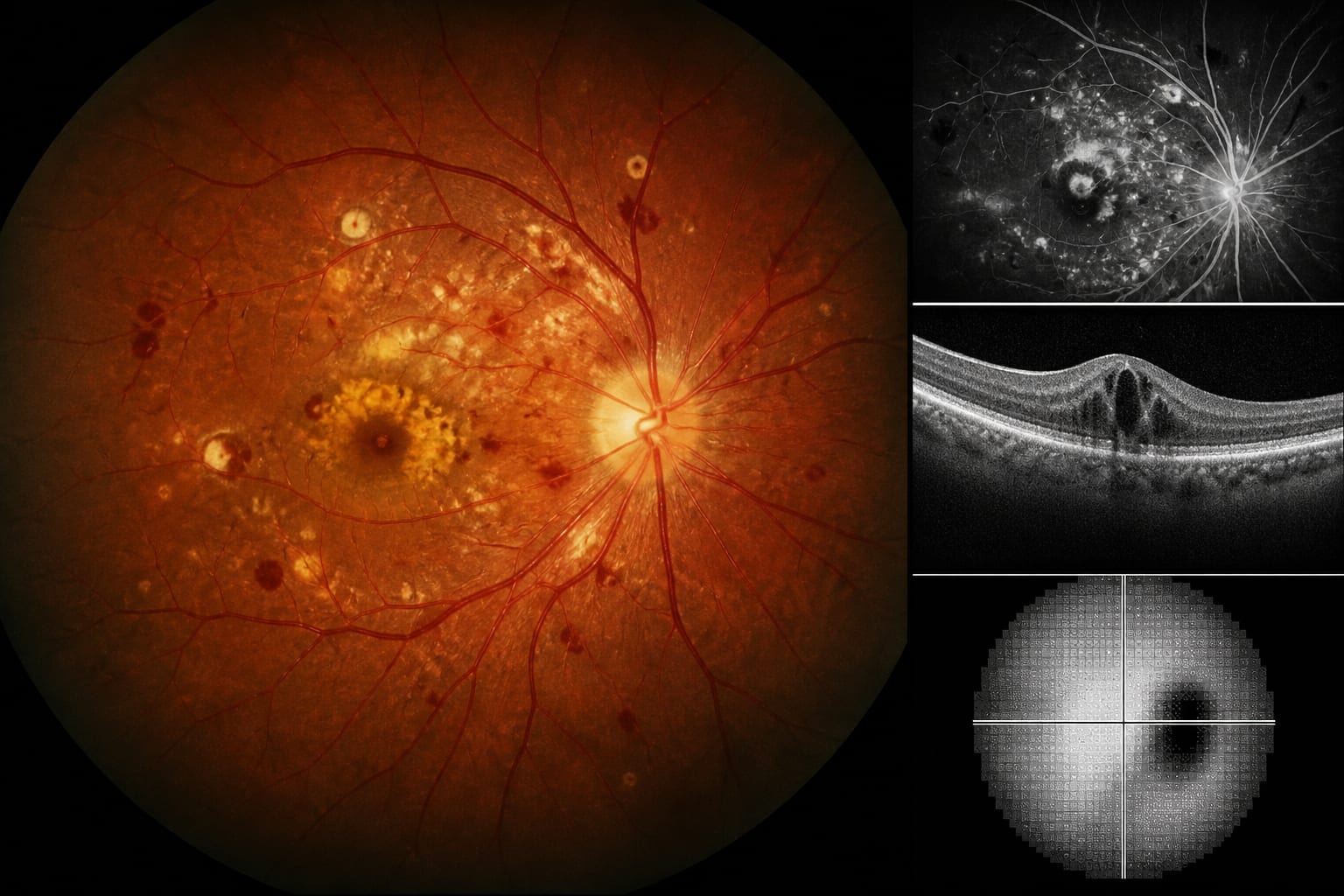
A correction to the 2025 BMC Ophthalmology review of idiopathic retinal vasculitis, aneurysms, and neuroretinitis (IRVAN) reports that the original Figure 2 legend omitted an attribution. The legend has been revised to acknowledge the 2018 Medical Hypotheses source and Elsevier’s permission to reproduce the excerpt.
Background
IRVAN is the subject of a comprehensive literature review published in BMC Ophthalmology in 2025. The correction concerns attribution for material reproduced in Figure 2, rather than a reported change to the review’s clinical content. Retinal vasculitis more broadly can involve inflammatory changes in retinal arteries and/or veins and may be sight-threatening because of complications including macular edema, vascular occlusion, retinal ischemia, and neovascularization. The related clinical article advises investigating the underlying etiology when assessing retinal vasculitis.
Data Highlights
This correction reports no numerical or trial data. It documents a revised Figure 2 legend acknowledging an excerpt reproduced from Medical Hypotheses, volume 111, pages 12–14, from a 2018 article by Chawla and colleagues, with Elsevier’s permission.
Key Findings
- The correction was published in BMC Ophthalmology, volume 25, article 386, in 2025.
- The original Figure 2 legend inadvertently omitted its attribution.
- The revised legend acknowledges that the excerpt was reproduced from Medical Hypotheses, volume 111, pages 12–14, with Elsevier’s permission.
- The acknowledged 2018 article was authored by Chawla R, Kumar A, Ravani R, Tewari R, Rajmohmad Shaikh F, and Sharma A, and concerned multimodal imaging and IRVAN syndrome etiology.
- The correction states that an update has been made to the article; it does not report a change to clinical findings or recommendations.
- A related 2022 Retinal Physician article describes retinal vasculitis as inflammatory changes of retinal arteries and/or veins and notes that evaluation should investigate the underlying etiology.
Clinical Implications
This notice concerns figure attribution and does not provide new clinical evidence or treatment guidance for IRVAN. In the related retinal vasculitis article, Hossain and Datoo O’Keefe advise investigating the condition thoroughly and tailoring treatment to its underlying etiology.
Conclusion
The 2025 correction updates the Figure 2 legend to provide the omitted source acknowledgment and permission statement. No clinical-content revision is described in the correction notice.
Related Resources & Content
- BMC Ophthalmology, 2025 — Correction: A Comprehensive Literature Review of Idiopathic Retinal Vasculitis, Aneurysms, and Neuroretinitis (IRVAN) Syndrome, a Rare Retinal Vasculopathy
- Chawla R, Kumar A, Ravani R, Tewari R, Rajmohmad Shaikh F, Sharma A, Medical Hypotheses, 2018 — Article concerning multimodal imaging and IRVAN syndrome etiology
- Hossain HA, Datoo O’Keefe G, Retinal Physician, 2022 — Diagnosis and Management of Retinal Vasculitis
- Retinal Physician — Diagnosis and Management of Retinal Vasculitis
- retinal physician — Diagnosis and Management of Retinal Vasculitis
- retinal physician — Experts Standardize Retinal Vasculitis Terminology
- Correction: A Comprehensive Literature Review of Idiopathic Retinal Vasculitis, Aneurysms, and Neuroretinitis (IRVAN) Syndrome, a Rare Retinal Vasculopathy
- Diagnosis and Management of Retinal Vasculitis
- Standardization of Retinal Vasculitis Terminology With Consensus Definitions From a Delphi Panel | Retinal Disorders | JAMA Ophthalmology | JAMA Network
Based on findings from:
Correction: Idiopathic retinal vasculitis, aneurysms, and neuroretinitis (IRVAN) syndrome: a comprehensive literature review of a rare retinal vasculopathy
Haidara Asaad, Raghad Hasan. Bmc Ophthalmology, 2026.
https://link.springer.com/article/10.1186/s12886-026-05407-2
This content is an AI-generated, fully rewritten summary based on a published scholarly article. It does not reproduce the original text and is not a substitute for the original publication. Readers are encouraged to consult the source for full context, data, and methodology.